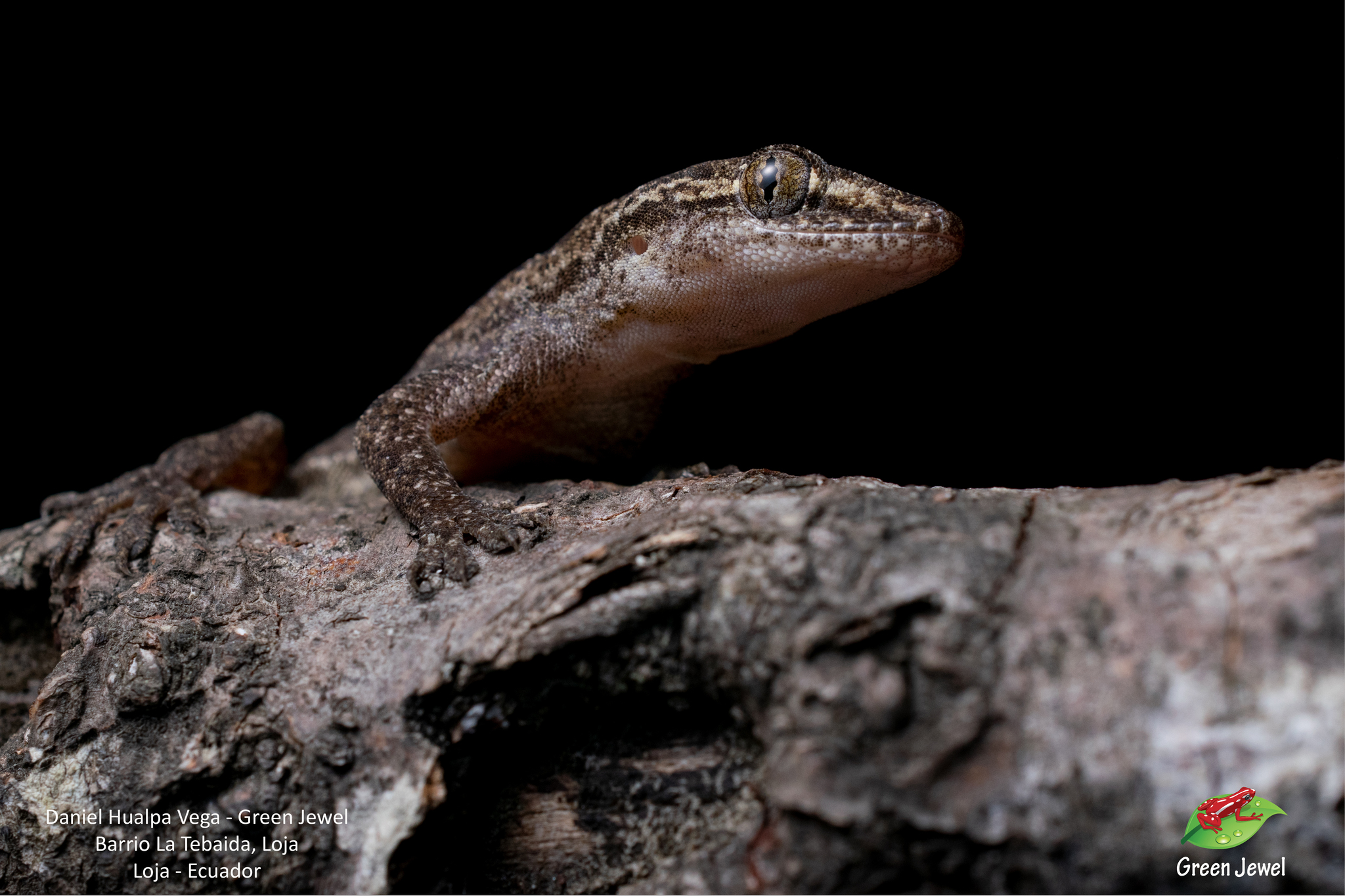
Hemidactylus (from Ancient Greek ἡμι- (hēmi-), meaning 'half', and δάκτυλος (dáktulos), meaning 'finger') is a genus of the common gecko family, Gekkonidae. It has 199 described species, newfound ones being described every few years. These geckos are found in all the tropical regions of the world, extending into the subtropical parts of Africa and Europe. They excel in colonizing oceanic islands by rafting on flotsam, and are for example found across most of Polynesia. In some archipelagoes, cryptic species complexes are found. Geckos like to live in and out of houses. They have been introduced to many areas around the world.
This species is closely related to the genus Gehyra, which belongs to the same family in Gekkonidae.
The species are typically known as house geckos, due to their readiness to adapt to and coexist with humans, and can be easily encountered in human habitations.
Taxonomy
This genus was originally established by Lorenz Oken in 1817 for the species at that time known as Hemidactylus tuberculosus, and now described as the tropical house gecko (Hemidactylus mabouia). The species name in turn comes from the Greek words ἡμι hemi "half" and δάκτυλος dáktylos "fingers" because its toes have split or "half" lamella underneath them.
Evolution
The origin of the genus Hemidactylus is still unclear as the higher level phylogeny is not well resolved. Moreover, much of the diversity in this group still remains to be discovered.
Feces
A house gecko will usually confine its excretions to one area of a house. This is sometimes considered a nuisance by home owners, and may stain certain surfaces. The feces are approximately five (5) millimeters in length, two (2) millimeters wide, and dark brown (almost black) in color.
Description
Foot upperside (left) and underside of the Oriental leaf-toed gecko (H. bowringii).
The dorsal scale pattern is either uniform or heterogeneous. The pupil of the eye is vertical. Males have pre-anal or femoral pores. Each...