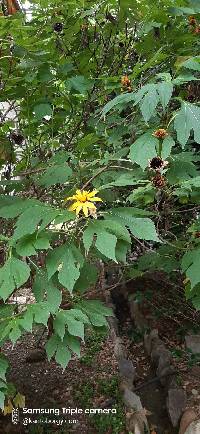
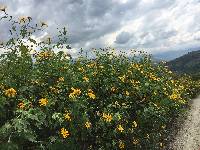
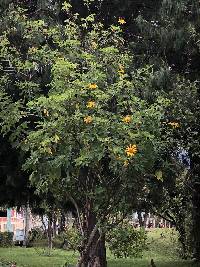
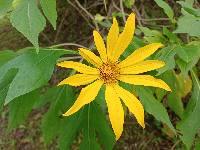
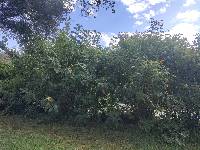
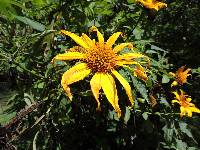
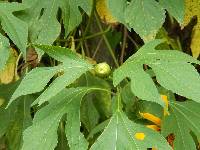
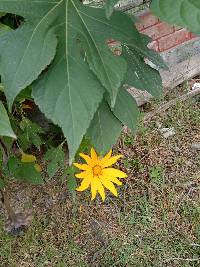
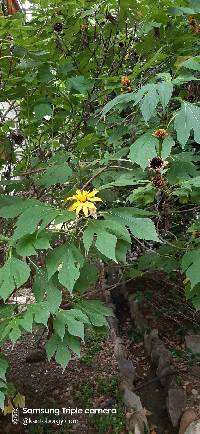
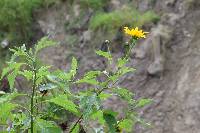
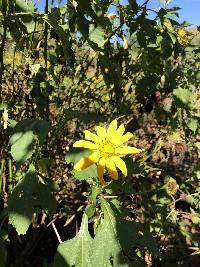
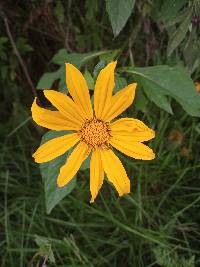
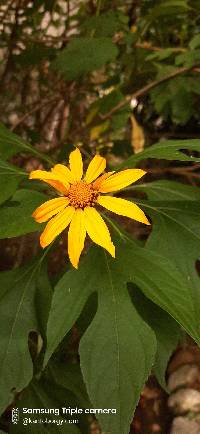
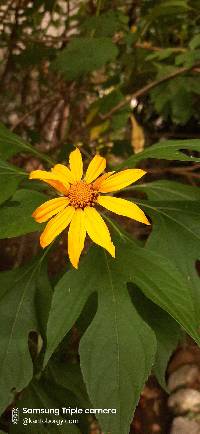
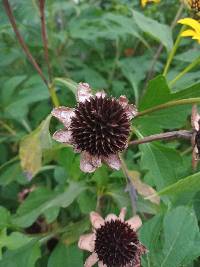
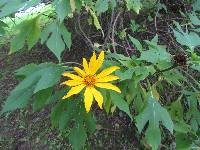
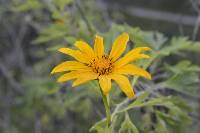
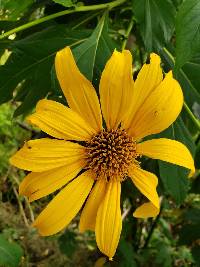
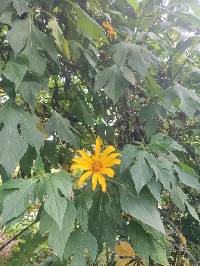
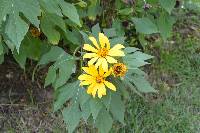
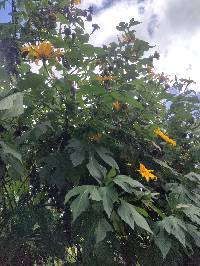
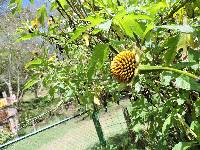
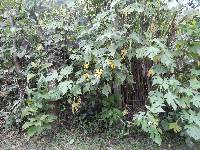
Tithonia diversifolia is a species of flowering plant in the family Asteraceae that is commonly known as the tree marigold, Mexican tournesol, Mexican sunflower, Japanese sunflower or Nitobe chrysanthemum. It is native to Mexico and Central America but has a nearly pantropical distribution as an introduced species. Depending on the area they may be either annual or perennial. It has shown great potential in raising the soil fertility in soils depleted in nutrients.
Research has shown its potential in benefiting poor African farmers. This plant is a weed that grows quickly and has become an option as an affordable alternative to expensive synthetic fertilizers. It has shown to increase plant yields and the availability of soil nutrients such as nitrogen (N), phosphorus (P), and potassium (K).
Description
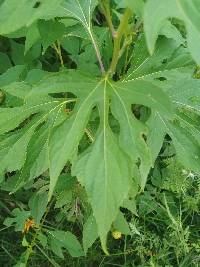
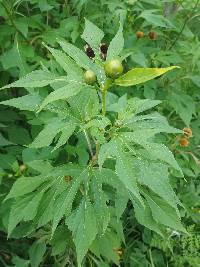
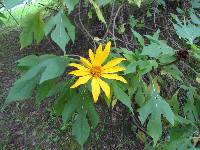
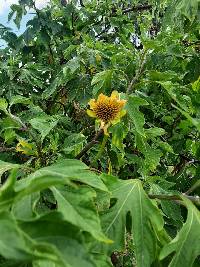
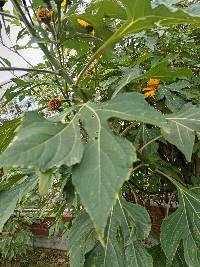
Tithonia diversifolia is 2–3 m (6.6–9.8 ft) in height with upright and sometimes ligneous stalks in the form of woody shrubs. Leaves are sub-ovate, serrate, acute, 10 to 40 cm long, simply or mostly 3-7 lobed, somewhat glandular, and slightly grayish beneath. The leaves of the plant alternate in sides they grow on, which is where the plant gets the name diversifolia.
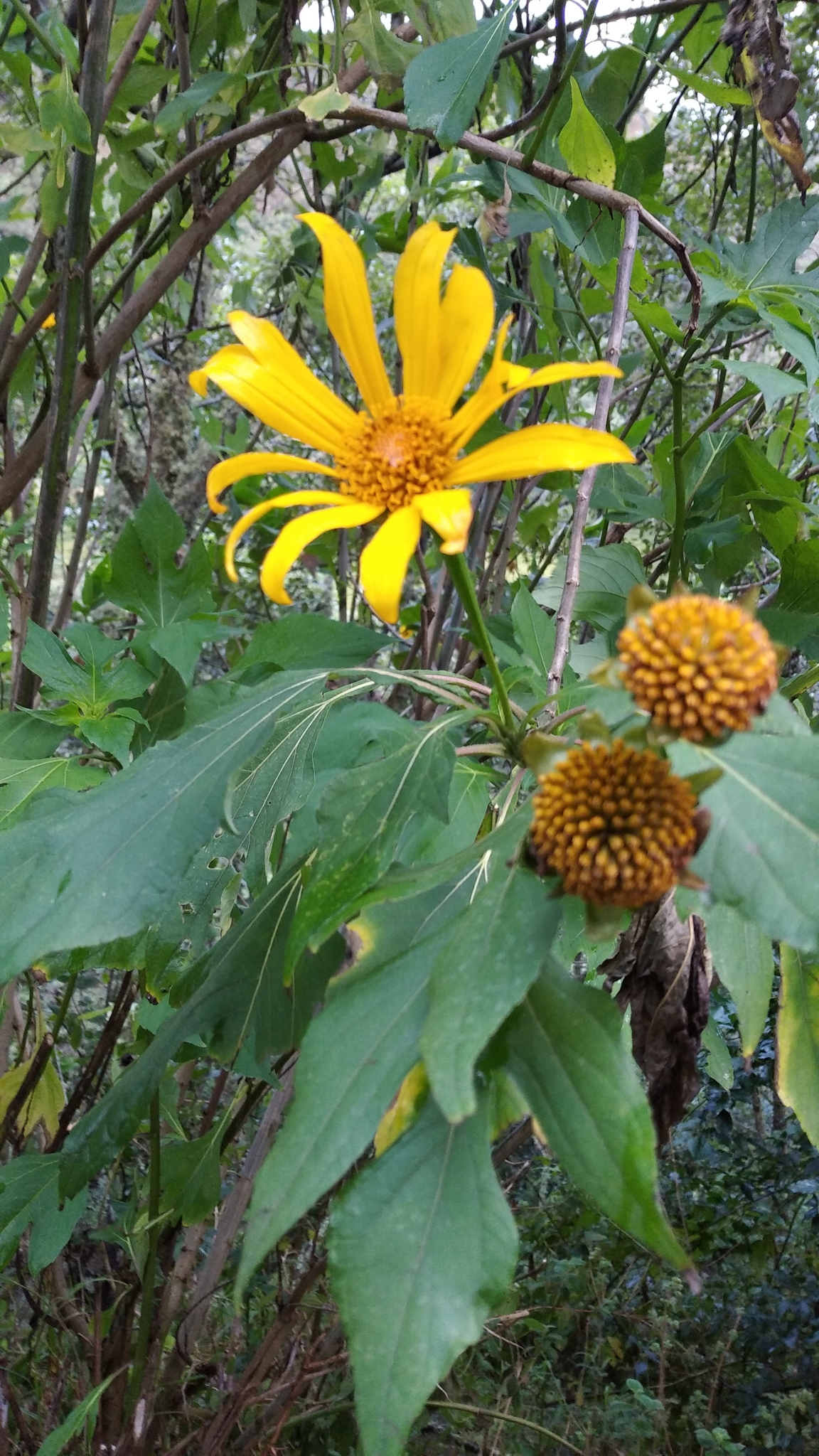
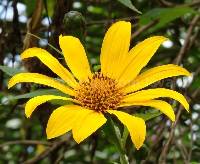
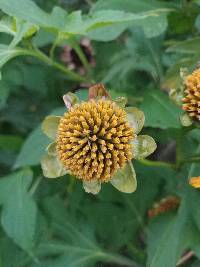
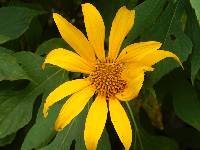
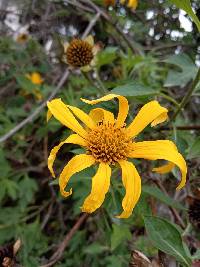
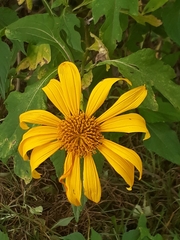
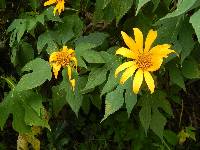
The large, showy honey-scented flowers are yellow to orange colored, 5–15 cm wide and 10–30 cm long. Flowering occurs mostly from April to June. Its seeds are spread through way of wind, water, and animals. The seeds are achenes, 4-angled, and 5mm long.
History and geography
Flower detail
This plant was originally domesticated in Mexico and spread to other parts of Central and South America and north into the United States. It was brought over to parts of Africa and Asia as an ornamental plant and has become an invasive weed that is widely spread. It is most commonly found in areas with an altitude between 550m and 1950m. It is commonly found scattered among rivers and roadsides.} In Asia and Latin America this plant is also referred to as kembang bulan (Indonesian and Javanese),...