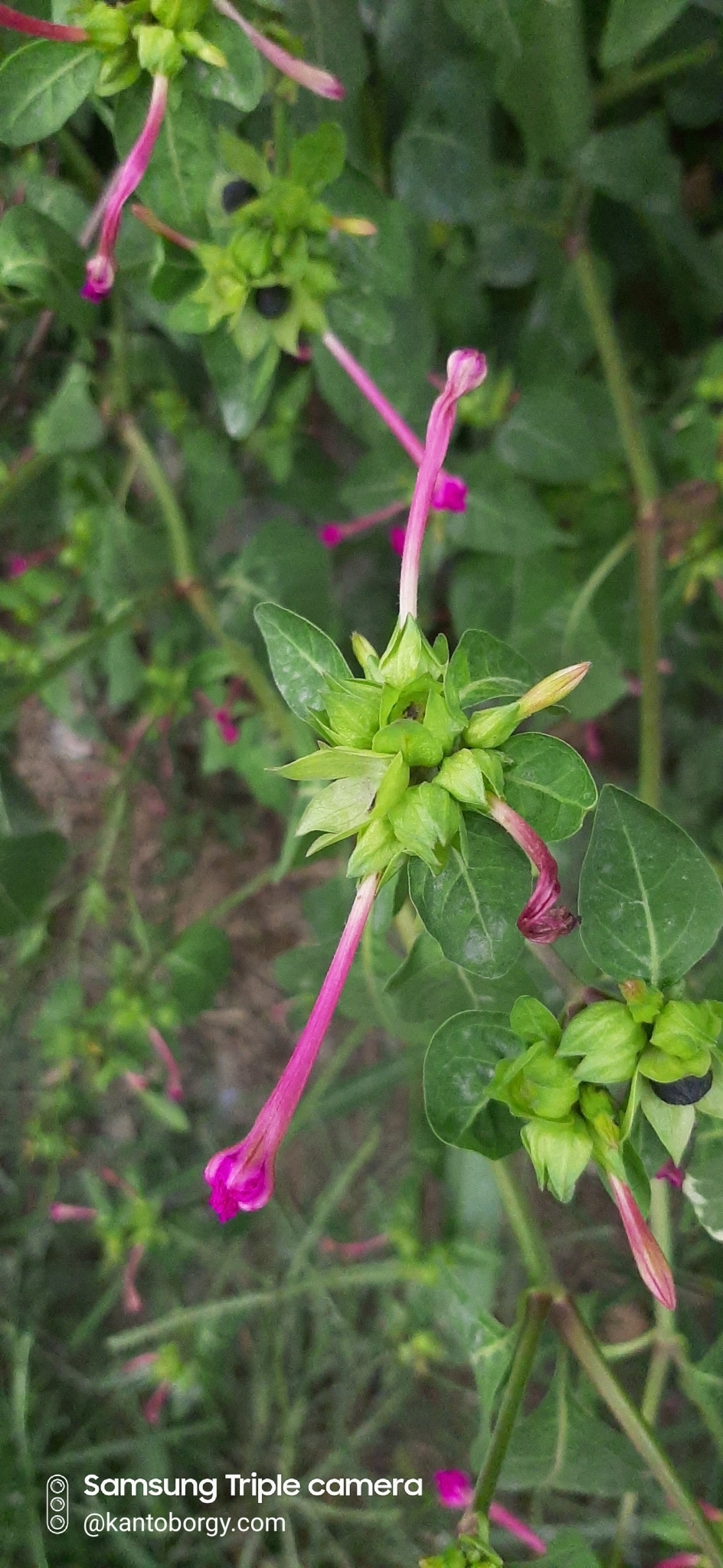
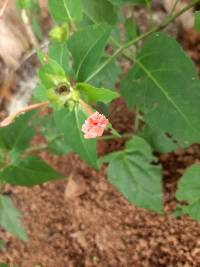
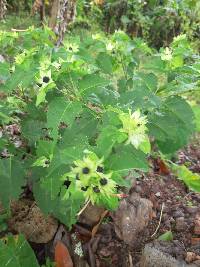
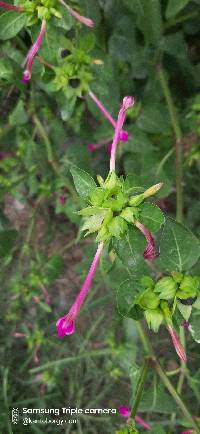
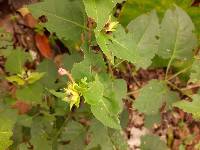
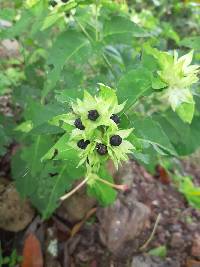
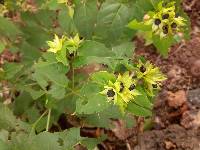
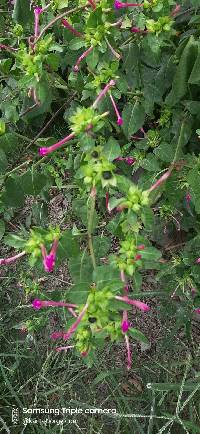
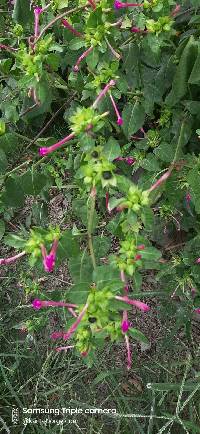
Mirabilis jalapa, the marvel of Peru or four o'clock flower, is the most commonly grown ornamental species of Mirabilis plant, and is available in a range of colors. Mirabilis in Latin means wonderful and Jalapa (or Xalapa) is the state capital of Veracruz in Mexico. Mirabilis jalapa is believed to have been cultivated by the Aztecs for medicinal and ornamental purposes.
The flowers usually open from late afternoon or at dusk (namely between 4 and 8 o'clock), giving rise to one of its common names. The flowers then produce a strong, sweet fragrance throughout the night, then close in the morning. New flowers open the following day. It arrived in Europe in 1525. Today, it is common in many tropical regions and is also valued in Europe as an ornamental plant, although not necessarily hardy. It is the children's state flower of Connecticut under the name of Michaela Petit's Four O'Clocks.
Etymology
The name of Mirabilis jalapa given by Carl Von Linné in 1753 is formed from the scientific Latin Mirabilis meaning "admirable" by allusion to the remarkable colors of its flowers and the specific name jalapa that would refer to its origin in the Jalapa in Guatemala. But the epithet of jalapa could also refer to the city of Xalapa (Jalapa) in Mexico from which came a former purgative drug, named jalap, taken from the tubers of the tuberous jalap. Xalapa also gives its name to the Jalapeño pepper.
Linnaeus refers to all species of Jalapa described by Joseph Pitton de Tournefort who in 1694 wrote:
"The Jalap, or Belle de Nuit is a kind of plant whose flower is a funnel-shaped flared pipe with a crenellated pavilion ... Father Plumier assured me that the Jalap, which is brought to us with the root of America, was a true species of Belle de nuit. We have also received the seed, which has produced in the Jardin Royal de Paris a plant quite like the common Belle de nuit; but this seed is more wrinkled, and the leaves of the plant are less smooth."