The papaya (, US: ) is the plant species Carica papaya, one of the 3 accepted species in the genus Carica of the family Caricaceae.
It was first domesticated in Mesoamerica, within modern-day southern Mexico and Central America. It is grown in several countries in regions with a tropical climate. In 2024, India was the leading producer, accounting for 36% of the world total.
Etymology and common names
The word papaya derives from the Arawakan languages of the West Indies, and is also the name for the plant. It was first used in English around 1600 in reference to the fruit and tree.
In some regions, such as Australia, it may be called papaw or pawpaw. In Australian English, pawpaw and papaya denote the fruit of different cultivars of Carica papaya: the former for "larger fruits with yellow flesh" and the latter for "more elongated fruits with distinctively orange red flesh".
In the United States, papaw and pawpaw are names for a different plant and fruit, Asimina triloba, which is unrelated to the papaya.
Description
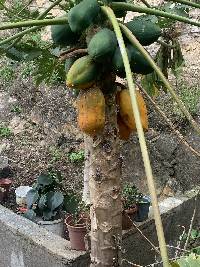
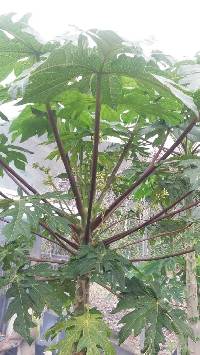
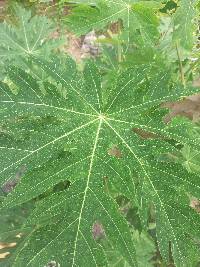
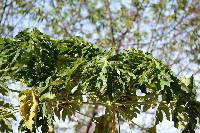
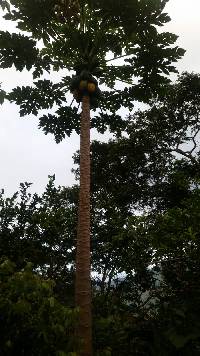
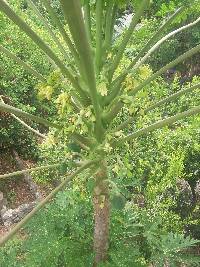
The papaya is a large herbaceous plant, usually with a single stem growing from 5 to 10 m (16 to 33 ft) tall, with spirally arranged leaves confined to the top of the trunk. The lower trunk is conspicuously scarred where leaves and fruit were borne. The leaves are large, 50–70 cm (20–28 in) in diameter, deeply palmately lobed, with seven lobes. All plant parts contain latex in articulated laticifers.
@media all and (max-width:720px){
Seedlings
Coiled phyllotaxy of papaya leaves
Leaf
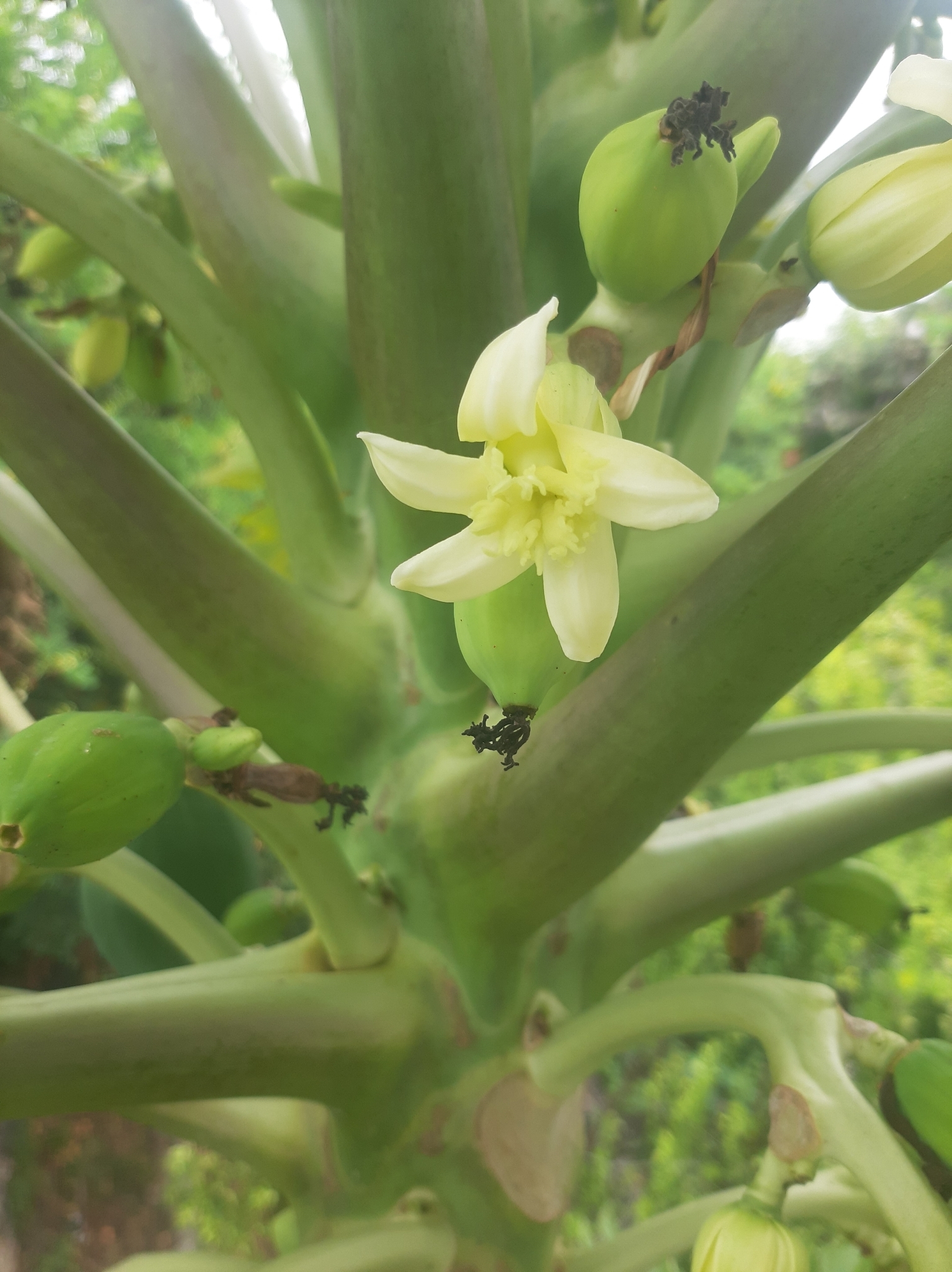
Papayas are dioecious. The flowers are five-parted and highly dimorphic; the male flowers have the stamens fused to the petals. There are two different types of papaya flowers. The female flowers have a superior ovary and five contorted petals loosely connected at the base.
Male and female flowers are borne in the leaf axils; the male flowers are in multiflowered dichasia, and the female ones are in...