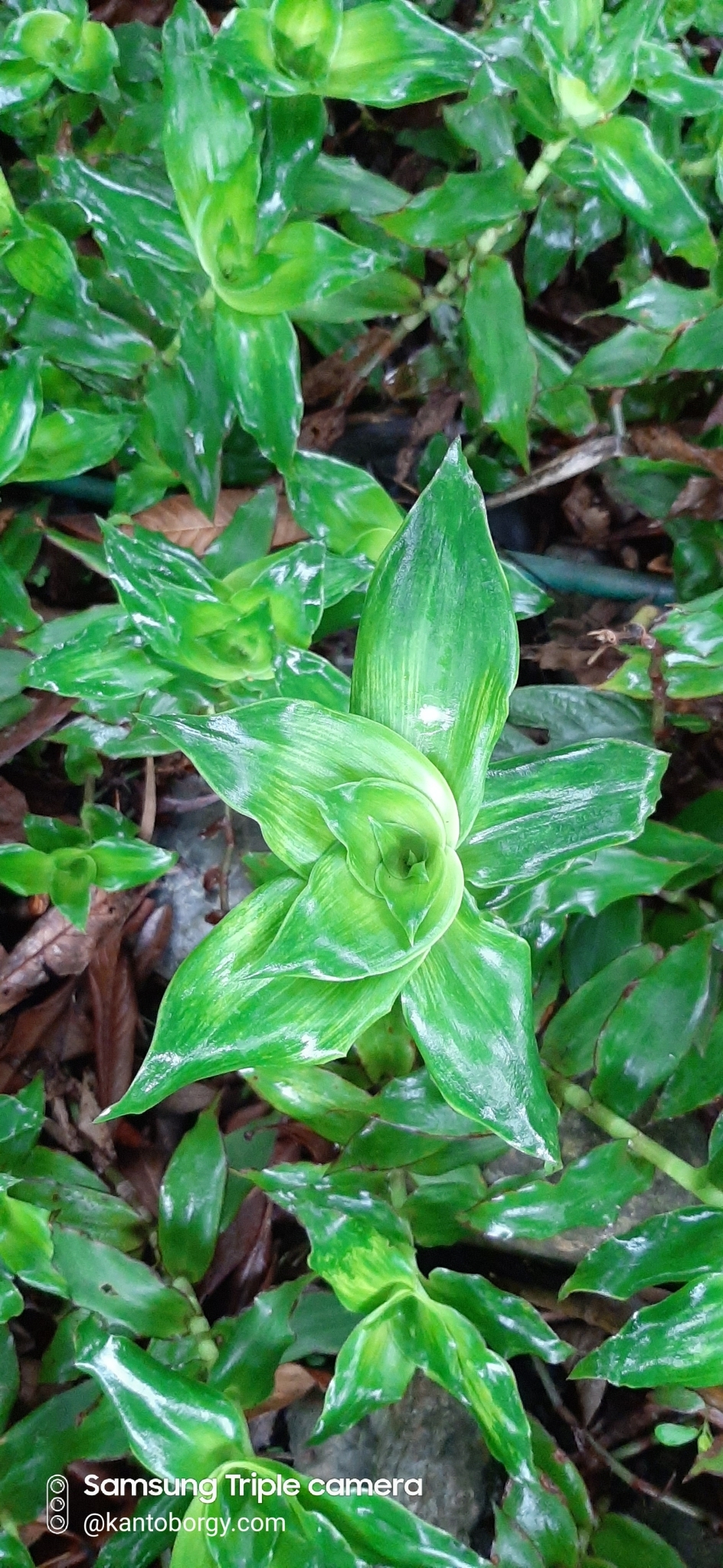
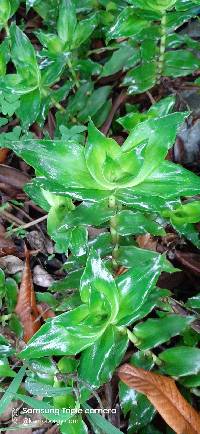
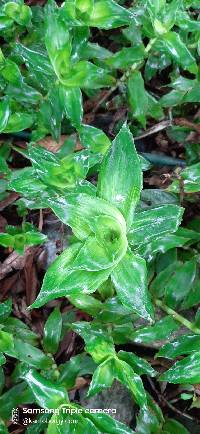
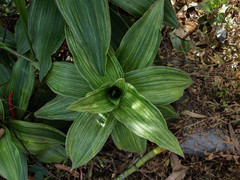
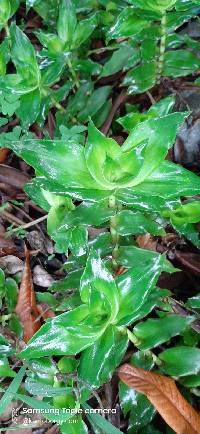
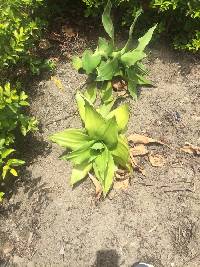
Callisia fragrans, the false bromeliad, false bromeliad plant or golden tendril, is a flowering plant species of the genus Callisia, in the spiderwort family, Commelinaceae that is native to Mexico.
Description
A flowering clump
A robust, perennial herbaceous plant, the fleshy stem of Callisia fragrans can grow to a height of 1.5 m (4.9 ft). The leaves are 25 cm (9.8 in) long and become burgundy-violet if exposed to more prolonged sunlight (an example of "sun-stressing").
Flowering shoots are bromeliad-like, vigorous, and covered with almost rosette-like leaves. They are sparsely branched. Long, fairly slender, distichous stolons emerge from the lower nodes. The leaves of flowering shoots are up to 30 centimeters long and 7 centimeters wide. They are bright light green, narrowly elliptic-lanceolate, pointed, almost stem-clasping, and usually glabrous.
Close-up of the small flowers
The almost sessile, small white flowers are fragrant, which occur from late winter to spring. The spreading inflorescence consists of terminal panicles with crowded branches. The sessile, paired whorls are borne on papery bracts up to 2 centimeters long. heir bristly sepals are 3.5 to 5 millimeters long and 1.5 to 2 millimeters wide.
The lanceolate to ovate, white petals have no flat blade. They are 5 to 6 millimeters long and 2.5 to 3.5 millimeters wide. The six long, protruding, white stamens are more conspicuous than the petals. Their connectives are membranous. The stigma is brush-shaped.
Inflorescence
Close-up of the small flowers
The almost sessile, small white flowers are fragrant, which occur from late winter to spring. The spreading inflorescence consists of terminal panicles with crowded branches. The sessile, paired whorls are borne on papery bracts up to 2 centimeters long. heir bristly sepals are 3.5 to 5 millimeters long and 1.5 to 2 millimeters wide.
The lanceolate to ovate, white petals have no flat blade. They are 5 to 6 millimeters...