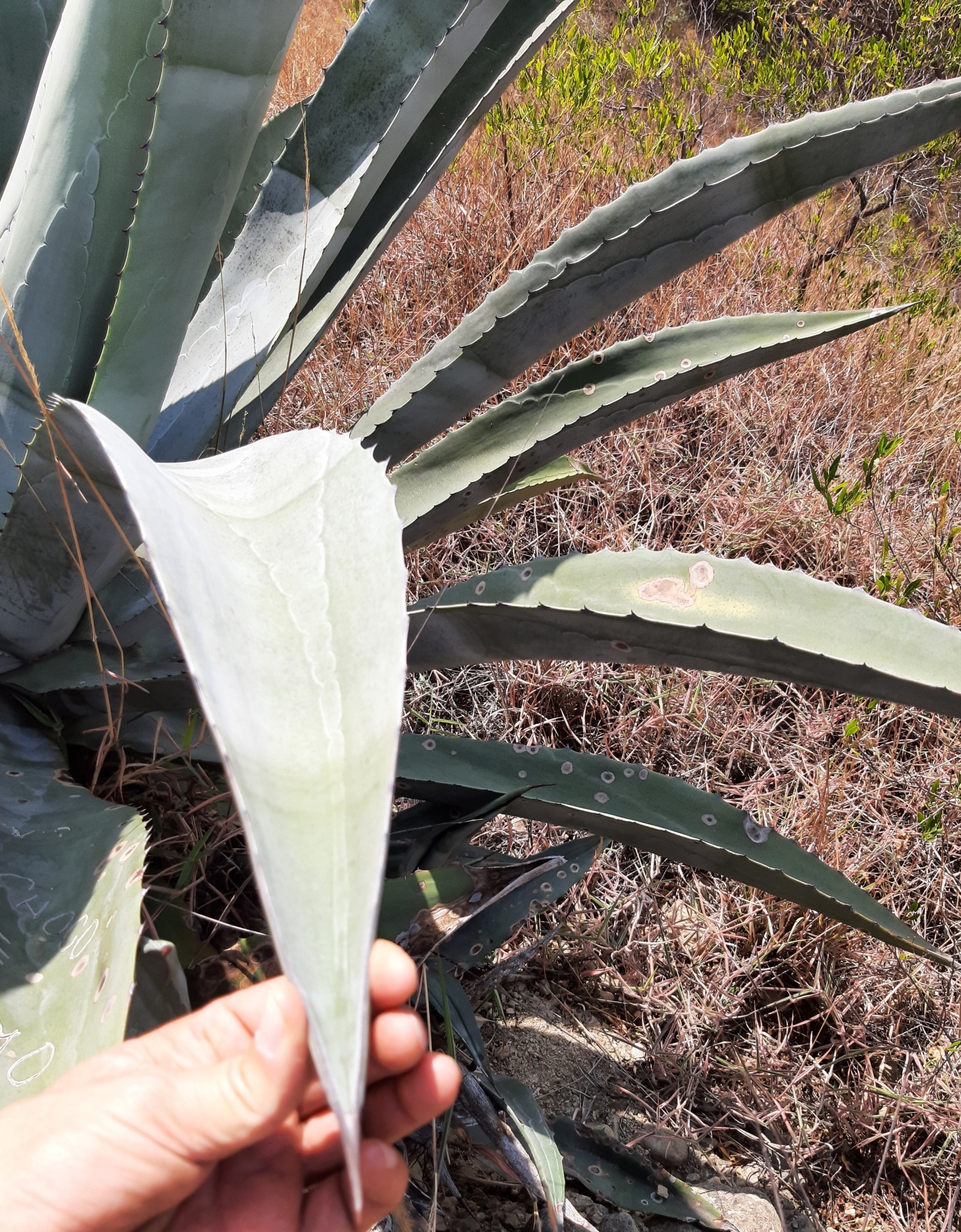
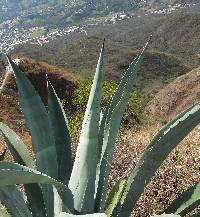
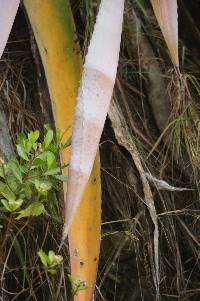
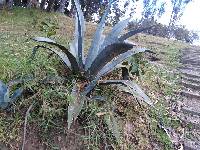
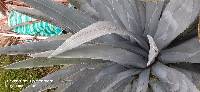
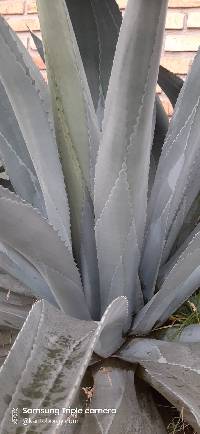
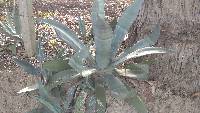
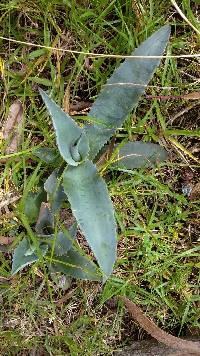
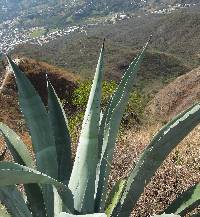
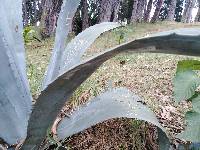
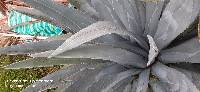
Agave americana, commonly known as the century plant, maguey, or American aloe, is a flowering plant species belonging to the family Asparagaceae. It is native to Mexico and the United States, specifically Texas. This plant is widely cultivated worldwide for its ornamental value and has become naturalized in various regions, including Southern California, the West Indies, South America, the Mediterranean Basin, Africa, the Canary Islands, India, China, Thailand, New Zealand and Australia.
Despite being called "American aloe" in common parlance, Agave americana is not closely related to Aloe species.
Description
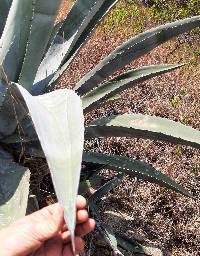
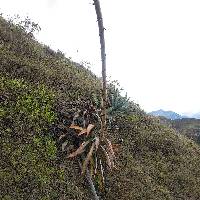
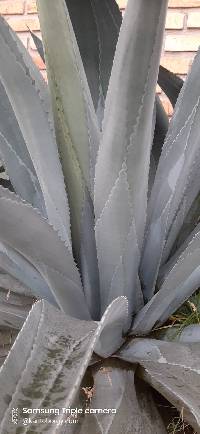
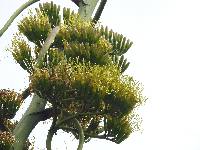
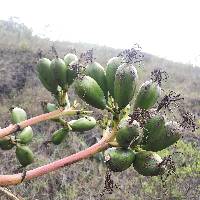
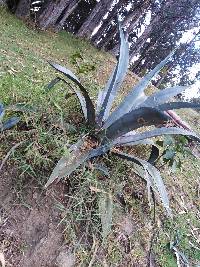
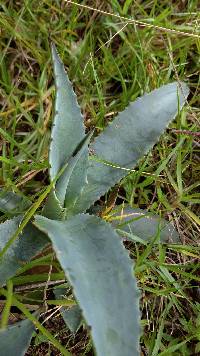
The common name "century plant" stems from its monocarpic nature of flowering only once at the end of its long life. After flowering, the plant dies but produces adventitious shoots from the base, allowing its growth to continue. Although it is called the century plant, it typically lives only 10 to 30 years. It has a spread around 1.8–3.0 m (6–10 ft) with gray-green leaves measuring 0.9–1.5 m (3–5 ft) in length, each with a prickly margin and a heavy spike at the tip that can pierce deeply. Towards the end of its life, the plant produces a tall, branched stalk adorned with yellow blossoms, which can reach a height of 8–9 m (25–30 ft).
On the Mediterranean island of Crete, Greece
Blossoms
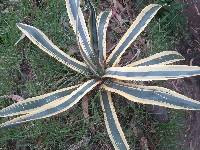
'Marginata', a variegated cultivar
Cultivar 'Mediopicta'
Naming
The species was given its binomial name Agave americana by Carl Linnaeus in the first edition of Species Plantarum (1753). This name is the one still in use today.
Cultivation
A. americana is cultivated as an ornamental plant, particularly valued for its large, dramatic mature form. It is often found in modernist, xeriscapes (drought-tolerant), and desert-style cactus gardens. It is popularly used in hot climates and areas prone to drought. The plant's presence can evoke the ambiance of 18th- to 19th-century Spanish colonial and...