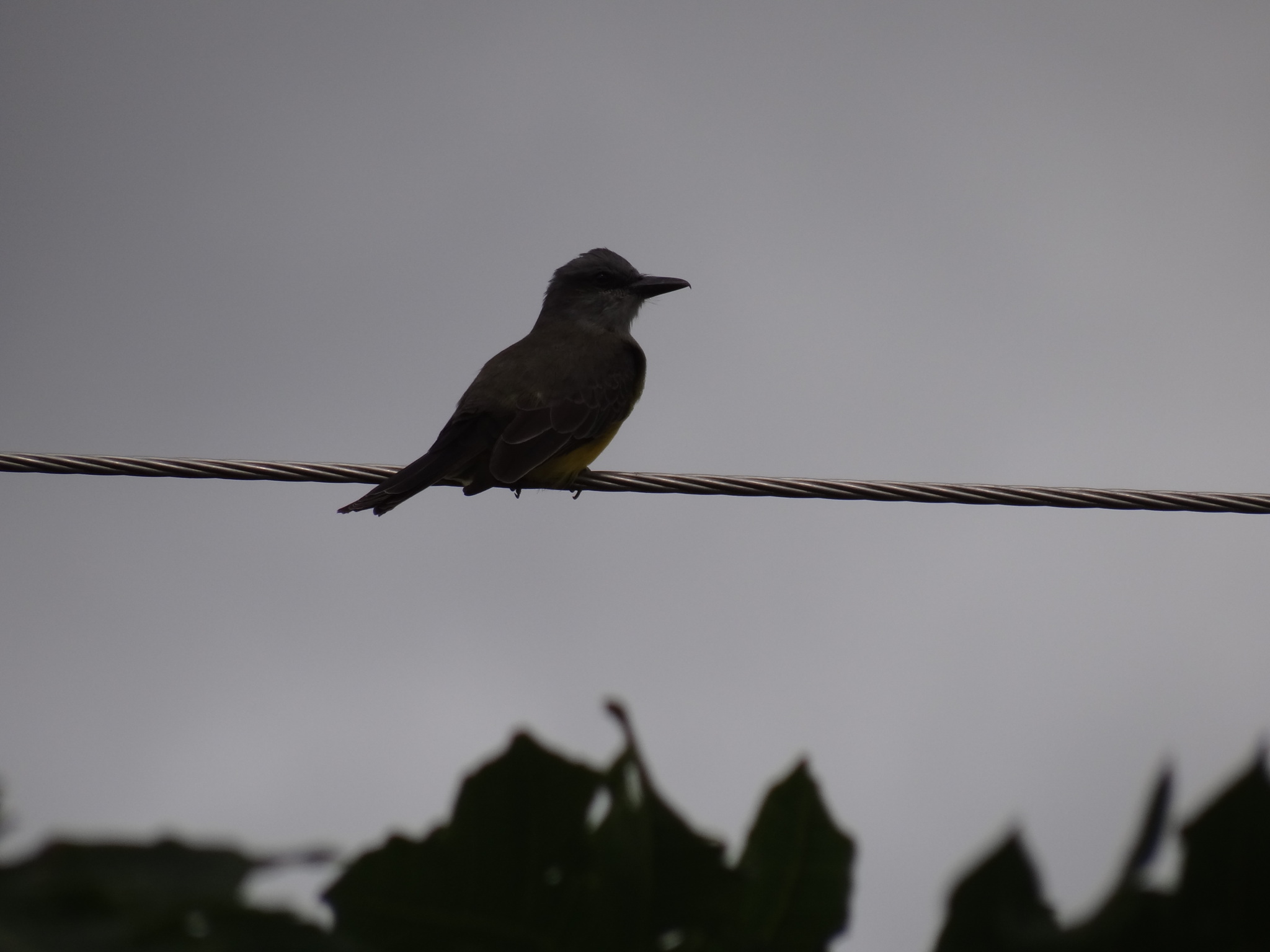
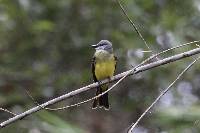
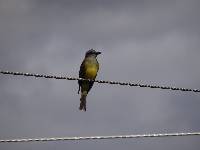
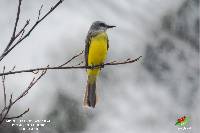
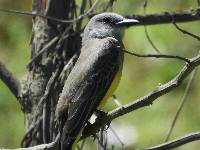
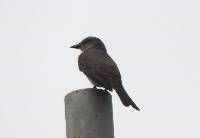
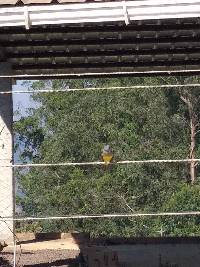
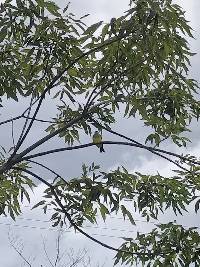
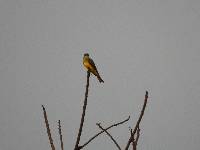
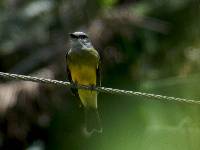
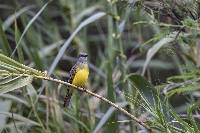
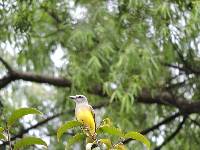
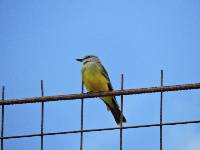
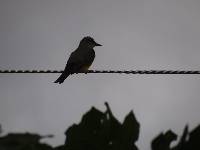
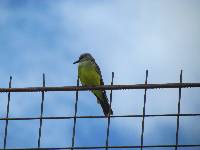
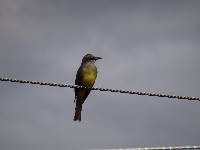
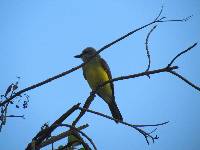
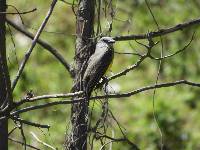
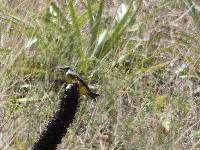
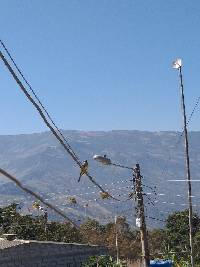
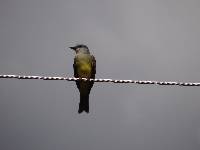
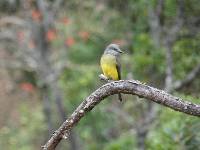
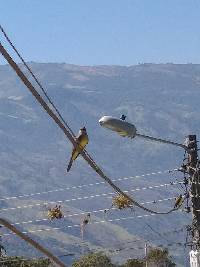
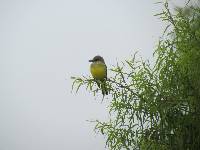
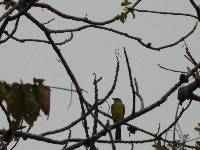
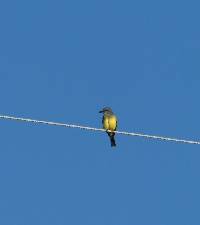
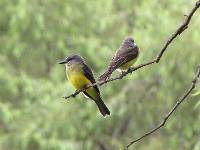
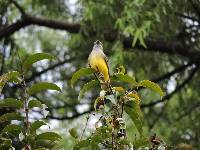
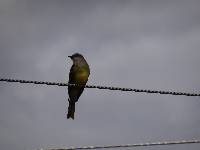
The tropical kingbird (Tyrannus melancholicus) is a large tyrant flycatcher. This bird breeds from southern Arizona and the lower Rio Grande Valley of Texas in the United States through Central America, South America as far as south as central Argentina and eastern Peru, and on Trinidad and Tobago. Birds from the northernmost and southern breeding areas migrate to warmer parts of the range after breeding.
Taxonomy
The tropical kingbird was formally described in 1819 by the French ornithologist Louis Pierre Vieillot under the binomial name Tyrannus melancholicus. Vieillot based his description on the Suirirí-Guazú that had been described by the Spanish naturalist Félix de Azara in 1805 in his book Apuntamientos para la historia natural de los páxaros del Paragüay y Rio de la Plata. The specific epithet is Latin meaning "melancholic" (that is "bad-tempered").
Three subspecies are recognised:
T. m. satrapa (Cabanis & Heine, 1860) – southwest USA to north Colombia, north Venezuela and Trinidad
T. m. despotes (Lichtenstein, MHK, 1823) – northeast Brazil
T. m. melancholicus Vieillot, 1819 – north South America to central Argentina
Description
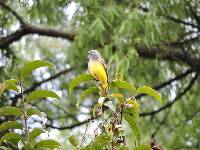
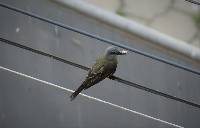
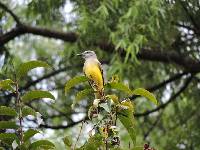
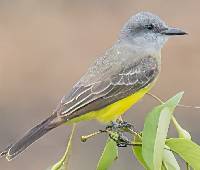
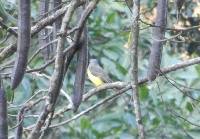
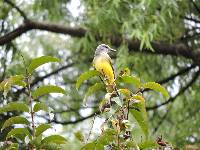
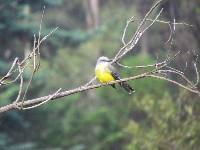
An adult tropical kingbird is 22 cm (8.7 in) long, weighs 39 g (1.4 oz) and has a wingspan range of 38–41 cm. The head is pale gray, with a darker eye mask, an orange crown stripe, and a heavy gray bill. The back is grayish-green, and the wing and forked tail are brown. The throat is pale gray, becoming olive on the breast, with the rest of the underparts being yellow. The sexes are similar, but young birds have pale buff edges on the wing coverts.
Behaviour and ecology
Tropical kingbirds appear to be monogamous. In most parts of the species' range, they are permanent residents and remain together in pairs year-round.(Sibley 2014)
The call is a high-pitched twittering trill, tree-e-e-e-e-e-e, with a more complex version sung by the male at dawn.
Their breeding habitat is semi-open areas with trees and...