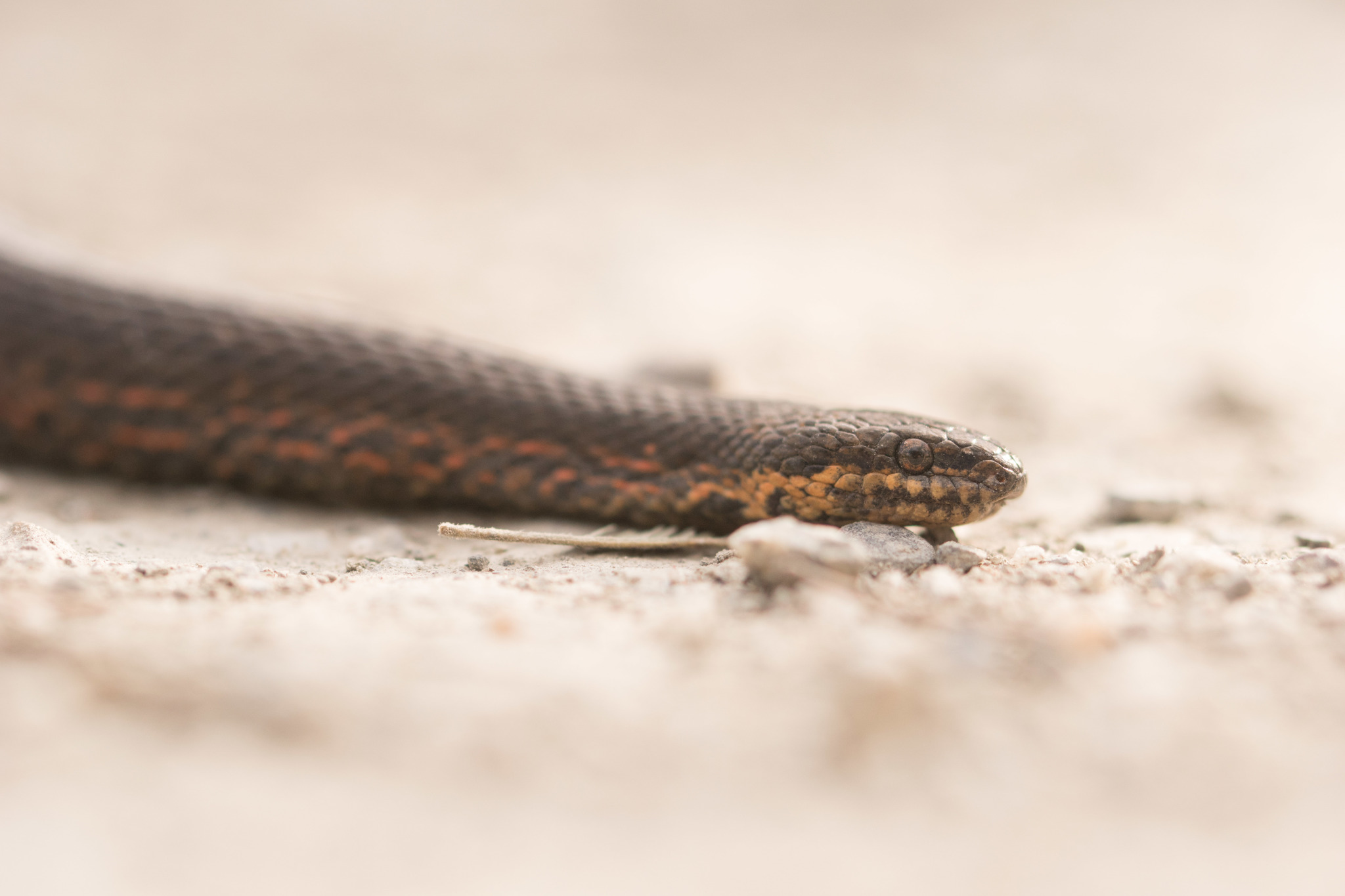
Tropidophis, common name Caribbean dwarf boas, wood snakes or West Indian wood snakes, is a genus of dwarf boas endemic to the West Indies and South America. Currently, either 17 or 33 species are recognized, depending on the authority.
Distribution and habitat
Found in the West Indies, including Cuba, and in South America (Brazil, Peru and Ecuador).
Description
Autohaemorrhaging in T. curtus
Adults grow to between 30 and 60 cm (12 and 24 in) in total length (including tail). They are secretive and predominantly terrestrial, found in a variety of natural habitats, including rain forest, swamps, pine woods and scrub, as well as in the vicinity of human habitation. They have an interesting defensive habit of autohaemorrhaging from the mouth, nostrils and eyes when disturbed. Some species also change colour over the course of the day.
Conservation
Despite their relatively small size and secretive nature, some species may be susceptible to extirpation, mainly due to habitat alteration and introduced feral animals. The Navassa Island dwarf boa (T. bucculentus) has not been seen for 100 years and is believed to be extinct.
Taxonomy
The Tropidophis dwarf boas have been traditionally considered sister taxa of the Trachyboa. However, a phylogenetic analysis of Tropidophiidae species found the Trachyboa species nested within the Tropidophis species and it was proposed to include all species in Tropidophis.
Species
The following 37 species are recognised by Reptile Database. These include two species that have historically been placed in genus Trachyboa and still are by some authorities.
Species
Taxon author
Subsp.
Common name
Geographic range
Tropidophis battersbyi
Laurent, 1949
0
Battersby's dwarf boa
Ecuador
Tropidophis boulengeri
(Peracca, 1910)
0
Northern eyelash boa
Colombia, Ecuador, Panama,
Tropidophis bucculentus
(Cope, 1868)
0
Navassa Island dwarf boa
Navassa Island
Tropidophis cacuangoae
(Hedges, Estrada & Díaz, 1999)
0
Ecuador...