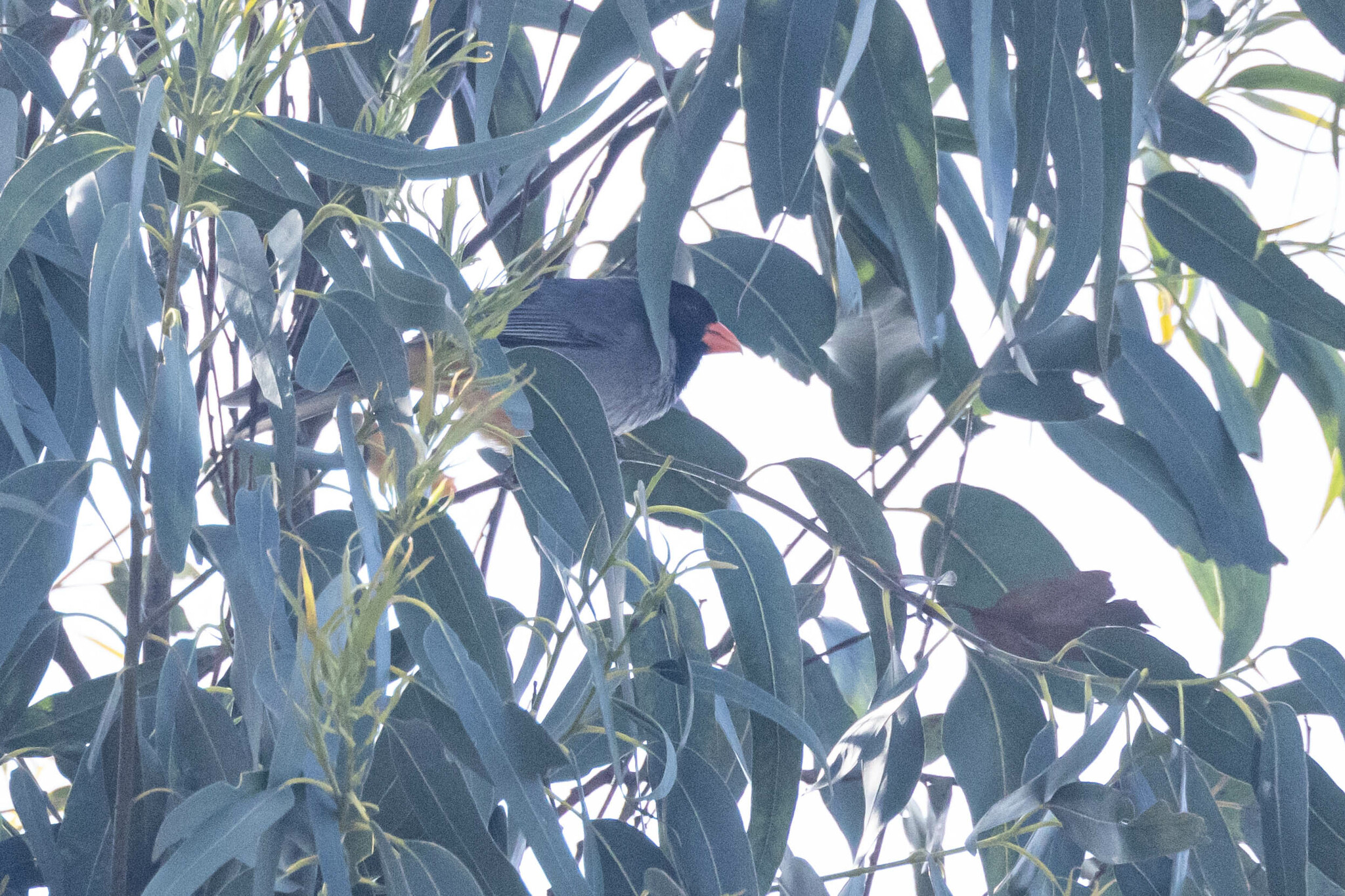
Saltator is a genus of passerine birds in the tanager family Thraupidae that are found in Central and South America. They have thick bills, relatively long tails and strong legs and feet.
Before the introduction of molecular genetic methods in the 21st century these species were placed in the cardinal family Cardinalidae.
Taxonomy
The genus was introduced by the French ornithologist Louis Pierre Vieillot in 1816 with the buff-throated saltator as the type species. The name is from the Latin saltator, saltatoris meaning "dancer".
The saltators were traditionally grouped with the cardinals, either in the subfamily Cardinalinae within an expanded Emberizidae or in a separate family Cardinalidae. Molecular phylogenetic studies have shown that the saltators are embedded within the tanager family Thraupidae. Within the Thraupidae the genus Saltator is now placed with the genus Saltatricula in the subfamily Saltatorinae. The relationship of the subfamily to the other subfamilies within the Thraupidae is uncertain.
Species
The genus contains 16 species:
Image
Common name
Scientific name
Distribution
Orinoco saltator
Saltator orenocensis
Venezuela, northeast Colombia
Green-winged saltator
Saltator similis
Argentina, Bolivia, Brazil, Paraguay, and Uruguay
Cinnamon-bellied (or northern grey) saltator
Saltator grandis
Mexico to Panama
Olive-grey (or Caribbean grey) saltator
Saltator olivascens
Colombia, Venezuela, the Guianas, far north Brazil and Trinidad
Bluish-grey (or Amazonian grey) saltator
Saltator coerulescens
Widely in tropical and subtropical South America
Streaked saltator
Saltator striatipectus
Colombia, Costa Rica, Ecuador, Guadeloupe, Panama, Peru, and Venezuela.
Lesser Antillean saltator
Saltator albicollis
Dominica, Martinique, Saint Kitts and Nevis, and Saint Lucia.
Buff-throated saltator
Saltator maximus
southeastern Mexico to western Ecuador and northeastern Brazil.
Black-winged saltator
Saltator atripennis
Colombia and...