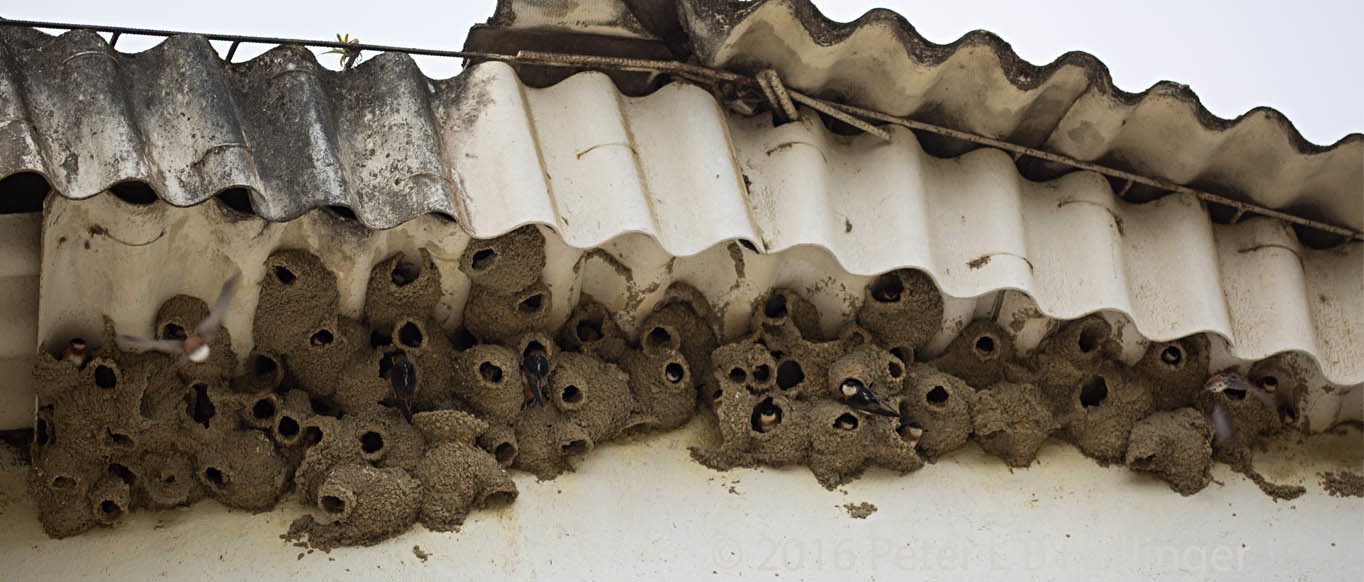
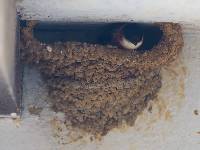
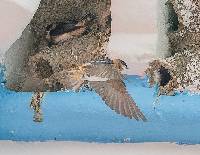
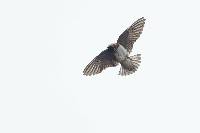
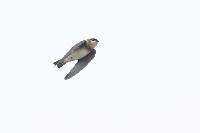
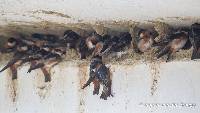
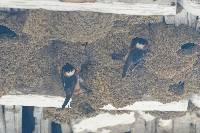
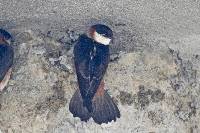
The chestnut-collared swallow (Petrochelidon rufocollaris) is a species of bird in the family Hirundinidae, the swallows and martins. It is found in Ecuador and Peru.
Taxonomy and systematics
The chestnut-collared swallow was originally described as Hirundo rufocollaris in Titian Peale's catalog of birds collected during the United States Exploring Expedition. It was later reclassified in its current genus Petrochelidon that had been erected in 1851. Some authors have treated it as a subspecies of the cave swallow (P. fulva) and the two form a superspecies.
The chestnut-collared swallow has two subspecies, the nominate P. r. rufocollaris (Peale, 1849) and P. r. aequatorialis (Chapman, 1924).
Description
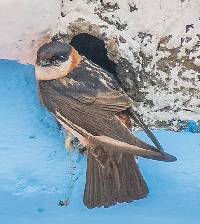
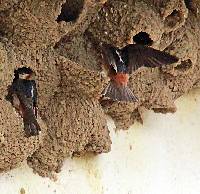
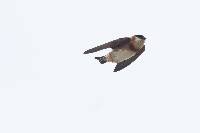
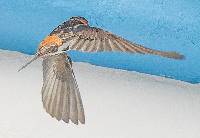
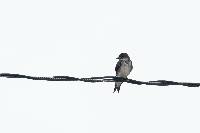
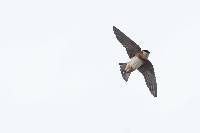
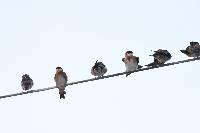
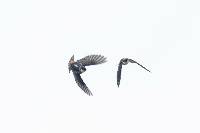
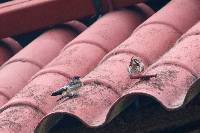
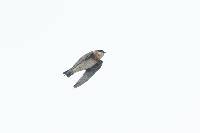
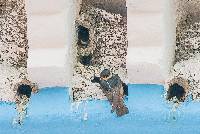
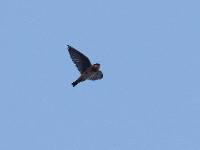
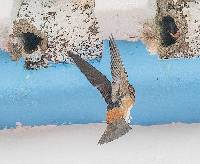
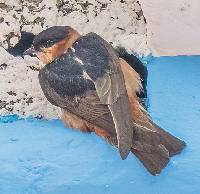
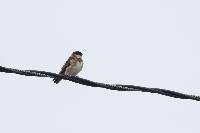
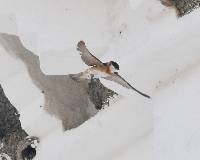
The chestnut-collared swallow is 12 to 12.5 cm (4.7 to 4.9 in) long and weighs 14 to 18 g (0.49 to 0.63 oz). Both sexes of both subspecies have essentially the same plumage. Adults have a dark chestnut forecrown and hindneck. Their crown and back are glossy blue-black with white streaks on the mantle and their rump is chestnut. Their ear coverts and throat are white that sometimes has a buff tinge. Their wings and tail are blackish brown. Their underparts are partially white with a rufous-chestnut band across the upper breast, rufous-chestnut flanks, and a brown or chestnut vent. They have a black bill, pinkish brown legs, and black feet. Juveniles are duller and browner than adults.
Distribution and habitat
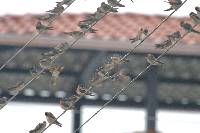
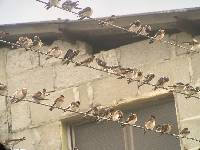
Subspecies P. r. aequatorialis of the chestnut-collared swallow is the more northerly of the two. It is found in southwestern Ecuador from central Manabí Province south about to the Peruvian border in Loja Province. The nominate subspecies is found from there south in Peru through Lima Department. The species primarily inhabits agricultural areas and their associated towns. In elevation it ranges from sea level to about 2,000 m (6,600 ft) in Ecuador and to 1,000 m (3,300 ft) in Peru.
Behavior
The chestnut-collared swallow's diet has not been studied. It is...