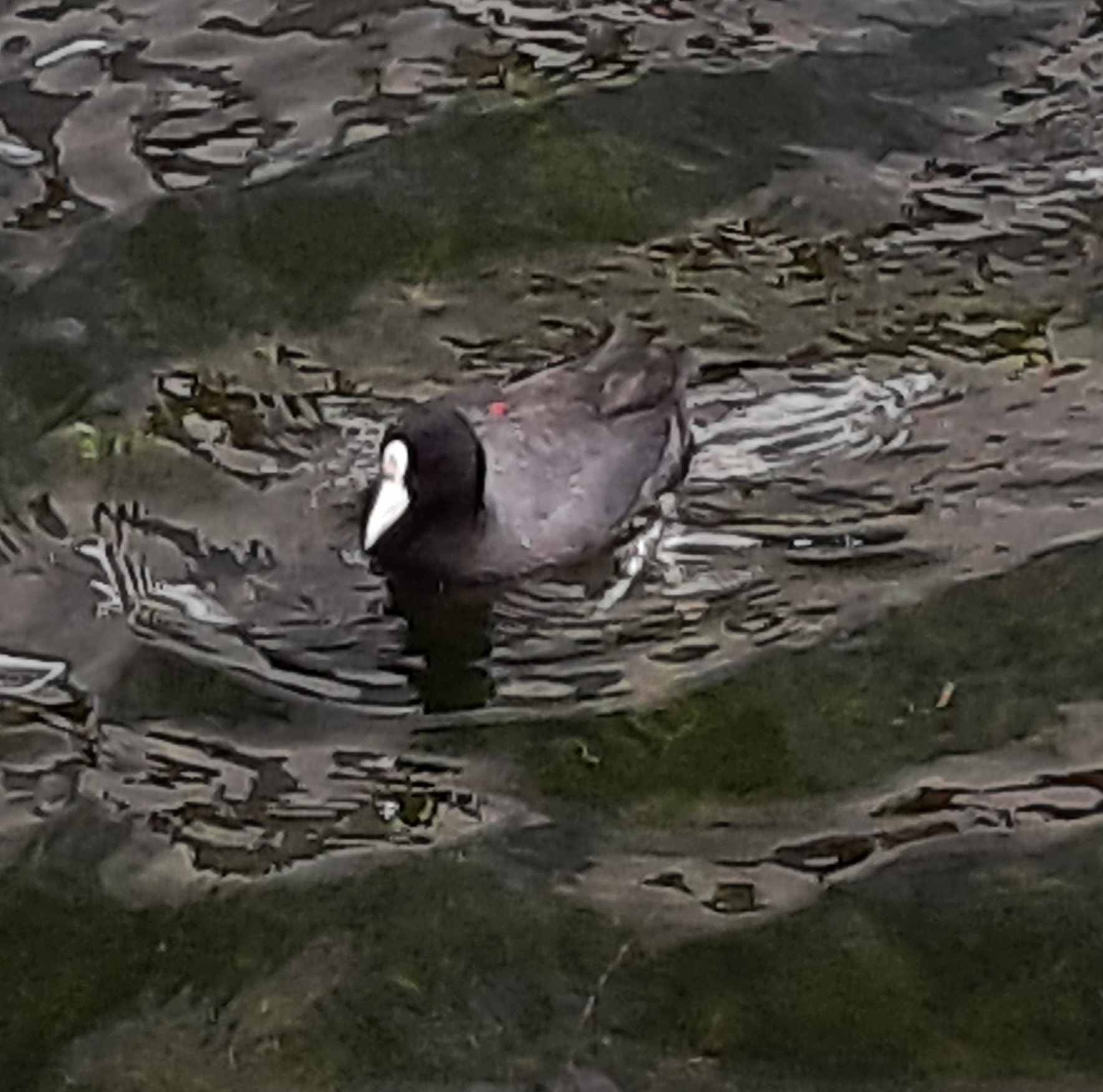
Rails (avian family Rallidae) are a large, cosmopolitan family of small- to medium-sized terrestrial or semi-amphibious birds. The family exhibits considerable diversity in its forms, and includes such ubiquitous species as the crakes, coots, and gallinules; other rail species are extremely rare or endangered. Many are associated with wetland habitats, some being semi-aquatic like waterfowl (such as the coot), but many more are wading birds or shorebirds. The ideal rail habitats are marsh areas, including rice paddies, and flooded fields or open forest. They are especially fond of dense vegetation for nesting. The rail family is found in every terrestrial habitat with the exception of dry desert, polar or freezing regions, and alpine areas (above the snow line). Members of Rallidae occur on every continent except Antarctica. Numerous unique island species are known. The rails have suffered disproportionally from human changes to the environment, and an estimated several hundred species of island rails have become extinct because of this. Several island species of rails remain endangered, and conservation organisations and governments continue to work to prevent their extinction.
Name
"Rail" is the anglicized respelling of the French râle, from Old French rasle. It is named from its harsh cry, in Vulgar Latin *rascula, from Latin rādere ("to scrape"). In the Old World, long-billed species tend to be called rails and short-billed species crakes. North American species are normally called rails irrespective of bill length. The larger species are also sometimes given other names. The black coots are more adapted to open water than their relatives, and some other large species are called gallinules and swamphens.
Morphology
New Zealand South Island takahē (Porphyrio hochstetteri) from behind, showing the short, soft, and fluffy remiges typical of flightless rails
The rails are a family of small to medium-sized, ground-living birds. They vary in length from 12 to 63 cm...