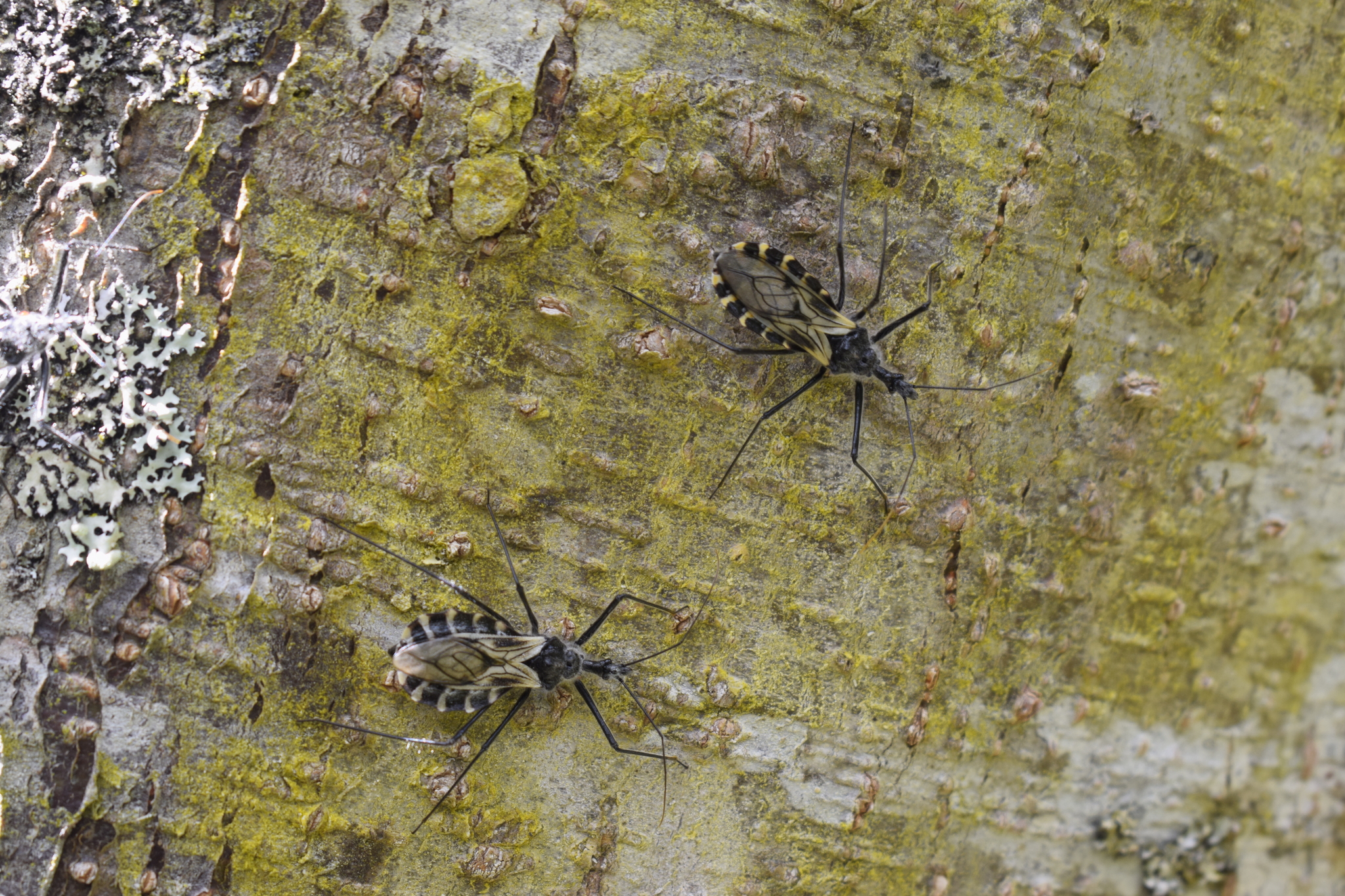
The Reduviidae is a large cosmopolitan family of the suborder Heteroptera of the order Hemiptera (true bugs), commonly known as assassin bugs. Among the Hemiptera and together with the Nabidae almost all species are terrestrial ambush predators; most other predatory Hemiptera are aquatic. The main examples of non-predatory Reduviidae are some blood-sucking ectoparasites in the subfamily Triatominae, with a few species from South America noted for their ability to transmit Chagas disease. Though spectacular exceptions are known, most members of the family are fairly easily recognizable: they have a relatively narrow neck, sturdy build, and formidable curved proboscis (sometimes called a rostrum). Large specimens should be handled with caution, if at all, because they sometimes defend themselves with a very painful stab from the proboscis.
Taxonomy
The family members are almost all predatory, except for a few blood-sucking species, some of which are important as disease vectors. About 7000 species have been described, in more than 20 recognized subfamilies, making it one of the largest families in the Hemiptera.
The name Reduviidae is derived from the type genus, Reduvius. That name, in turn, comes from the Latin reduvia, meaning "hangnail" or "remnant". Possibly this name was inspired by the lateral flanges on the abdomen of many species.
While members of most subfamilies have no common names other than assassin bugs, some subfamilies have their own common names such as:
Ambush bugs – subfamily Phymatinae
Thread-legged bugs – subfamily Emesinae, including the genus Emesaya
Kissing bugs (or cone-headed bugs) – subfamily Triatominae, unusual in that most species are blood-suckers and several are important disease vectors
Wheel bugs – genus Arilus, including the common North American species Arilus cristatus
Grass assassin...