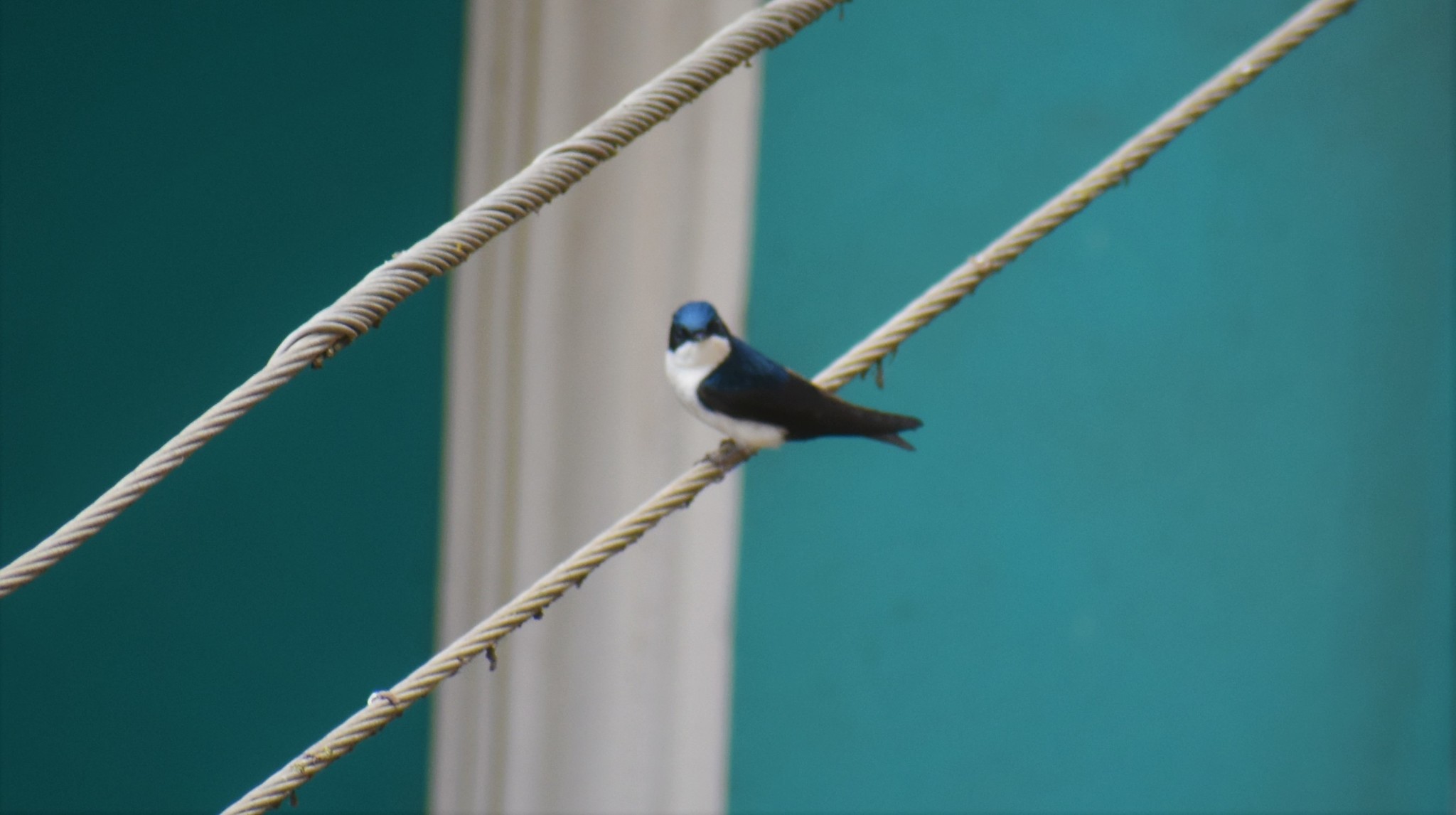
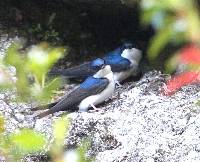
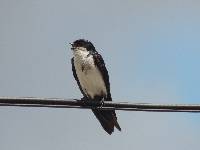
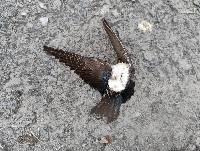
The blue-and-white swallow (Pygochelidon cyanoleuca) is a passerine bird that breeds from Nicaragua south throughout South America, except in the deserts and the Amazon Basin. The southern race is migratory, wintering as far north as Trinidad, where it is a regular visitor. The nominate northern race may have bred on that island.
Taxonomy
The blue-and-white swallow was first formally described as Hirundo cyanoleuca by the French ornithologist Louis Pierre Vieillot in 1817, based on a specimen he believed to be from Paraguay. The scientific name has the same meaning as the English common name.
This species was formerly placed in the genus Notiochelidon. It was moved to the resurrected genus Pygochelidon based on a phylogenetic study published in 2005.
Three subspecies are recognised:
P. c. cyanoleuca (Vieillot, 1817) – Costa Rica through northern, central South America
P. c. peruviana Chapman, 1922 – western Peru
P. c. patagonica (d'Orbigny & Lafresnaye, 1837) – southern South America
Description
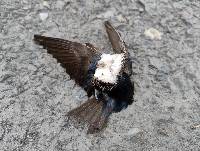
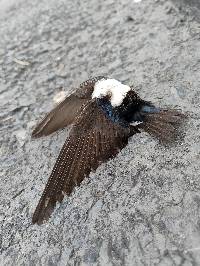
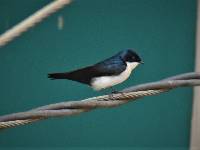
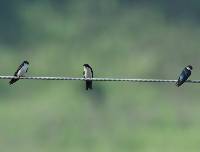
The adult blue-and-white swallow averages 11–12 cm (4.3–4.7 in) long and weighs about 10 g (0.35 oz). It has dark blue upperparts and white underparts, and its underwings and the undersurface of its short forked tail are blackish. The juvenile is brown above, buff-tinted below, and has a less forked tail. The call is a buzzing dzzzhreeee.
There are three subspecies. The nominate N. c. cyanoleuca occurs from Nicaragua and Trinidad south to northwestern Argentina, Paraguay and Uruguay. The migratory southern race N. c. patagonica is larger, 13.5 cm (5.3 in), has paler underwings, and white basal undertail coverts. N. c. peruviana is restricted to coastal Peru up to 2,500 m (8,200 ft) altitude. It is smaller than patagonica, has less white in the undertail, darker underwings and duskier flanks.
Distribution and habitat
A blue-and-white swallow in an urban area in Brazil
This is a swallow of open areas including villages and towns,...