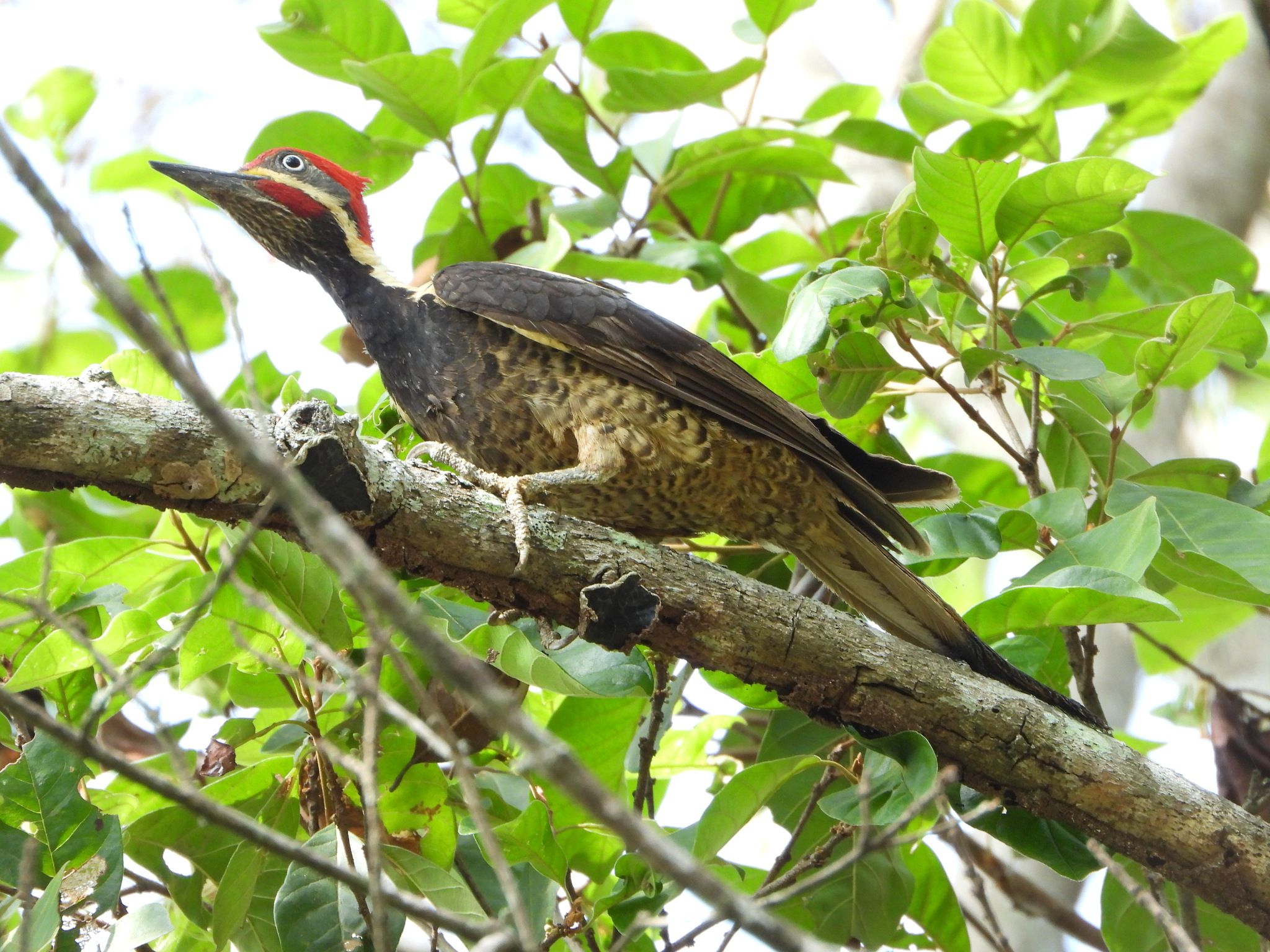
The lineated woodpecker (Dryocopus lineatus) is a very large woodpecker which is a resident breeding bird from southern Mexico to northern Argentina and Trinidad in the Caribbean.
Taxonomy
In 1760 the French zoologist Mathurin Jacques Brisson included a description of the lineated woodpecker in his Ornithologie based on a specimen collected in Cayenne, French Guiana. He used the French name Le pic noir hupé de Cayenne and the Latin name Picus niger cayanensis cristatus. Although Brisson coined Latin names, these do not conform to the binomial system and are not recognised by the International Commission on Zoological Nomenclature. When in 1766 the Swedish naturalist Carl Linnaeus updated his Systema Naturae for the 12th edition, he added 240 species that had been previously described by Brisson. One of these was the lineated woodpecker. Linnaeus included a terse description, coined the binomial name Picus lineatus, and cited Brisson's work. The specific name lineatus is Latin and means "lined" or "marked with lines". The lineated woodpecker is now one of six species that the International Ornithological Committee (IOC) and the Clements taxonomy place in the genus Dryocopus. The North American Classification Committee of the American Ornithological Society concurs for the lineated and pileated woodpeckers, the only two of the six that occur in Central and North America. However, BirdLife International's Handbook of the Birds of the World (HBW) places the pileated and several others in the genus Hylatomus. Genus Dryocopus was introduced by the German naturalist Friedrich Boie in 1826.
The IOC and Clements recognize these five subspecies:
D. l. scapularis – (Vigors, 1829): found in western Mexico (Sonora south to Guerrero). The white stripe on the sides of the face is reduced or lacking; also smaller than similis and nominate lineatus. Bill pale, pale horn, dull white, or bluish-white.
D. l. similis – (Lesson, 1847): found in eastern and southern Mexico...