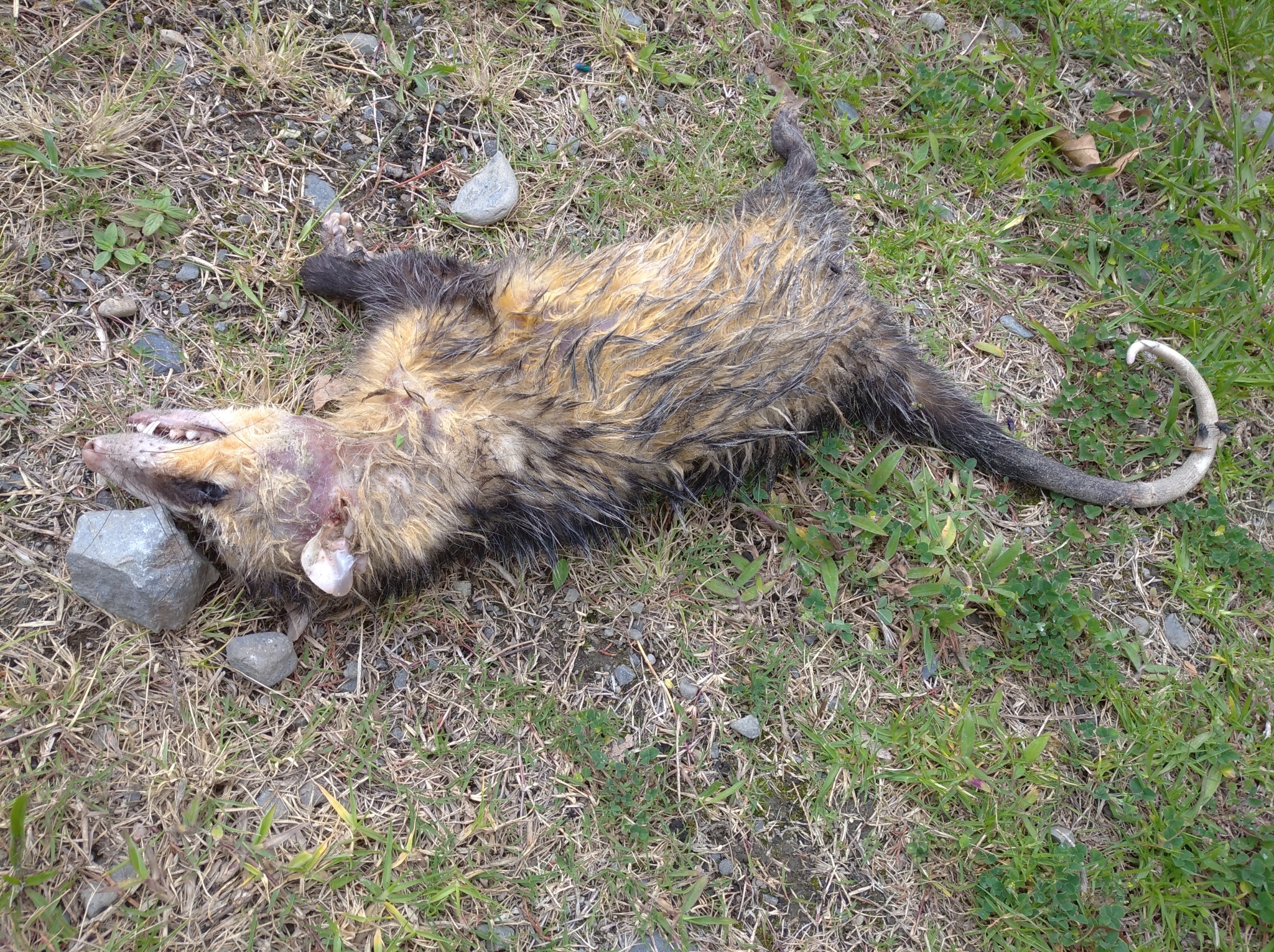
Didelphis is a genus of New World marsupials. The six species in the genus Didelphis, commonly known as Large American opossums, are members of the opossum order, Didelphimorphia.
The genus Didelphis is composed of cat-sized omnivorous species, which can be recognized by their prehensile tails and their tendency to feign death when cornered. The largest species, the Virginia opossum (Didelphis virginiana), is the only marsupial to be found north of Mexico.
The Virginia opossum has opposable toes on their two back feet.
One of the synapomorphies of this genus is the hypertrophied spinous processes of the cervical vertebrae, which also interlock. As a result, this prevents any movement of the neck. The purpose of this is not yet fully understood.
Human interaction
Due to frequent interaction between human populations, Didelphis have potential risks and benefits. Disease is commonly carried amongst the species which poses threats to humans, pets, and livestock who come in contact with didelphis. A study argues otherwise however as in various regions of Brazil Didelphis marsupialis is commonly consumed for protein and its medicinal benefits used to treat disease.
Phylogeny
Cladogram of living large American opossums, the genus Didelphis:
body.skin-vector-2022
D. virginiana
D. aurita
D. marsupialis
D. albiventris
D. imperfecta
D. pernigra
Skeleton of Didelphis sp., 3D model
Image
Scientific name
Distribution
Didelphis albiventris
Argentina, Bolivia, Brazil, Paraguay, and Uruguay
Didelphis aurita
Argentina, Brazil and Paraguay.
Didelphis imperfecta
Brazil, Suriname, French Guiana and Venezuela.
Didelphis marsupialis
northeast of Mexico to Bolivia to the central coast of Peru, including Trinidad and Tobago
Didelphis pernigra
Venezuela to Bolivia
Didelphis virginiana
Central America and North America from...