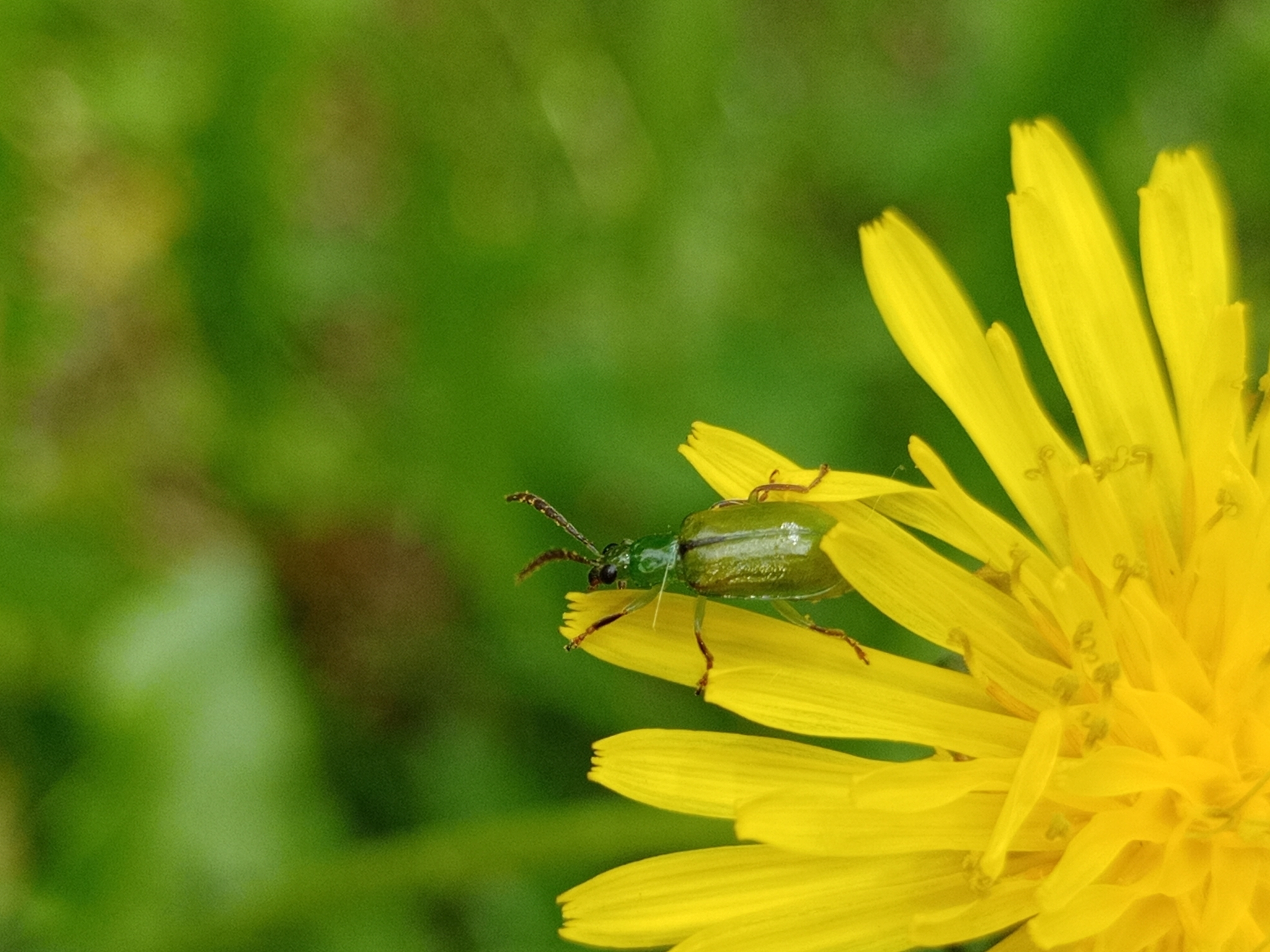
Diabrotica is a large, widespread genus of beetles in the family Chrysomelidae. Members of this genus include several destructive agricultural pest species, sometimes referred to as corn rootworms.
There are an estimated 400 species grouped into the genus Diabrotica. Within Diabrotica there are 3 series: fucata, virgifera, and signifera groups. The fucata series contains the majority of Diabrotica diversity with 354 species. Fucata are characterized as multivoltine, producing two broods of offspring per year. The virgifera series comprises 24 species, and the signifera series contains 11. Additionally, virgifera and signifera are characterized as univoltine, and will only brood one set of offspring annually.
There is very limited information on most species of Diabrotica. Majority of the research conducted on the Diabrotica genus focuses on investigating species of consequential economic importance, such as D. balteata, D. barberi, D. undecimpunctata howardi, D. virgifera, D. speciosa. Multiple Diabrotica species are considered major agricultural pests, therefore the control and management of populations is of significant importance to farm management strategies.
Taxonomy and evolutionary history
The Diabrotica genus arose in the Cretaceous period and began to diversify and speciate ~60 million years ago, which culminated ~30-40 million years ago. Contrary to previous suggestions, Diabrotica speciation was not linked to the onset of corn and other crop cultivation. Gene sequencing has led to a phylogenetic reconstruction of the Diabrotica genus that indicates monophagy is the ancestral trait. The genus began to diversify when certain lineages expanded their diets to include a multitude of different types of plants, leading to a polyphagous trait. However, subsequent reversals back to monophagy or oligophagy have occurred in some evolutionary branches.
The diversification and evolution of Diabrotica species is closely linked to their relationship with wild plant species in the family...