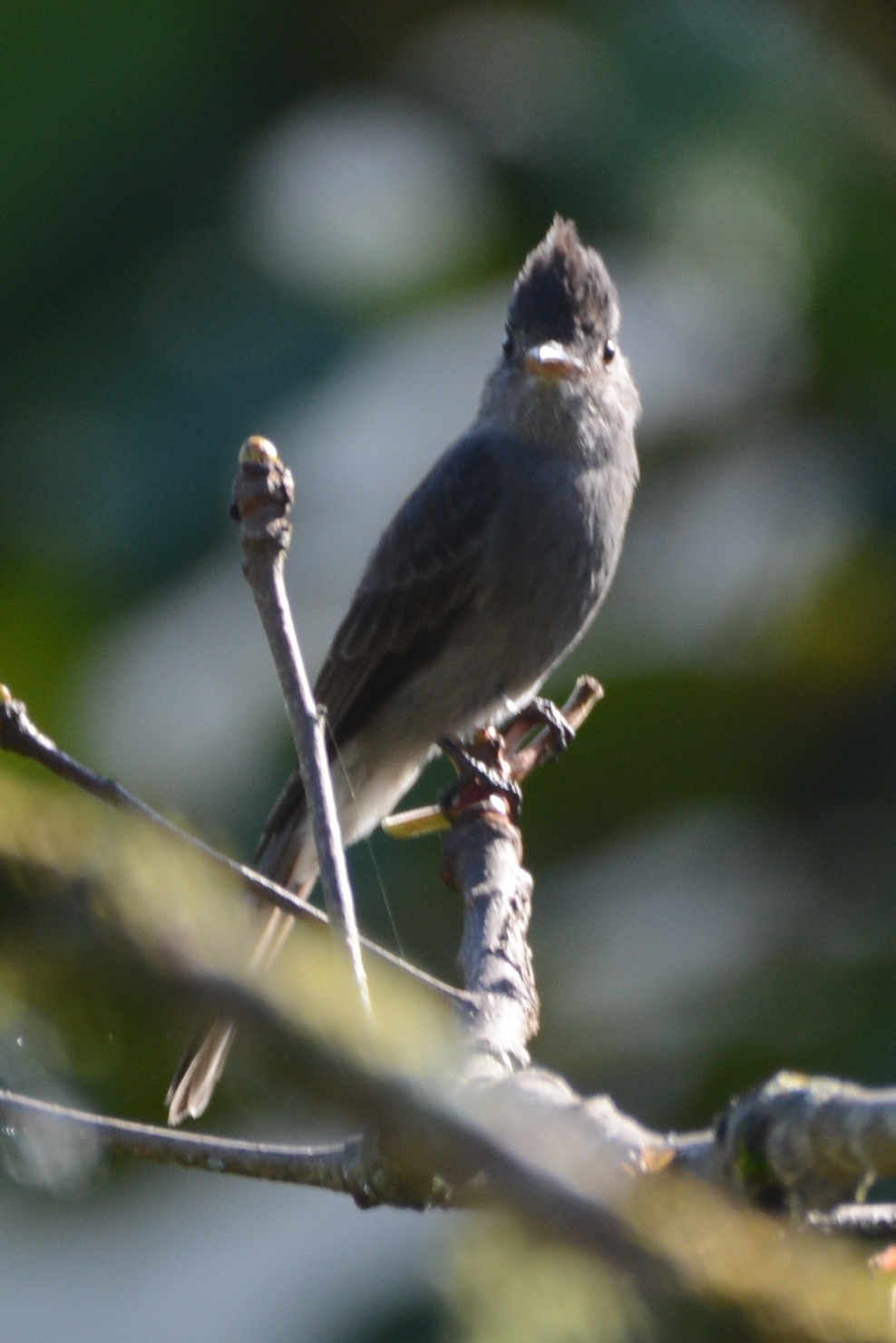
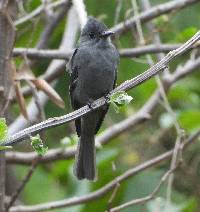
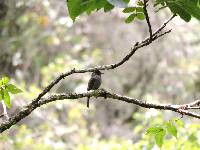
The smoke-colored pewee (Contopus fumigatus) is a species of bird in the family Tyrannidae. The species is characterized by a uniform dusky-grey plumage.
Smoke-colored pewees are found in Argentina, Bolivia, Brazil, Colombia, Ecuador, Guyana, Peru, and Venezuela. Their natural habitats are subtropical or tropical dry forests, subtropical or tropical moist montane forests, and heavily degraded former forests.
Taxonomy and systematics
The smoke-colored pewee belongs to the family Tyrannidae, known as the tyrant flycatchers. The Tyrannidae are considered to be the largest family of birds on earth, containing over 400 species. The group shows large variation in form and plumage and can be found in every country in the Americas.
The species was first formally described by the French naturalists Alcide d'Orbigny and Frédéric de Lafresnaye in 1837, based on a specimen found in the Bolivian Yungas. The generic name Contopus derives from the Ancient Greek kontos (pole) and pous (foot). The specific name fumigatus comes from the Latin fumus (smoke).
Six subspecies are recognized:
C. f. ardosiacus (Lafresnaye, 1844) - Colombia and W Venezuela to E Ecuador and NE Peru
C. f. cineraceus (Lafresnaye, 1848) - Subtropical N Venezuela (Yaracuy to Miranda)
C. f. duidae (Chapman, 1929) - Tepuis of S Venezuela (s Bolívar and Amazonas), adj. Guyana
C. f. zarumae (Chapman, 1924) - SW Colombia (Nariño), W Ecuador, and NW Peru (south to southwestern Cajamarca)
C. f. fumigatus - the nominate subspecies (d'Orbigny & Lafresnaye, 1837) - SE Peru (Puno) and W Bolivia (La Paz and Cochabamba)
C. f. brachyrhynchus (Cabanis, 1883) SE Peru (Puno) and W Bolivia (La Paz and Cochabamba)
Description
The smoke-colored pewee is a grey bird with a slight crest on its head. Their beaks are orange with a black culmen. Mature birds are 16–17 cm in size and 18-20g in weight. This species displays no sexual dimorphism, meaning both sexes share the same plumage. Their feet are anisodactyl, therefore three...