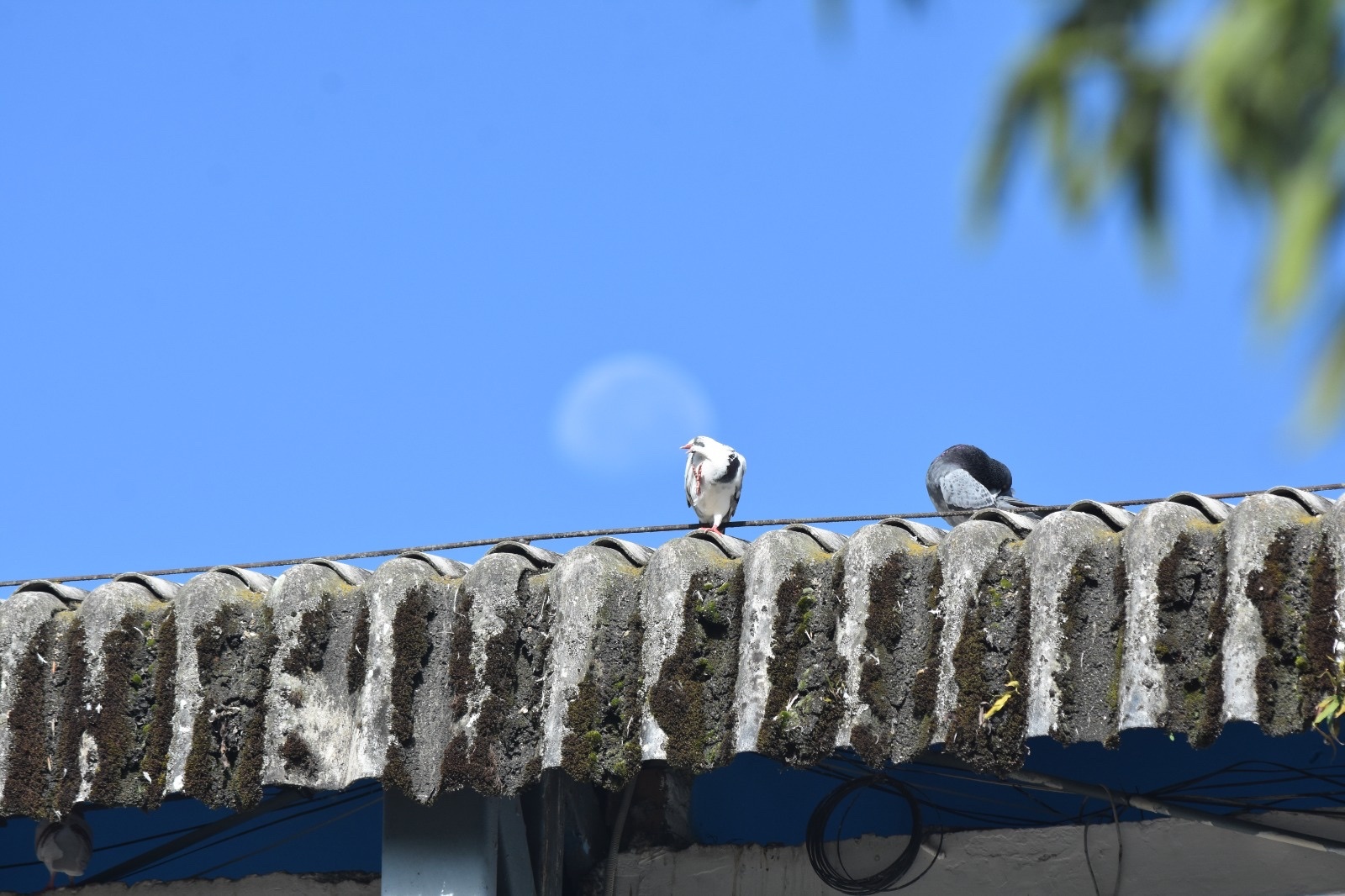
Columbidae is a bird family consisting of doves and pigeons. It is the only family in the order Columbiformes. These are stout-bodied birds with small heads, relatively short necks and slender bills that in some species feature fleshy ceres. They feed largely on plant matter, feeding on seeds (granivory), fruit (frugivory), and foliage (folivory).
In colloquial English, the smaller species tend to be called "doves", and the larger ones "pigeons", although the distinction is not consistent, and there is no scientific separation between them. Historically, the common names for these birds involve a great deal of variation. The bird most commonly referred to as "pigeon" is the domestic pigeon, descendant of the wild rock dove, which is a common inhabitant of cities as the feral pigeon.
Columbidae contains 52 genera divided into 353 species. The family occurs worldwide, often in close proximity to humans, but the greatest diversity is in the Indomalayan and Australasian realms. 118 species (34%) are at risk, and 13 are extinct, with the most famous examples being the dodo, a large, flightless, island bird, and the passenger pigeon, that once flocked in the billions.
Etymology
Pigeon is a French word that derives from the Latin pīpiō, for a 'peeping' chick, while dove, shared with Old Norse dūfa and Gothic dubo, is from a Proto-Germanic word imitative of the cooing calls of woodpigeon and stock dove. The English dialectal word culver appears to derive from Latin columba. A group of doves has sometimes been called a "dule", taken from the French word deuil ('mourning').
Origin and evolution
Columbiformes is one of the most diverse non-passerine clades of neoavians, and its origins are in the Cretaceous and the result of a rapid diversification at the end of the K–Pg boundary. Whole genome analyses have found Columbiformes is the sister clade to the clade Pteroclimesites a clade consisting the orders Pterocliformes (sandgrouses) and Mesitornithiformes (mesites). The...