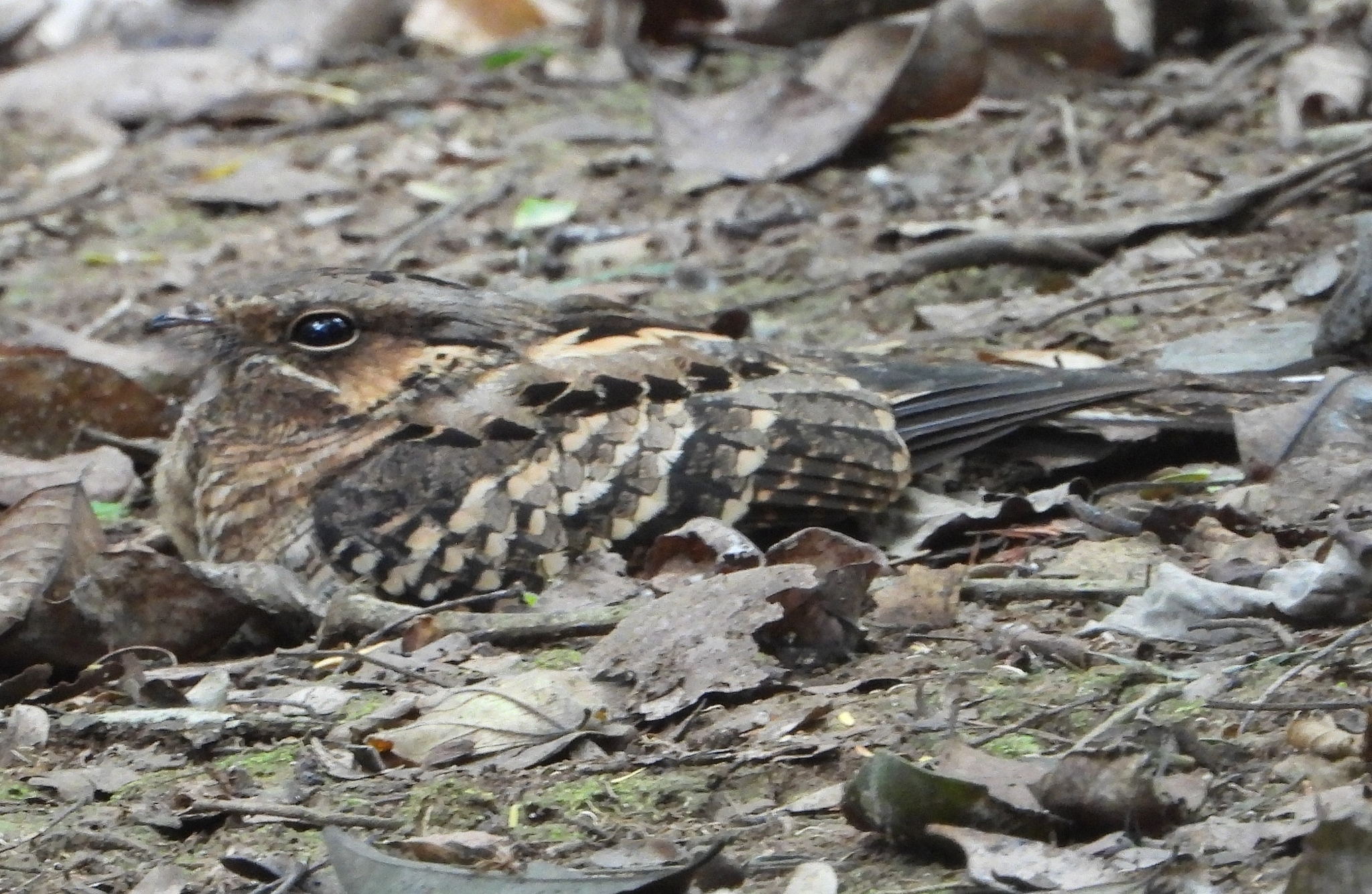
Nightjars are medium-sized nocturnal or crepuscular birds in the family Caprimulgidae and order Caprimulgiformes, characterised by long wings, short legs, and very short bills. Some New World species are called nighthawks. The English word nightjar originally referred to the European nightjar.
Nightjars have a wide distribution, being found on all continents apart from Antarctica, and on certain island groups such as the Seychelles and New Caledonia. They can be found in a variety of habitats, most commonly the open country with some vegetation. They usually nest on the ground, with a habit of resting and roosting on roads.
Nightjars have similar characteristics, including small feet, of little use for walking, and long, pointed wings. Typical nightjars have rictal bristles, longer bills, and softer plumage. The colour of their plumage and their unusual perching habits help conceal them during the day, but they often possess contrasting pale patches or spots that likely serve in intraspecific communication.
Systematics
Previously, all members of the orders Apodiformes, Aegotheliformes, Nyctibiiformes, Podargiformes, and Steatornithiformes were lumped alongside nightjars in the Caprimulgiformes. In 2021, the International Ornithological Congress redefined the Caprimulgiformes as only applying to nightjars, with potoos, frogmouths, oilbirds, and owlet-nightjars all being reclassified into their own orders. See Strisores for more info about the disputes over the taxonomy of Caprimulgiformes. A phylogenetic analysis found that the extinct family Archaeotrogonidae, known from the Eocene and Oligocene of Europe, are the closest known relatives of nightjars.
Traditionally, nightjars have been divided into two subfamilies: the Caprimulginae, or typical nightjars and the Chordeilinae. The Chordeilinae included species with short bills and lack of elongated rictal bristles in the genera Nyctiprogne, Lurocalis and Chordeiles. Molecular phylogenetic studies have shown that the...