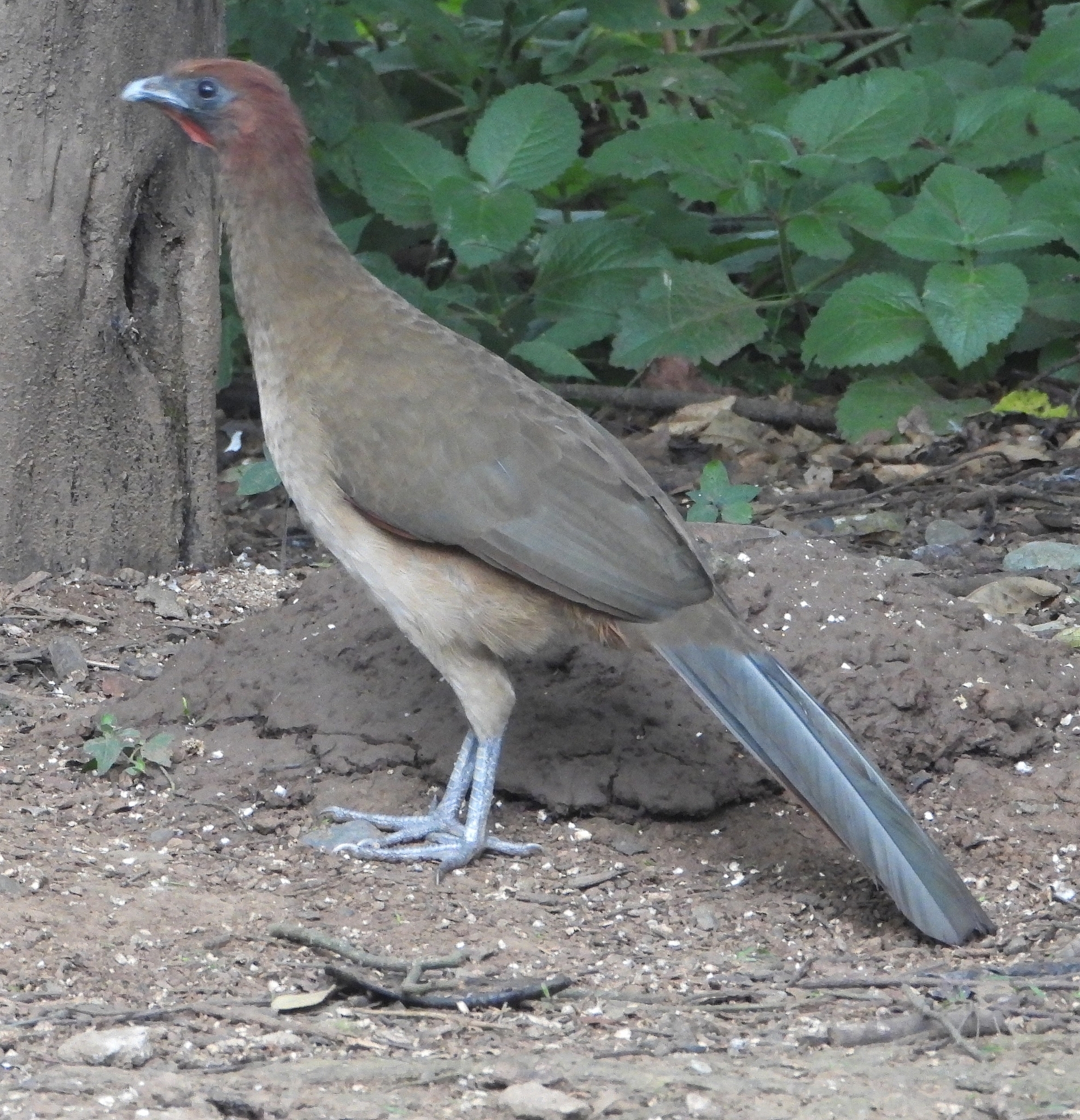
The chachalacas, guans, and curassows are birds in the family Cracidae. These are species of tropical and subtropical Central and South America. The range of one species, the plain chachalaca, just reaches southernmost parts of Texas in the United States. Two species, the Trinidad piping guan and the rufous-vented chachalaca occur on the islands of Trinidad and Tobago respectively.
Systematics and evolution
The family Cracidae was introduced (as Craxia) by the French polymath Constantine Samuel Rafinesque in 1815. The Cracidae are an ancient group that were thought to be related to the Australasian mound-builders of family Megapodiidae. The two families were sometimes placed in a distinct order, Craciformes, as in Munroe and Sibley's 1993 World Checklist of Birds. However, the group is not monophyletic and more recent phylogenetic studies have found Megapodiidae and Cracidae to be successive early branching lineages of Galliformes.
Cladogram based on the study by De Chen and collaborators published in 2021. The numbers of species are from the list maintained by Frank Gill, Pamela Rasmussen and David Donsker on behalf of the International Ornithologists' Union.