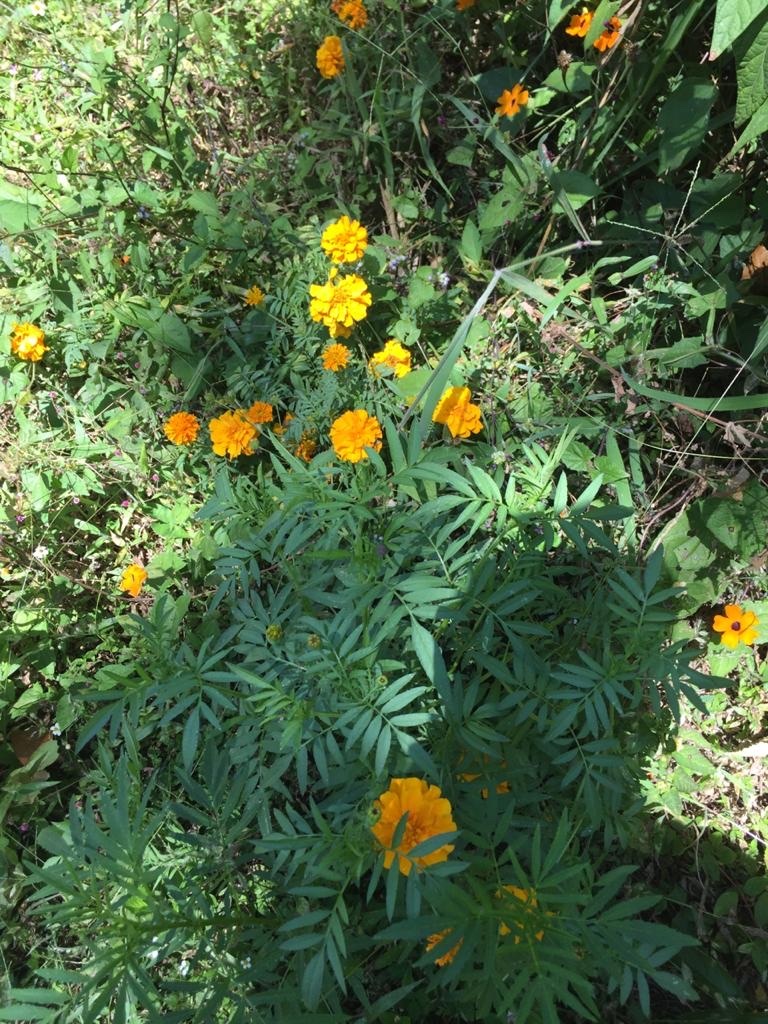
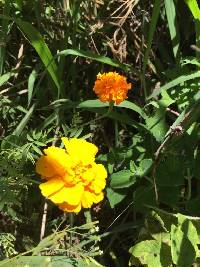
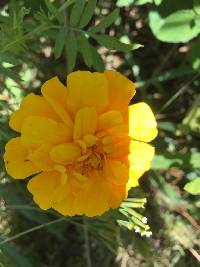
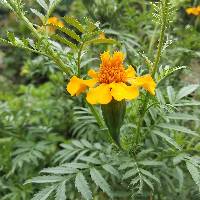
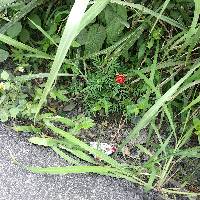
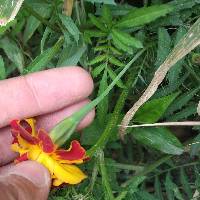
Tagetes erecta, the Aztec marigold, Mexican marigold, big marigold, cempaxochitl or cempasúchil, is a species of flowering plant in the genus Tagetes native to Mexico and Central America. Despite being native to the Americas, it is often called the African marigold. In Mexico, this plant is found in the wild in the states of México, Michoacán, Puebla, Veracruz and Guerrero.
This plant reaches heights of between 20 and 90 cm (7.9 and 35.4 in). The Aztecs gathered the wild plant as well as cultivating it for medicinal, ceremonial and decorative purposes; it was introduced to Europe after the Spanish conquest of the Aztec Empire and colonization and became widely cultivated commercially with many cultivars in use as ornamental plants, and for the cut-flower trade.
Some authorities regard Tagetes patula (the French marigold) as a synonym of Tagetes erecta.
Names
The Spanish name cempazúchitl (or cempasúchil) comes from the Nahuatl cempohualxochitl ("twenty flower") – 20 (cempohualli) is the base of the Aztec vigesimal counting system, consequently a symbol of completion including in life reflected in measurements like their calendrical daycount. The English name marigold comes from their petals' arrangement resembling Calendula officinalis, also called "Mary's gold" or "marigold".
In Thai, it is called ดาวเรือง daao reuaang meaning "glittering star".
↑
↑ Cite error: The named reference JTCM was invoked but never defined (see the help page).
↑ Perez, Julio (26 October 2023). "Marigolds: Blooms of Cultural Significance". Putnam County. University of Florida Institute of Food and Agricultural Sciences. Retrieved 1 May 2025.
↑ Xu, Li-Wei; Wang, Guo-Ying; Yan-Ping, Shi (May 2011). "Chemical constituents from Tagetes erecta flowers". Chemistry of Natural Compounds. 47 (2): 81–283. doi:10.1007/s10600-011-9905-5. S2CID 38292218.
Description
It is a herbaceous annual or perennial plant whose height ranges from 30...