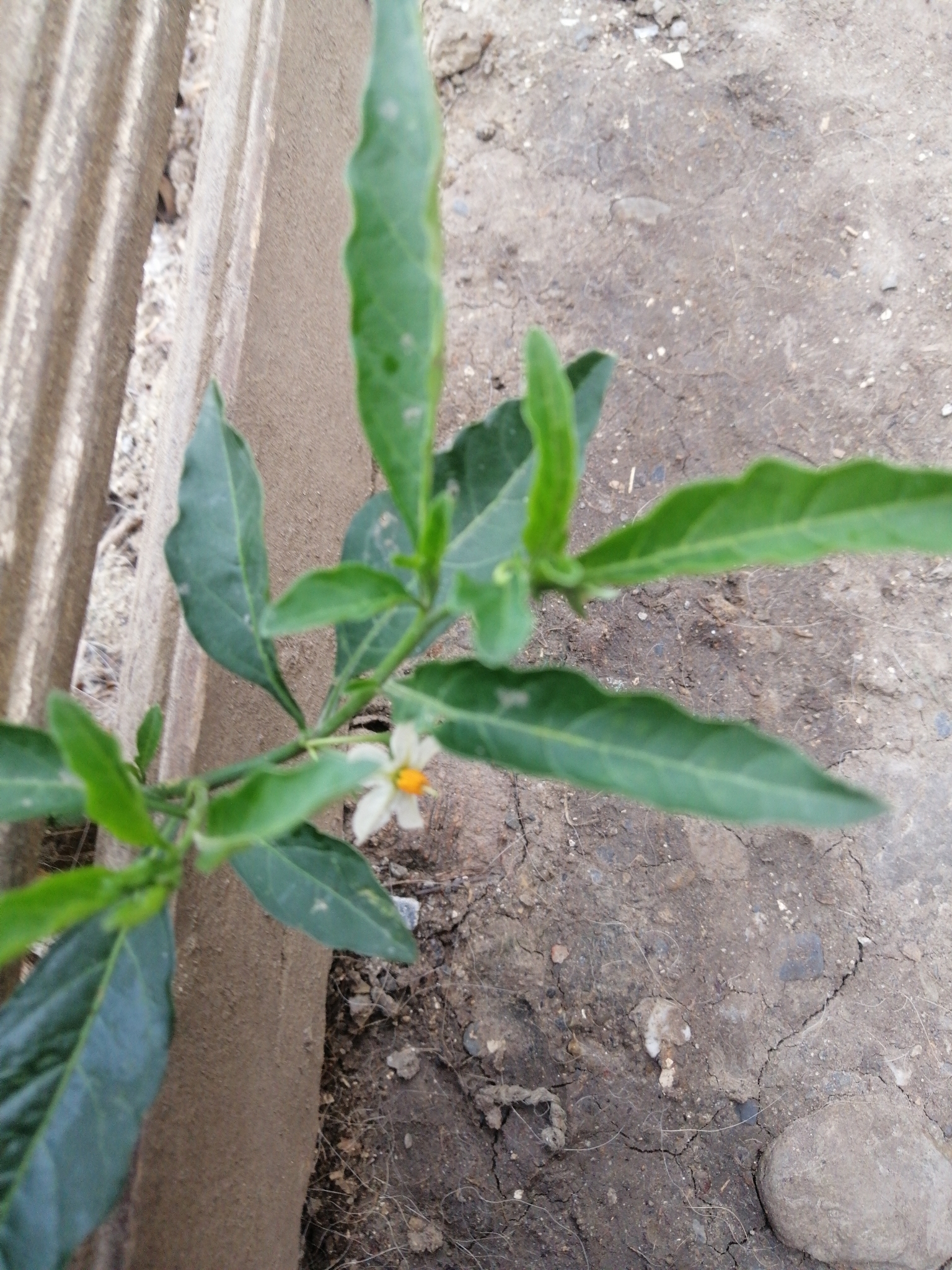
Solanum pseudocapsicum is a nightshade species with mildly poisonous fruit. It is commonly known as the Jerusalem cherry, Madeira winter cherry, xiuhecapatl (in Nahuatl, "windherb"), or ambiguously, "winter cherry". These perennials can be grown decoratively as house plants, but in some areas of South Africa, India, Australia and New Zealand it is regarded as a weed.
Overview
The plant is perennial in zones up to USDA 8. Native to Peru and Ecuador, they can survive frosts and cold weather. They generally live up to 10 years, producing fruit usually in their second or third year, and every year after that. The poisonous fruit is extremely similar to cherry tomatoes in taste and texture, and are therefore easily confused with them.
The Jerusalem cherry's poison is primarily solanocapsine, which is similar to other alkaloids found in their genus, such as solanine. Although the toxin is poisonous, it is generally not life-threatening to humans. It may cause gastric problems, including vomiting and gastroenteritis as referenced in the obsolete scientific name S. ipecacuanha (roughly "ipecac nightshade").
Jerusalem cherries are possibly poisonous to cats and some birds. Though Jerusalem cherry is distributed by certain birds in the wild – both where native and where introduced, e.g., in Australia by the pied currawong (Strepera graculina) – most popular pet birds, namely parrots and relatives, are not immune to its poison.
It is identified in the Libellus de Medicinalibus Indorum Herbis as an ingredient which Aztecs had used for a poultice to cure fever applied to the forehead and neck.
Taxonomy
Supposedly, the plant described as Solanum capsicastrum and called false Jerusalem cherry is a closely related but distinct species, and the trade name "winter cherry" is also held to apply to this exclusively. It is said to be recognizable by more mediocre size, and/or a greyish hue to the foliage and/or stems, and/or fruit that have a pronounced yellow hue...