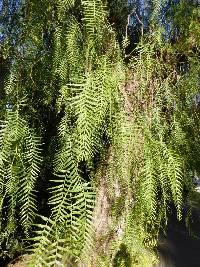
Schinus molle (Peruvian pepper, also known as American pepper, Peruvian peppertree, escobilla, false pepper, rosé pepper, molle del Peru, pepper tree, peppercorn tree, California pepper tree, pirul, Peruvian mastic, anacahuita or aguaribay and pepperina) is an evergreen tree in the cashew family (Anacardiaceae) that grows to 15 m (50 ft). It is native to an area from the Peruvian Andes to southern Brazil. The bright pink fruits of S. molle are often sold as "pink peppercorns", although it is unrelated to black pepper (Piper nigrum). The word molle in Schinus molle comes from mulli, the Quechua word for the tree. The tree is host to the pepper-tree moth, Bombycomorpha bifascia.
Description
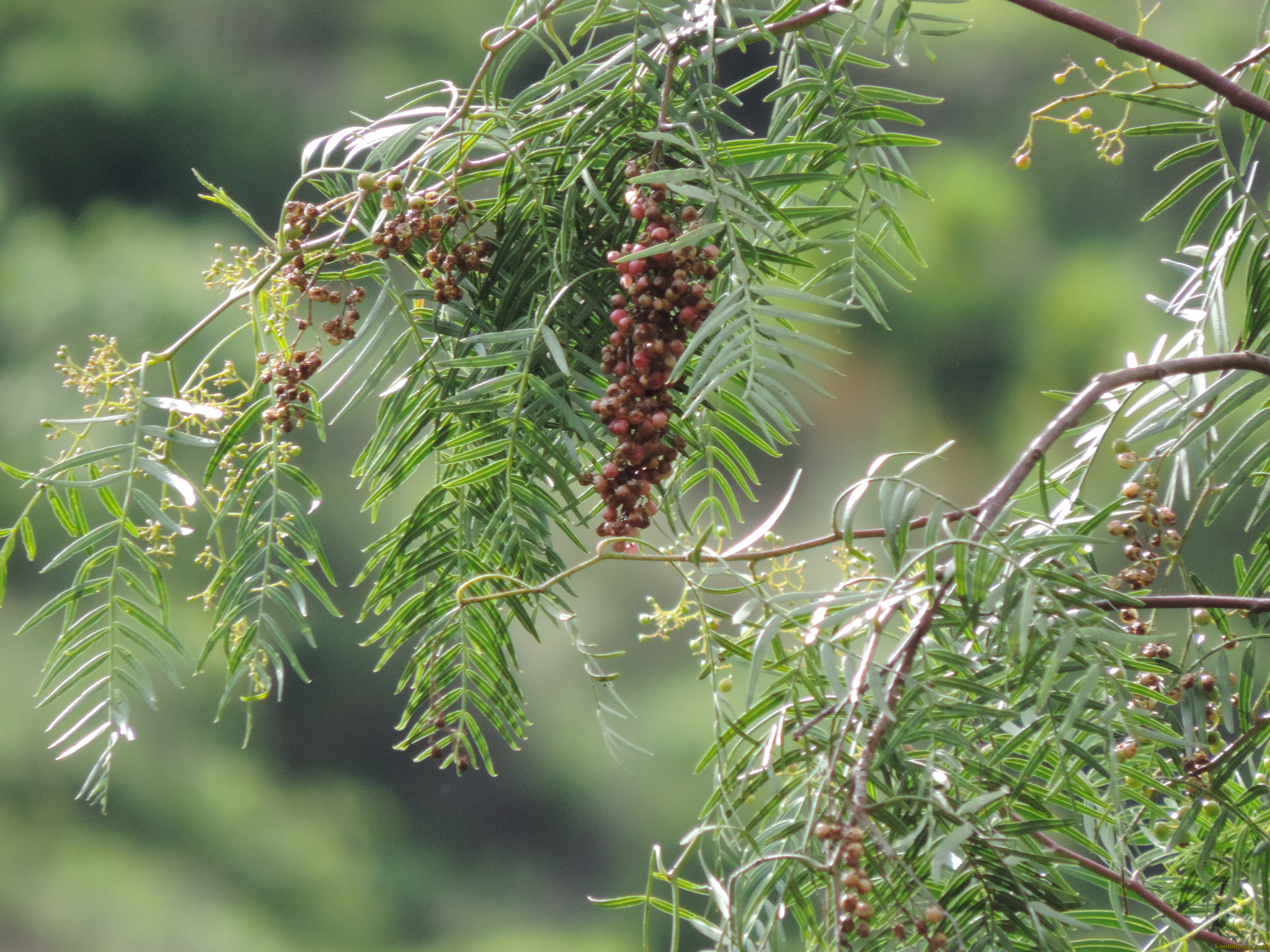
Schinus molle is a quick growing evergreen tree that grows up to 15 m (50 ft) tall and wide. It is the largest of all Schinus species and potentially the longest lived. The upper branches of the tree tend to droop. The tree's pinnately compound leaves measure 8–25 cm long × 4–9 cm wide and are made up of 19–41 alternate leaflets. Male and female flowers occur on separate plants (dioecious). Flowers are small, white and borne profusely in panicles at the ends of the drooping branches. The fruit are 5–7 mm diameter round drupes with woody seeds that turn from green to red, pink or purplish, carried in dense clusters of hundreds of berries that can be present year round. The rough grayish bark is twisted and drips sap. The bark, leaves and berries are aromatic when crushed.
Distribution
Schinus molle is native to the arid zone of northern South America and Peru's Andean deserts, extending to central Argentina and central Chile. It has, however, become widely naturalized around the world. It is known for its strong wood used for saddles, and was one of the Spanish colonies' supply sources for saddles. It has also been used for spice production, but is mainly planted as an ornamental tree.
S. molle is a drought-tolerant, long-lived, hardy evergreen species that has...