Sambucus nigra is a temperate species of tree or shrub in the family Viburnaceae native to the Azores, Europe, and the Middle East. Common names include elder, common elder, black elder, European elder, and also elderberry for the fruit, and elderflower for the flowers. It grows in a variety of conditions including both wet and dry fertile soils, primarily in sunny locations. The plant is widely grown as an ornamental shrub or small tree.
Both the flowers and the berries have a long tradition of culinary use, primarily for cordial and wine. Although the plant is commonly used in dietary supplements and traditional medicine, there is no clinical evidence that it provides any health effect.
Description
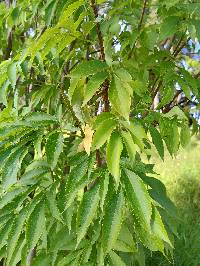
Common elder is a deciduous shrub or small tree often growing to 6–10 metres (20–33 ft) tall; exceptionally, trees can reach 15 m (49 ft) tall. They typically live for up to 60 years, taking 10-20 years to reach maturity, but can exceptionally reach over 200 years. The bark, light yellowish-grey when young, changes to a coarse yellowish-grey outer bark with deep lengthwise furrowing, lenticels prominent. The leaves are arranged in opposite pairs, 10–30 cm (4–12 in) long, pinnate with five to seven (rarely nine) leaflets, the leaflets 5–12 cm (2–5 in) long and 3–5 cm (1.2–2.0 in) broad, with a serrated margin. The young stems are hollow.
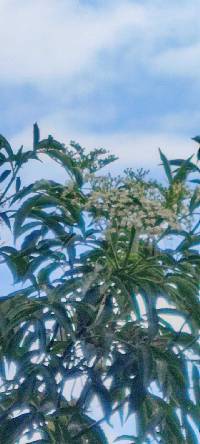
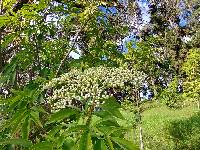
The hermaphroditic flowers have five stamens, which are borne in large, flat corymbs 8–24 cm in diameter in late spring to mid-summer (late May, June, July). The individual flowers are ivory white, 5.5–7.5 millimetres (0.22–0.30 in) in diameter, with five petals, and despite having no nectar, produce a strong scent which attracts pollinating flies, beetles, and bees.
The fruit is a glossy, dark purple to black drupe 5–6 mm diameter containing 3-5 seeds, produced in drooping clusters in late autumn. The dark colour of elderberries results from their...