Salvia () is the largest genus of plants in the sage family Lamiaceae, with just under 1,000 species of shrubs, herbaceous perennials, and annuals. Within the Lamiaceae, Salvia is part of the tribe Mentheae within the subfamily Nepetoideae. One of several genera commonly referred to as sage, it includes two widely used herbs, Salvia officinalis (common sage, or just "sage") and Salvia rosmarinus (rosemary, formerly Rosmarinus officinalis).
The genus is distributed throughout the Old World and the Americas (over 900 total species), with three distinct regions of diversity: Central America and South America (approximately 600 species); Central Asia and the Mediterranean (250 species); Eastern Asia (90 species).
Etymology
Salvia tingitana flower in Behbahan
The name Salvia derives from Latin salvia (sage), from salvus (safe, secure, healthy), an adjective related to salūs (health, well-being, prosperity or salvation), and salvēre (to feel healthy, to heal). Pliny the Elder was the first author known to describe a plant called "Salvia" by the Romans, likely describing the type species for the genus Salvia, Salvia officinalis.
The common modern English name sage derives from Middle English sawge, which was borrowed from Old French sauge, from Latin salvia (the source of the botanical name). When used without modifiers, the name "sage" generally refers to Salvia officinalis ("common sage" or "culinary sage"), although it is used with modifiers to refer to any member of the genus. The ornamental species are commonly referred to by their genus name Salvia.
Description
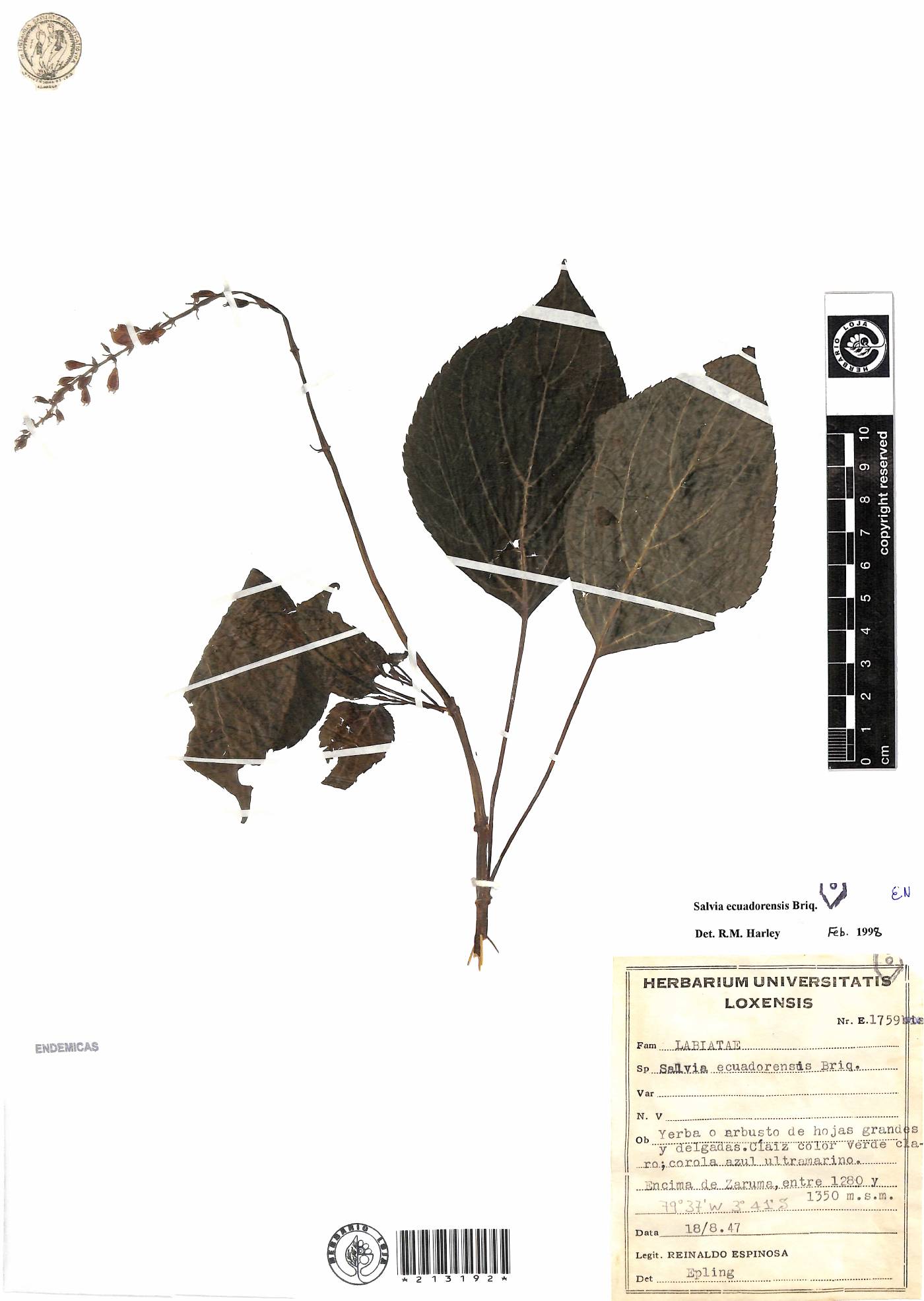
Salvia species include annual, biennial, or perennial herbaceous plants, along with woody subshrubs. The stems are typically angled like other members in Lamiaceae. The leaves are typically entire, but sometimes toothed or pinnately divided. The flowering stems bear small bracts, dissimilar to the basal leaves—in some species the bracts are ornamental and showy.