The docks and sorrels, genus Rumex, are a genus of about 200 species of annual, biennial, and perennial herbs in the buckwheat family, Polygonaceae. Members of this genus are common perennial herbs with a worldwide native distribution in temperate and subtropical climates.
Some are nuisance weeds (and are sometimes called dockweed or dock weed), but some are grown for their edible leaves. Rumex species are used as food plants by the larvae of a number of Lepidoptera species, and are the only host plants of the butterflies Lycaena dispar and Lycaena rubidus.
Etymology
Rumex is from the Latin, meaning to suck, alluding to the practice since Roman times of sucking the leaves to alleviate thirst. The name dock is from the Old English docce, meaning tall weed, and other European languages for bundle or tuft.
Description
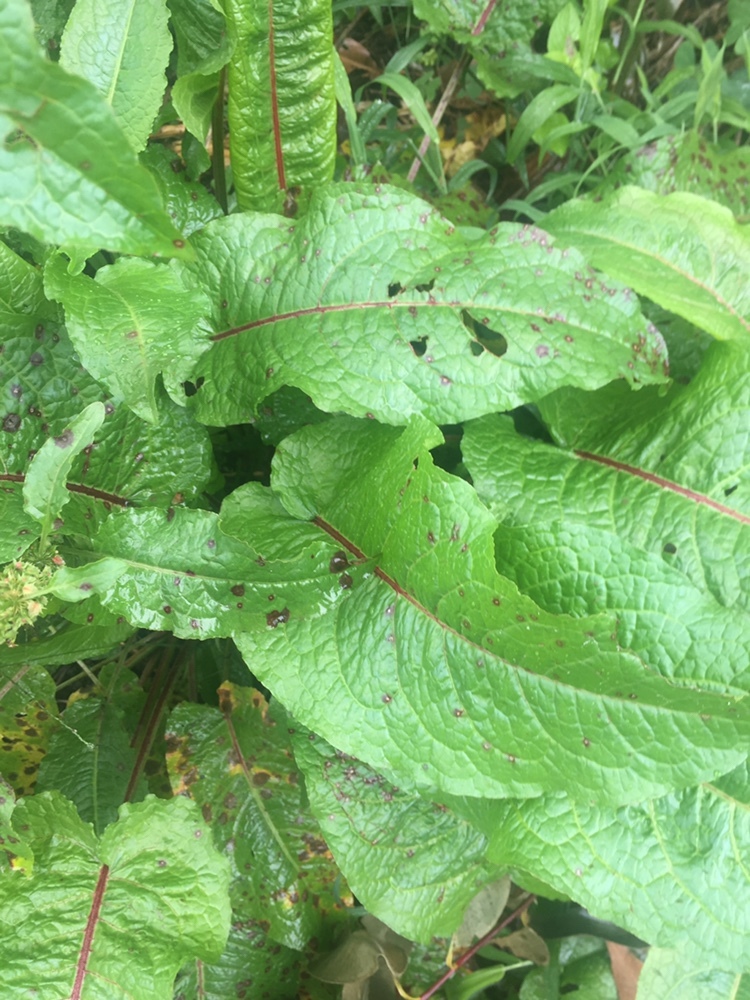
They are erect plants, usually with long taproots. The fleshy to leathery leaves form a basal rosette at the root. The basal leaves may be different from those near the inflorescence. They may or may not have stipules. Minor leaf veins occur. The leaf blade margins are entire or crenate.
The usually inconspicuous flowers are carried above the leaves in clusters. The fertile flowers are mostly hermaphrodites, or they may be functionally male or female. The flowers and seeds grow on long clusters at the top of a stalk emerging from the basal rosette; in many species, the flowers are green, but in some (such as sheep's sorrel, Rumex acetosella) the flowers and their stems may be brick-red. Each seed is a three-sided achene, often with a round tubercle on one or all three sides.
Taxonomy
The genus was first described by Carl Linnaeus in 1753. Within the family Polygonaceae, it is placed in the subfamily Polygonoideae. The genus Emex was separated from Rumex by Francisco Campderá in 1819 on the basis that it was polygamous (i.e. had both bisexual and unisexual flowers on the same plant). However, some species of Rumex subg. Acetosa also have this characteristic, and...