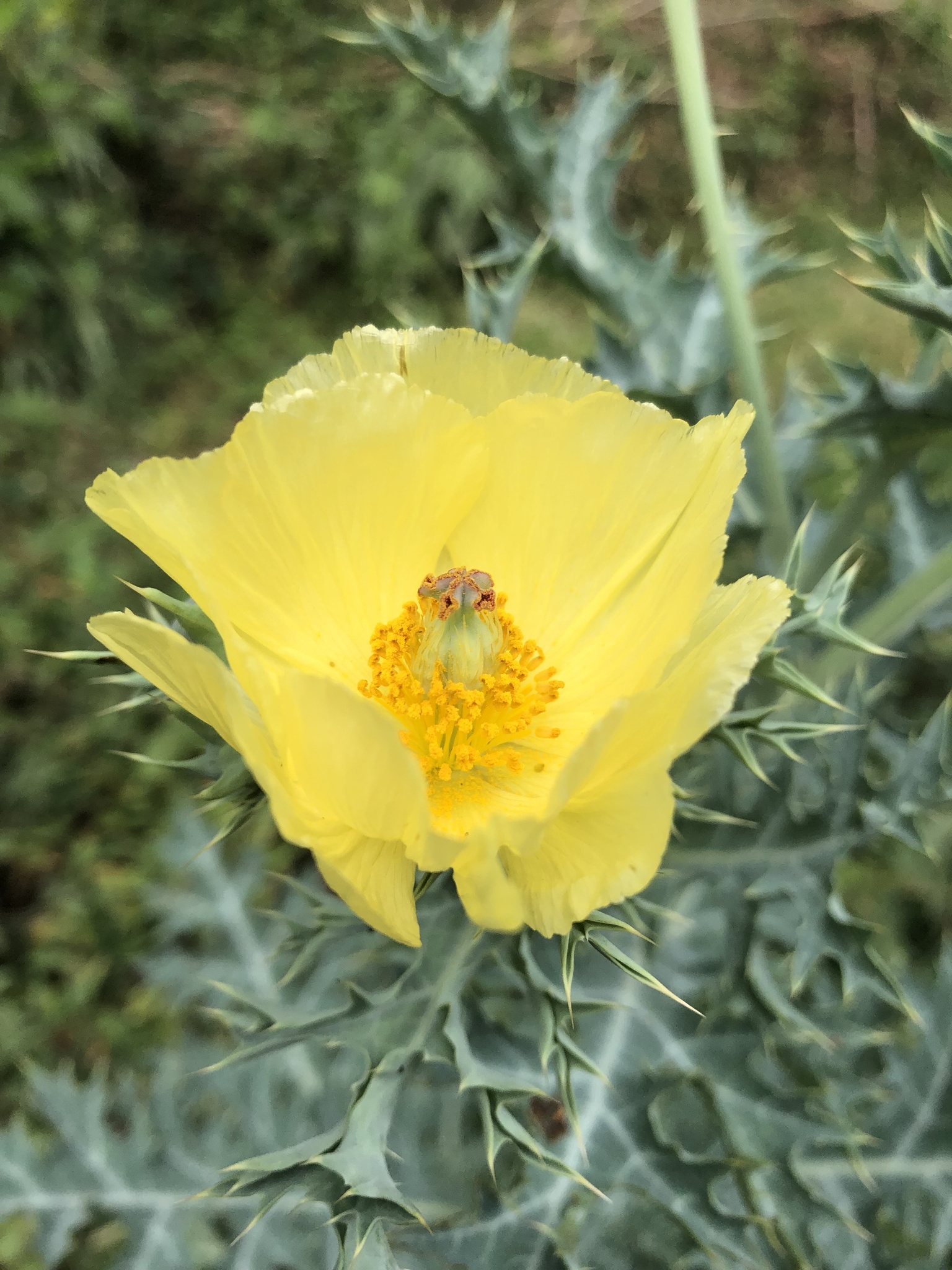
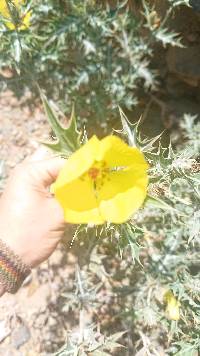
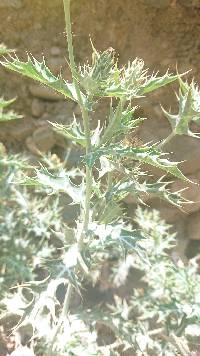
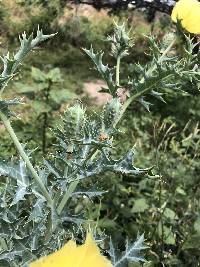
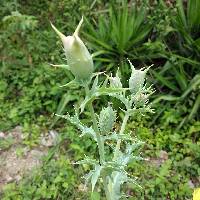
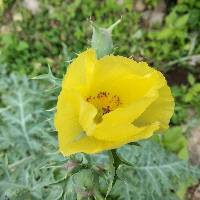
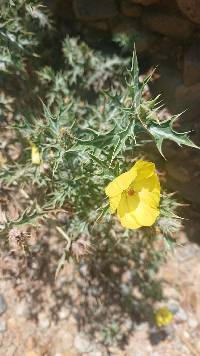
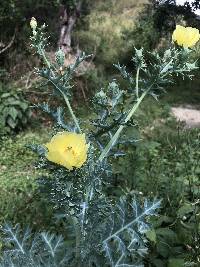
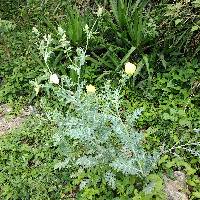
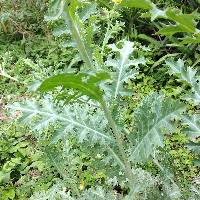
Argemone mexicana, also known by the common names Mexican poppy, Mexican prickly poppy, flowering thistle, cardo, and cardosanto, is a species of poppy found in Mexico and now widely naturalized in many parts of the world. An extremely hardy pioneer plant, it is tolerant of drought and poor soil, often being the only cover on new road cuttings or verges. It has bright yellow latex. It is poisonous to grazing animals, and it is rarely eaten, but it has been used medicinally by many peoples, including those in its native area, as well as the indigenous peoples of the western United States, parts of Mexico, and many parts of India. In India, during the colorful festival Holika Dahan, adults and children worship by offering flowers, and this species is in its maximum flowering phase during March when the Holi festival is celebrated. It is also referred to as "Kanteli Ka Phul" and "Satyanashi" in India.
Chemical constituents
Protopine
Argemone mexicana seeds contain 22–36% of a pale yellow non-edible oil, called argemone oil or katkar oil, which contains the toxic alkaloids sanguinarine and dihydrosanguinarine.
Four quaternary isoquinoline alkaloids, dehydrocorydalmine, jatrorrhizine, columbamine, and oxyberberine, have been isolated from the whole plant of Argemone mexicana. Many other alkaloids such as argemexicaines A and B, argemonine (N meth pavine), Argepavine, O CH3 Argepavine, argemexirine, argenaxine, Argemexicaines A and B (protopine type), coptisine, cryptopine, allocryptopine and chelerythrine have also been found in this plant.
The seed pods secrete a pale yellow latex when cut open. This argemone resin contains berberine and protopine.
pollen grain of 'Mexican prickly poppy'
Toxicity
Argemone Mexicana, Village Bharaj Sangrur
The seeds resemble the seeds of Brassica nigra (mustard). As a result, mustard can be adulterated by argemone seeds, rendering it poisonous. Several significant instances of katkar poisoning have been reported in India, Fiji, South Africa and...