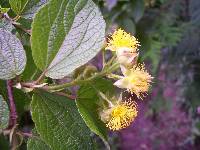
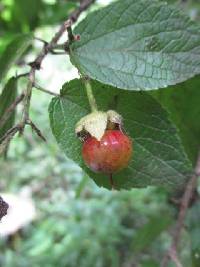
Prockia crucis, commonly known as guasimilla, is a species of flowering plant in the family Salicaceae, distributed across the Americas. As the type species of its genus, it was first named by Carl Linnaeus in 1759, but described by Patrick Browne earlier. The plant is used in medicine, food, and gardening, with a conservation status of least concern on the IUCN Red List.
Description
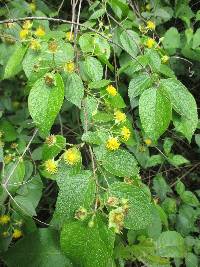
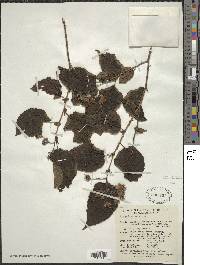
Prockia crucis is a variable shrub or tree usually 1.2–10 m (3 ft 11 in – 32 ft 10 in) tall, occasionally reaching up to 20 m (66 ft). It is characterized by a globose crown supported by a crooked trunk that is up to 25 cm (9.8 in) wide, with grey or brown bark that is either glabrous or puberulous; the wood within is white, coarse, and quite brittle, reportedly having a density of 0.58 g/cm (0.052 oz/in). The leaves are alternate, measuring up to 15 cm (5.9 in) long and 11 cm (4.3 in) wide; the shape is commonly elliptic, lanceolate, or ovate, the apex is acuminate, the base is often rounded or cordate, and the margins are frequently serrate or crenate. The leaf surface is either chartaceous or membranaceous, and the veins come in pairs that form an obscure reticulate pattern; the petiole is short, measuring up to 3 cm (1.2 in) long.
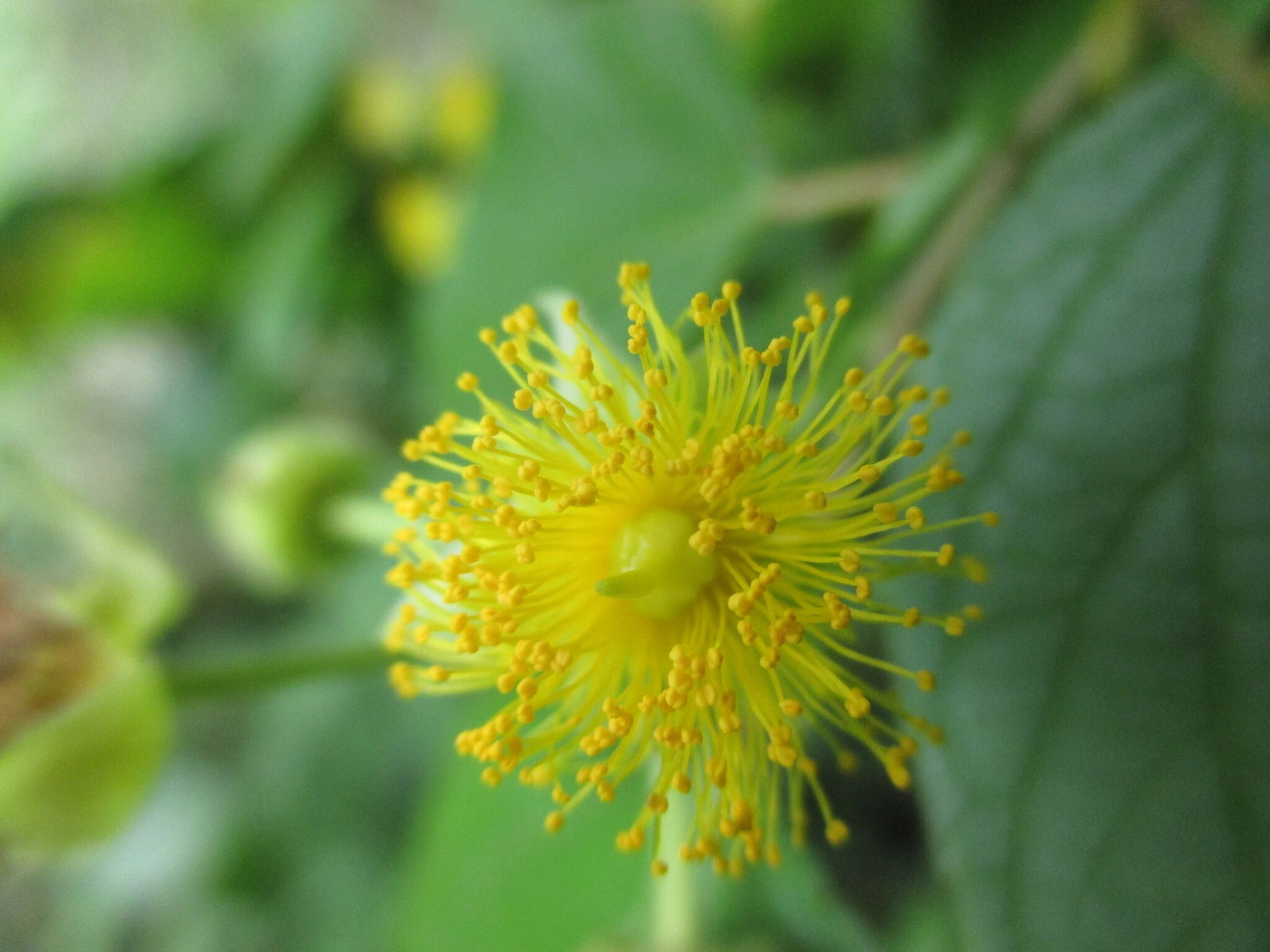
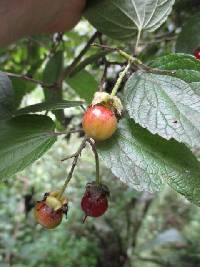
The inflorescences are usually racemose, paniculate, or corymbose, measure up to 4 cm (1.6 in) long and 3 cm (1.2 in) wide, and contain up to 12 hermaphroditic flowers that are green or yellow in color. The stamens are yellow, numerous, and feature filaments that are up to 6 mm (0.24 in) long. The ovary is superior, either globose or ovoid in shape, and may be glabrous or puberulous; it bears a style that measures up to 4 mm (0.16 in) long, tipped by a lobed stigma. The fruit is a globose berry or drupe measuring up to 10 mm (0.39 in) in diameter; they begin green and mature to red, purple, or black, featuring a thin...