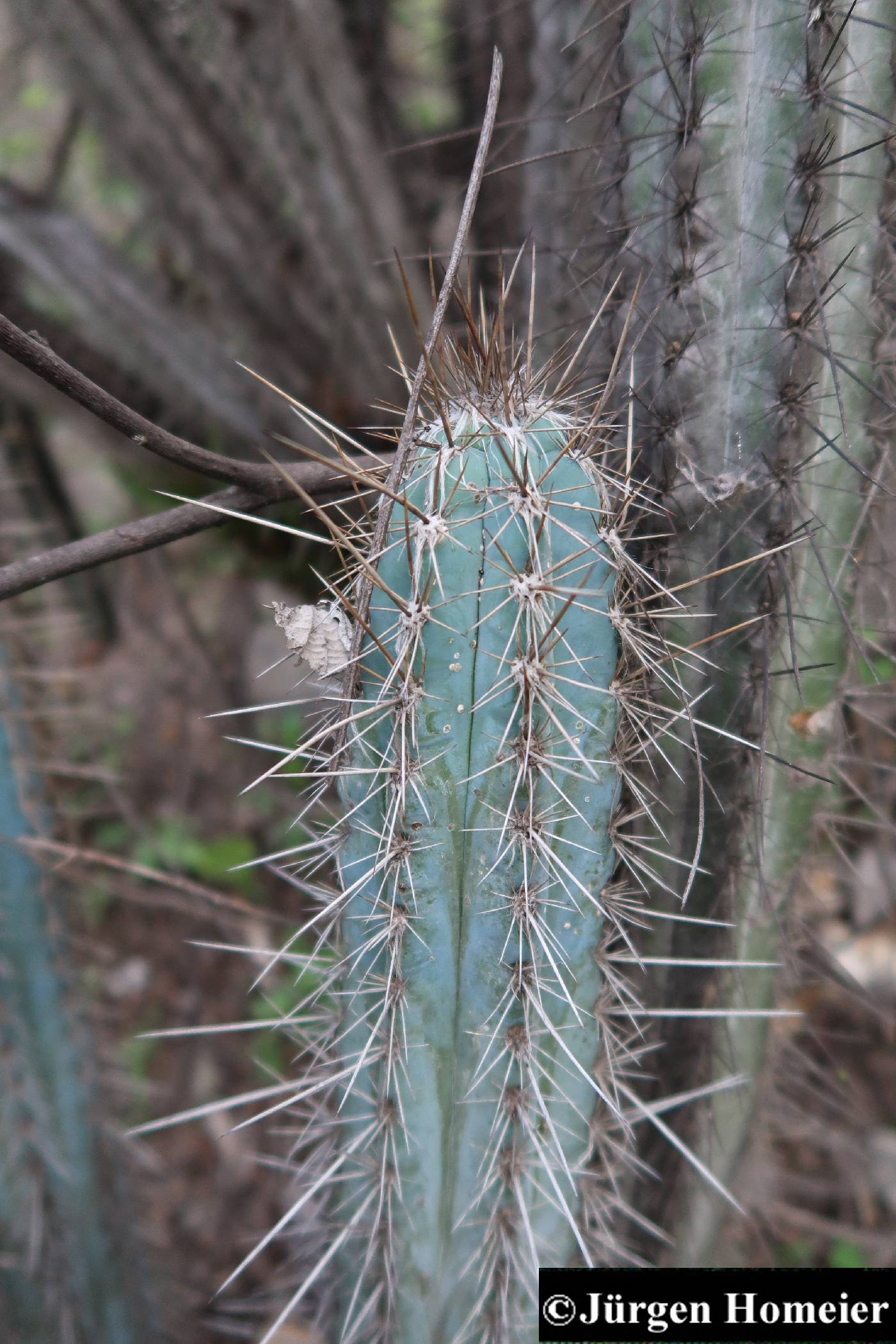
Pilosocereus (from Latin, "hairy cereus") is a genus of cactus native to the Neotropics. Tree cactus is a common name for Pilosocereus species. The genus Pseudopilocereus is a synonym of this genus. For many years, the illegitimate name Pilocereus was used for this genus, although properly a synonym for Cephalocereus. The subdivision of the genus has varied very widely, resulting in very different numbers of species being accepted.
The commonly cultivated Pilosocereus pachycladus (syn. Pilosocereus azureus) is a blue cactus with hairy areoles that emit golden spines.
Description
Species of the genus Pilosocereus are columnar cacti with a shrubby or tree-like habit. Some may be up to 7 m (23 ft) tall. They may be unbranched, or have a dense mass of branches. The stems vary widely in the number of ribs and spines. The areoles may have long or short hairs, sometimes with more silky hairs on flowering areoles than on non-flowering ones. A few species have a pseudocephalium. The flowers usually open at night and may smell strongly of garlic. The fruits have white, red-purple or other-colored pulp when ripe.
Taxonomy
The taxonomic history of the genus name Pilosocereus is somewhat complicated. In 1838, Charles Antoine Lemaire created a section within the genus Cereus, C. sect. Cephalophori, based on Cereus senilis and C. columna-trajani. In the same year, Ludwig Pfeiffer published the genus name Cephalocereus, also based on Cereus senilis. In 1839, Lemaire raised his Cereus sect. Cephalophori to a genus under the name Pilocereus, presumably unaware of Pfeiffer's earlier name. Since both Cephalocereus and Pilocereus are based on the same type (i.e. Cereus senilis), the later of the two names is superfluous, and so must be rejected under the International Code of Nomenclature for algae, fungi, and plants (ICNafp). In 1894, Karl Moritz Schumann decided that Lemaire's Cereus sect. Cephalophori needed to be split into two genera, rather than treated as one...