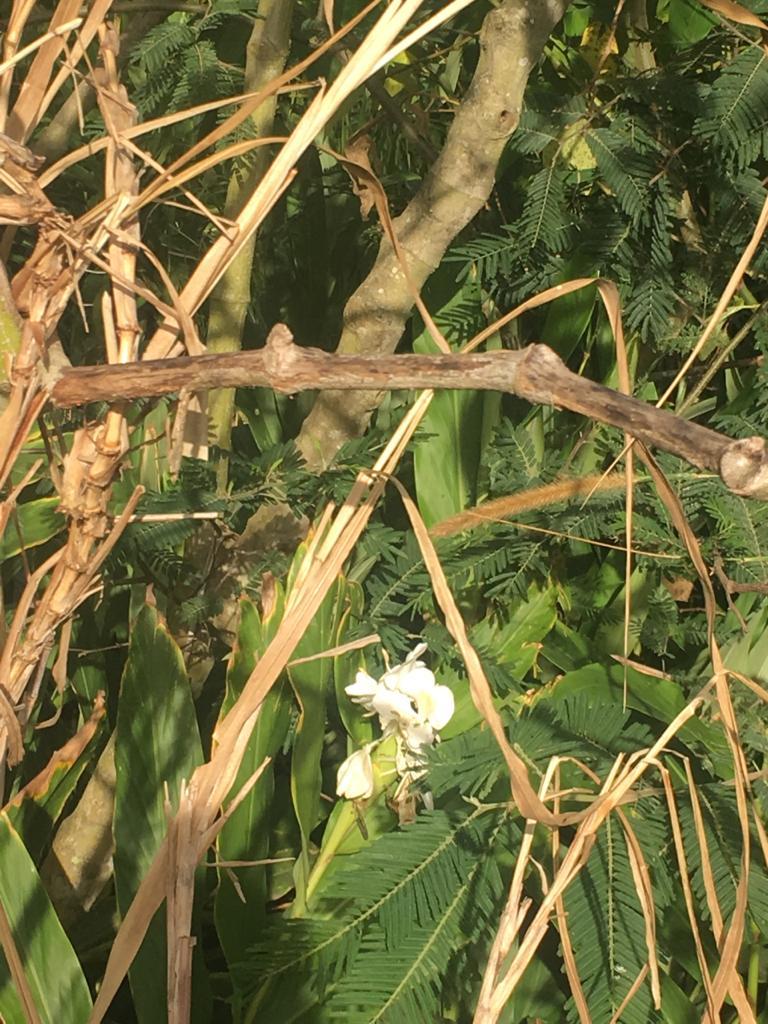
Zingiberaceae, the ginger family, is a family of flowering plants containing 59 genera and about 1600 described species distributed globally in the tropics and subtropics. They are aromatic perennial herbs with creeping rhizomes, sometimes tuberous. Basal leaf sheathing forms a pseudostem taller than their true stems which emerge unbranched. Flowers are typically zygomorphic (bilaterally symmetrical) and inflorescence is raceme. Fruit is typically a dry capsule and seeds are arillate.
Ancient fossils and phylogenetics indicate the Zingiberaceae evolved in Africa during the mid-Cretaceous period. The dispersal of these plants across Asia, the Americas, and Australia followed the expansion of tropical rain forest habitat soon after this period. In tropical Southeast Asia, conservation efforts are following the high diversity of endemic and threatened Zingiberaceae species due to deforestation and forest degradation.Habitat conservation is important for local cultures and economies in Thailand and its surrounding region, where Zingiberaceae species are grown for food, medicine, and socio-religious activities.
Morphology
Illustration Zingiber officinale from Köhler's Medicinal PlantsZingiber officinale rhizome
Members of the family are small to large herbaceous plants with distichous leaves connected to basal sheaths that overlap to form a pseudostem, or 'false stem'. True erect vegetative stems are short, thin-walled and always unbranched. Horizontal underground stems are rhizomes, see description and photo below. Leaves are alternate, 2-ranked, entire, elliptic, with prominent midribs.
Flowers are hermaphroditic, usually strongly zygomorphic, in raceme inflorescences, and subtended by conspicuous, spirally arranged bracts. The perianth is composed of two whorls, a fused tubular calyx, and a tubular corolla with one lobe larger than the other two. Flowers typically have two of their stamenoids (sterile stamens) fused to form a petaloid lip. There is one fertile...