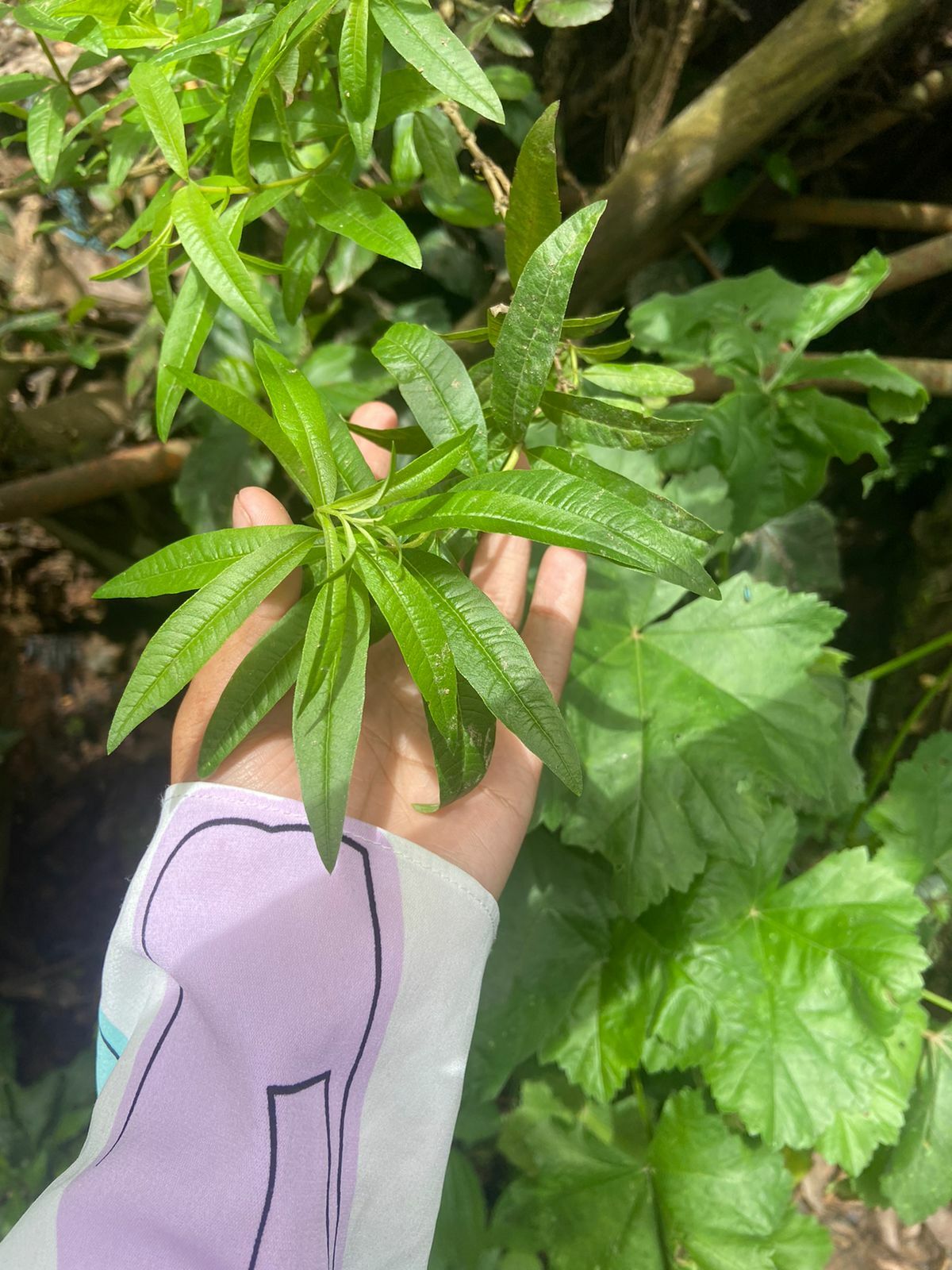
The first European botanist who publicly noticed this plant was the French Philibert Commerson, who collected it in Buenos Aires on his botanical circumnavigation with Bougainville, about 1767. The plant had already been imported directly into the Real Jardín Botánico de Madrid, where in 1797 professors Casimiro Gómez Ortega and Antonio Palau y Verdera [es] named it, though they did not yet effectively publish it, Aloysia citriodora in Latin and "Hierba de la Princesa" in Spanish, to compliment Maria Louisa of Parma, Princess of Asturias the wife of the Garden's patron Infante Carlos de Borbon, Prince of Asturias and son of king Carlos III. The name was later effectively published in the first volume of Palau's Parte Práctica de Botánica in 1784.
Unofficial importations from Spanish America seldom fared well: when another French botanist Joseph Dombey landed his collections at Cádiz in 1785, the plants were impounded and left to rot in warehouses, while Dombey was refused permission even to have seeds planted. Among the bare handful of plants Dombey had assembled during eight years at Lima, lemon verbena survived. Gómez Ortega sent seeds and specimens of the plant to Charles Louis L'Héritier de Brutelle in Paris; L'Héritier published it as Verbena triphylla in his Stirpes Novae, published in December 1785 or January 1786. From Paris John Sibthorp, professor of botany at Oxford, obtained the specimen that he introduced to British horticulture: by 1797 lemon verbena was common in greenhouses around London, and its popularity as essential in a fragrant bouquet increased through the following century.
This plant has gained the Royal Horticultural Society's Award of Garden Merit.