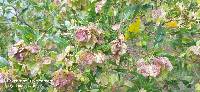
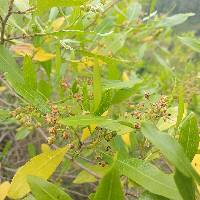
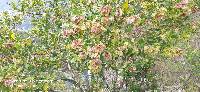
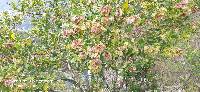
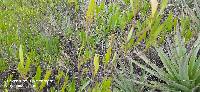
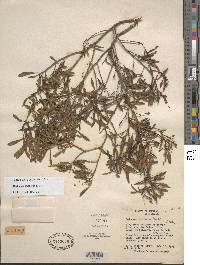
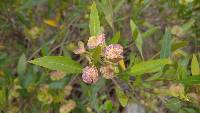
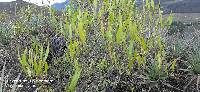
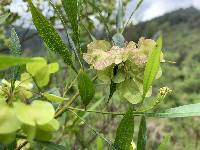
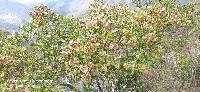
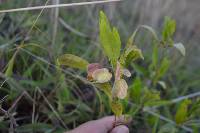
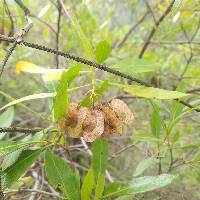
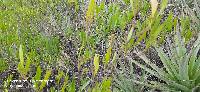
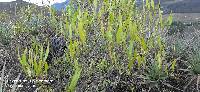
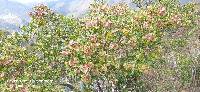
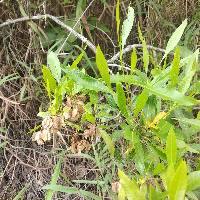
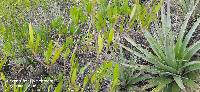
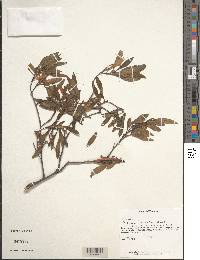
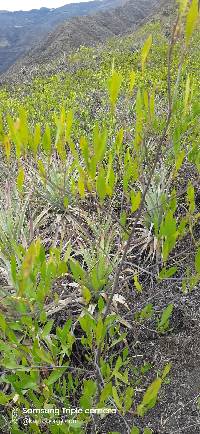
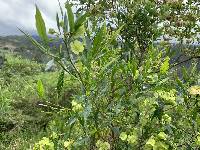
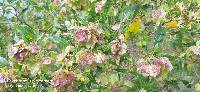
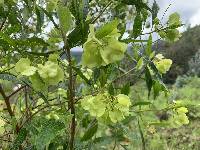
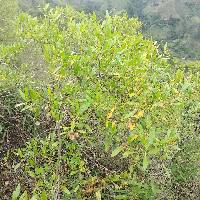
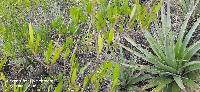
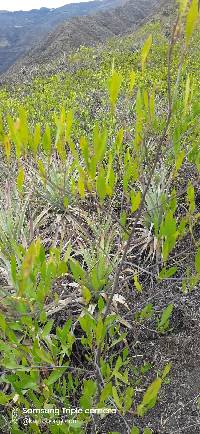
Dodonaea viscosa, also known as the broadleaf hopbush, is a species of flowering plant in the Dodonaea (hopbush) genus that has a cosmopolitan distribution in tropical, subtropical and warm temperate regions of Africa, the Americas, southern Asia and Australasia. Dodonaea is part of Sapindaceae, the soapberry family.
This species is notable for its extremely wide distribution, which it achieved only over the last 2 million years (from its region of origin in Australia) via oceanic dispersal. Harrington and Gadek (2009) referred to D. viscosa as having "a distribution equal to some of the world's greatest transoceanic dispersers".
Description
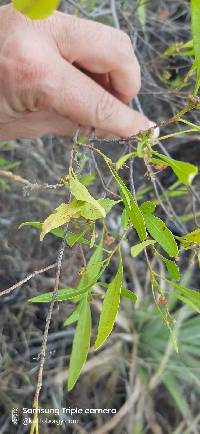
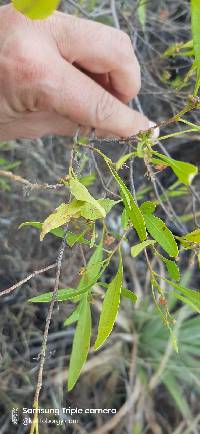
D. viscosa is a shrub growing to 1–3 m (3.3–9.8 ft) tall, rarely a small tree to 9 m (30 ft) tall. The leaves are variable in shape: generally obovate but some of them are lanceolate, often sessile, 4–7.5 cm (1.6–3.0 in) long and 1–1.5 cm (0.39–0.59 in) broad, alternate in arrangement, and secrete a resinous substance. Many specimens have a pointed or rounded apex. Leaf base is extended. Leaf texture is leathery, tough, but also pliable. Midribs are medium becoming less visible close to the apex. Secondary veins are thin, generally indistinct; Veins: often 6 to 10 pairs, indifferently opposite, subopposite, and alternate, camptodrome. Venation branches from the midrib at different angles, which may vary from 12° to 70°. The basal veins are very ascending in some plants: the angle of divergence may be close to 45°. The basal secondary venation branches from a point near the base of the main vein and becomes parallel with the leaf margin, with the distance of 1 to 2 millimetres (0.039 to 0.079 in) from the edges. Margins are usually toothed or undulating. The remaining secondary veins lay at regular intervals with flowers usually growing at the branches' ends.
The flowers are yellow to orange-red and produced in panicles about 2.5 cm (0.98 in) in length. The...