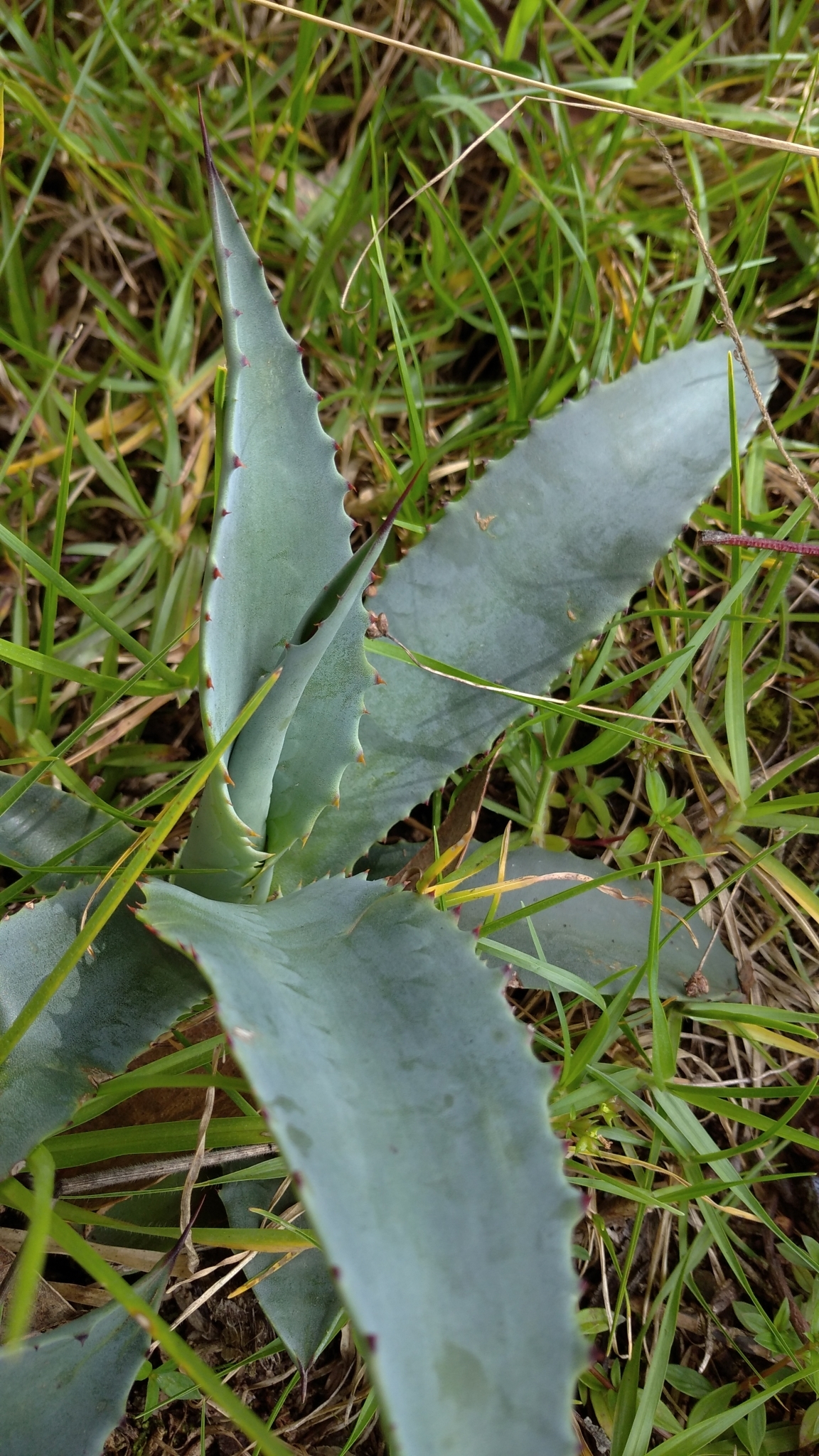
Agave (; also UK: ; Anglo-Hispanic, also US: ) is a genus of monocots native to the arid regions of the Americas. The genus is primarily known for its succulent and xerophytic species that typically form large rosettes of strong, fleshy leaves.
Many plants in this genus may be considered perennial, because they require several to many years to mature and flower. However, most Agave species are more accurately described as monocarpic rosettes or multiannuals, since each individual rosette flowers only once and then dies; a small number of Agave species are polycarpic.
Along with plants from the closely related genera Yucca, Hesperoyucca, and Hesperaloe, various Agave species are popular ornamental plants in hot, dry climates, as they require very little supplemental water to survive. Most Agave species grow very slowly. Some Agave species are known by the common name "century plant".
Maguey is a Spanish word that refers to all of the large-leafed plants in the Asparagaceae family, including agaves and yuccas. Maguey flowers are eaten in many indigenous culinary traditions of Mesoamerica.
Nomenclature
In other regions, it goes by different names. In the Chinese, Japanese, and Korean languages, it is referred to as the compound word dragon tongue orchid (simplified Chinese: 龙舌兰; traditional Chinese: 龍舌蘭; pinyin: lóngshélán; Japanese: 竜舌蘭, romanized: ryūzetsuran; Korean: 용설란; Hanja: 龍舌蘭; RR: yongseollan).
In Malta, it is referred to as Sabbara; In Maltese, Agave americana is referred to as "Sabbara tal-Amerika", and Agave sisalana is referred to as "Sabbara ta' Sisal".
Description
The large flower spike of Agave chiapensis, San Francisco Botanical Garden
The succulent leaves of most Agave species have sharp marginal teeth, an extremely sharp terminal spine, and are very fibrous inside. The stout stem is usually extremely short, which may make the plant appear as though it is stemless.