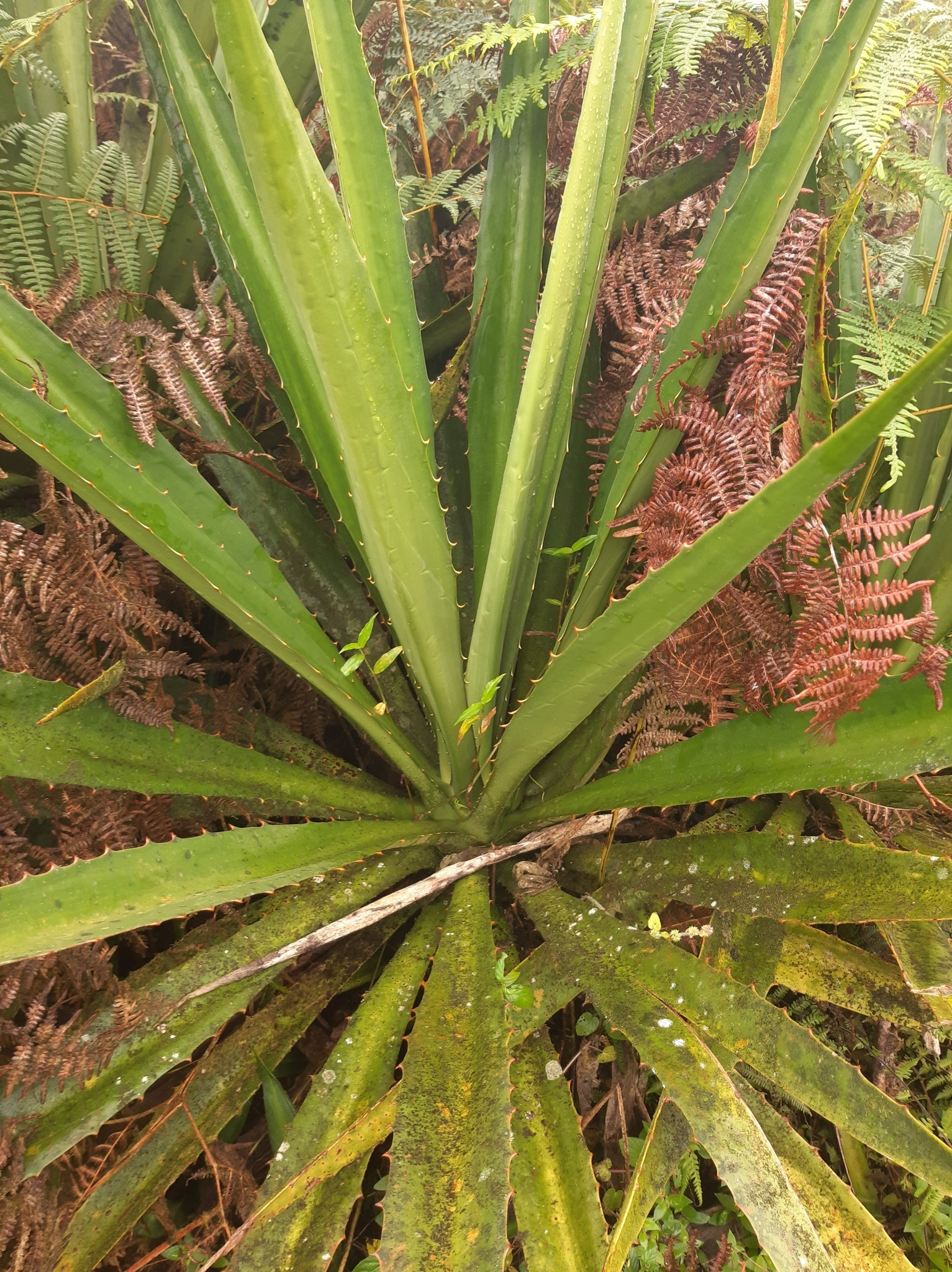
Asparagaceae (), known as the asparagus family, is a family of flowering plants, placed in the order Asparagales of the monocots. The family name is based on the edible garden asparagus, Asparagus officinalis. This family includes both common garden plants as well as common houseplants. The garden plants include asparagus, yucca, bluebell, lily of the valley, agave‚ and hosta, and the houseplants include snake plant, corn cane, spider plant, and plumosus fern.
The Asparagaceae is a morphologically heterogenous family with the included species varying widely in their appearance and growth form. It has a cosmopolitan distribution, with genera and species contained in the family native to all continents except Antarctica.
Taxonomy
The plant family Asparagaceae was first named, described, and published in Genera Plantarum in 1789 by the French botanist Antoine Laurent de Jussieu, who is particularly noted for his work in developing the concept of plant families. From the time of first introduction until the 21st century, the Asparagaceae was a monotypic family containing only the single genus, Asparagus, after which the family was named.
In 2003, the formation of the APG II plant classification system radically expanded the Asparagaceae to include the genera and species previously contained in seven plant families. In the APG II system, two options were provided as to the circumscription of the family, with Asparagaceae sensu lato (meaning in the wider sense) being the broader circumscription of the family documented in the APG II; or, Asparagaceae sensu stricto (meaning in the strict sense) consisting of only Asparagus and Hemiphylacus. If opting to use Asparagaceae sensu lato, the paper outlining the APG II system recommended placing the previously recognised family in parentheses after Asparagaceae. The paper also recommended including grouping the families Anemarrhenaceae, Anthericaeae, Behniaceae and Herreriaceae with the Agavaceae, noting that in 2000, the...