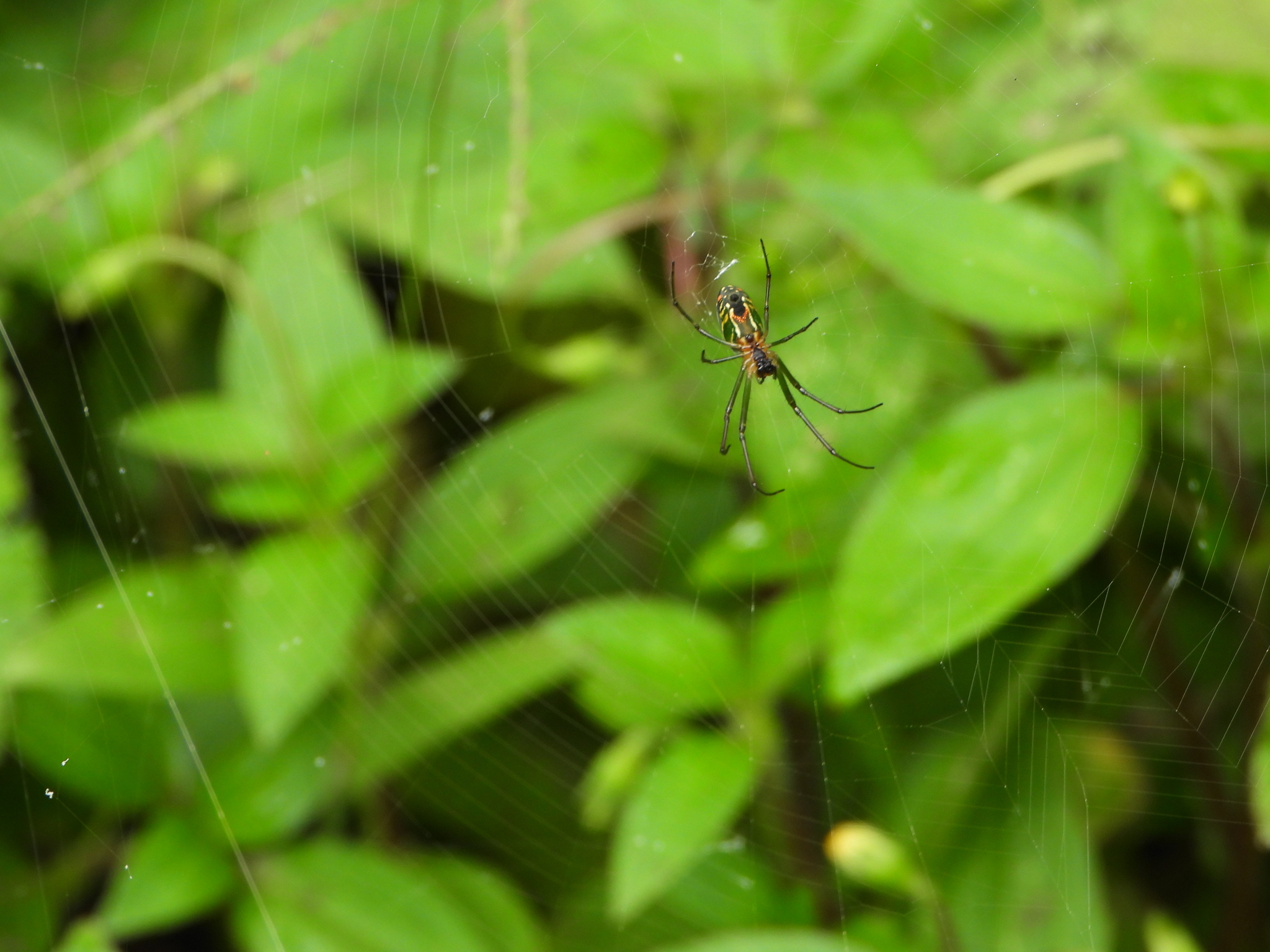
Leucauge mariana is a long-jawed orb weaver spider, native to Central America and South America. Its web building and sexual behavior have been studied extensively. Males perform several kinds of courtship behavior to induce females to copulate and to use their sperm.
A particularly unusual feature of sex in L. mariana is the formation of mating plugs during copulation. These masses sometimes block the access of subsequent males to the female’s genitalia and can prevent copulations. Unlike other species, L. mariana forms the mating plug from materials contributed by both the female and the male; the male alone cannot make a functional plug. Most mating plugs in other animals are typically viewed as a male tactic used to increase his chances of paternity, without participation of the female. Female participation in creating a mating plugs, and her presumed benefit from them, have led to multiple studies of sexual selection on the sexual behavior of L. mariana.
A second special feature of L. mariana is the possible relation between the undiminished behavioral capabilities of the tiny spiderlings that have only recently emerged from the egg sac; design modifications of the spiderling’s nervous system (greater relative brain size and reduced neuron size) result in it having similar estimated numbers of neurons to those of adults. This may explain the lack of behavioral deficits in web construction by the spiderlings compared with adults.
Description
dorsal view of female
ventral view of female
The sides and ventral surface of the abdomen have complex array of green, yellow, black, white and red markings; the abdomen’s dorsal surface, in contrast, is silvery white with dark streaks. The legs are mostly green. Predators and prey looking at the spider from above while it rests at the hub of its more or less horizontal web would see the complex color patterns on its ventral surface; these colors may help camouflage the spider. On the other hand, predators and...