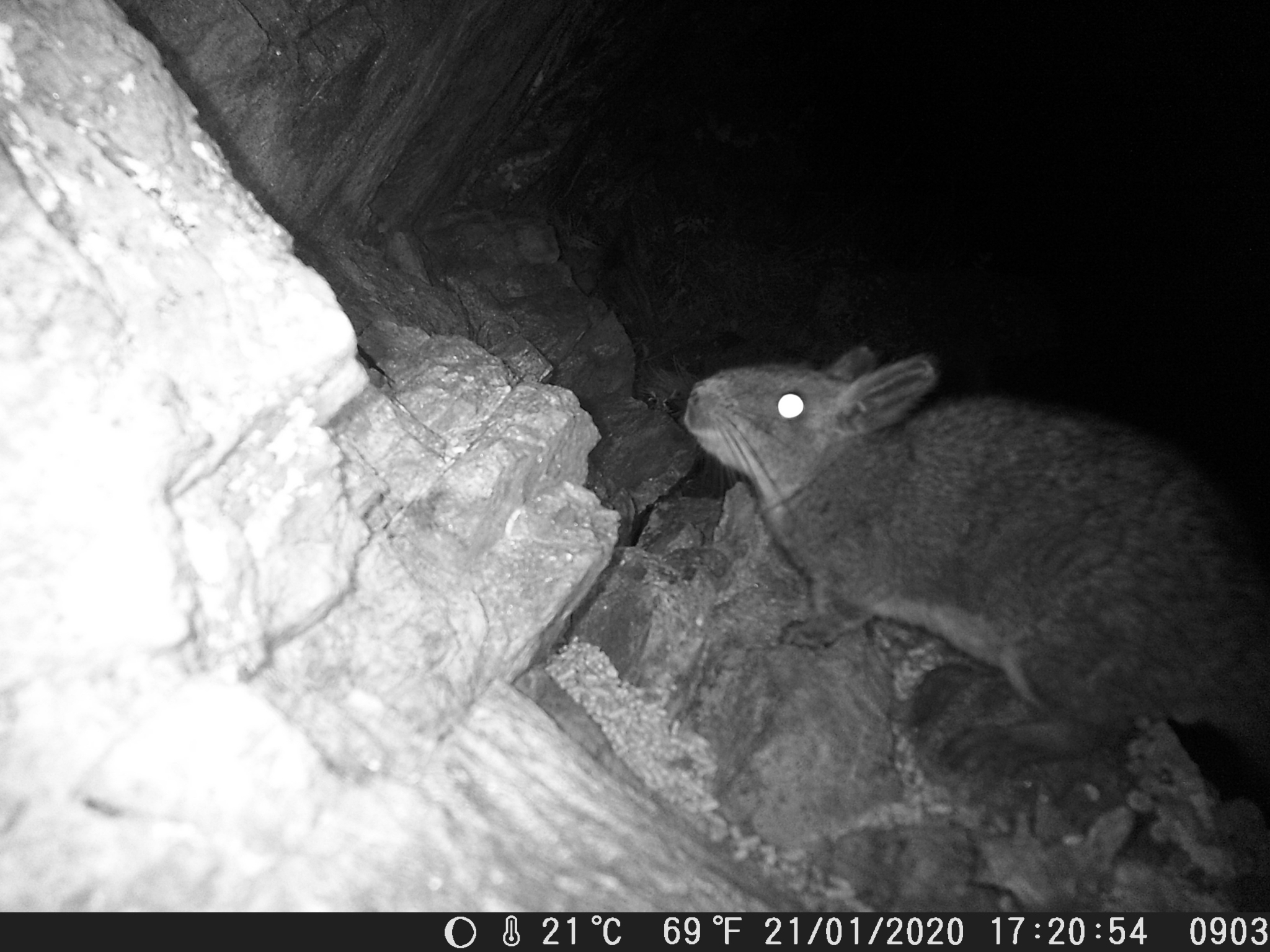
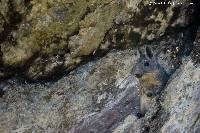
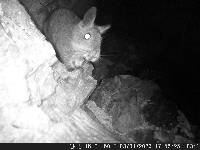
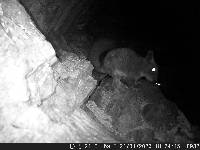
Lagidium ahuacaense is a rodent in the mountain viscacha genus (Lagidium) that occurs in southern Ecuador. First observed in 2005 and formally described in 2009, it occurs more than 500 km (310 mi) north of the nearest previously known population of mountain viscachas in central Peru. Only a single population is known. It is found on rocky habitats on Cerro El Ahuaca, an isolated granite mountain in southern Ecuador; as few as several dozen individuals remain. The species is threatened by fires and grazing cattle; the discoverers recommended its conservation status be assessed as critically endangered.
Taxonomy
L. ahuacaense was first observed in July 2005, when the only known population was encountered at Cerro El Ahuaca, Ecuador, over 500 km (310 mi) north of the northernmost previously known population of mountain viscachas (Lagidium) in central Peru. The find was published in a 2006 note by Florian Werner, Karim Ledesma, and Rodrigo Hidalgo, who provisionally identified the population as representing the Peruvian species Lagidium peruanum, but did not discount the possibility that it might represent a distinct species. Three years later, Ledesma, Werner, Ángel Spotorno, and Luis Albuja described the population as a new species, Lagidium ahuacaense, on the basis of morphological and DNA sequence differences. The specific name, ahuacaense, refers to Cerro de Ahuaca. They suggested the English common name of "Ecuadorean mountain viscacha".
L. ahuacaense was the fourth species of the genus Lagidium to be described, after L. peruanum, L. viscacia, and L. wolffsohni of the central and southern Andes, although more species may eventually be recognized within L. peruanum and L. viscacia, and L. wolffsohni is poorly differentiated from L. viscacia. Together with the plains viscacha (Lagostomus maximus) and the chinchillas (Chinchilla), Lagidium forms the rodent family Chinchillidae. Within Lagidium, L. ahuacaense...