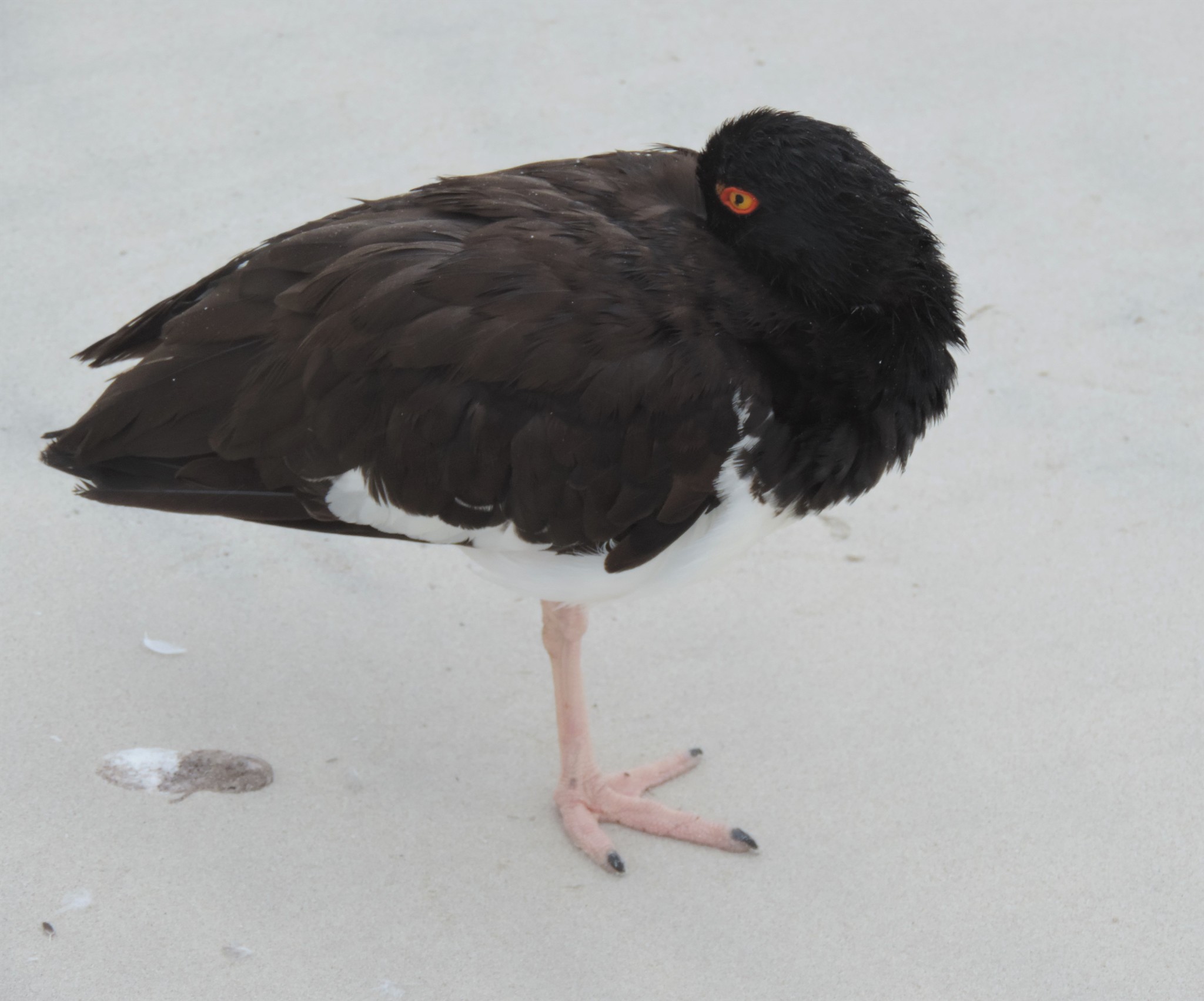
The oystercatchers are a group of waders forming the family Haematopodidae, which has a single genus, Haematopus. They are found on coasts worldwide, apart from the polar regions and some tropical regions of Africa and Southeast Asia. The exceptions to this are the Eurasian oystercatcher, the South Island oystercatcher, and the Magellanic oystercatcher, which also breed inland, far inland in some cases. In the past there has been a great deal of confusion as to the species' limits, with discrete populations of all black oystercatchers being afforded specific status but pied oystercatchers being considered one single species.
Taxonomy
The genus Haematopus was introduced in 1758 by the Swedish naturalist Carl Linnaeus in 1758 in the tenth edition of his Systema Naturae to accommodate a single species, the Eurasian oystercatcher Haematopus ostralegus. The genus name Haematopus comes from the Ancient Greek words haima αἳμα meaning blood, and pous πούς meaning foot, referring to the red legs of the Eurasian oystercatcher; it had been in use since Pierre Belon in 1555. The family Haematopodidae was introduced (as the subfamily Haematopodinae) by the French naturalist Charles Bonaparte in 1838.
The common name oystercatcher was coined by Mark Catesby in 1731 for the North American species H. palliatus, which he described as eating oysters. The English zoologist William Yarrell in 1843 established this as the preferred term, replacing the older name sea pie, although the term had earlier been used by the Welsh Naturalist Thomas Pennant in 1776 in his British Zoology.
Description
The different species of oystercatcher show little variation in shape or appearance. They range from
The variable oystercatcher is slightly exceptional in being either all-black or pied. They are large, obvious, and noisy plover-like birds, with massive long orange or red bills used for smashing or prying open molluscs. The bill shape varies between species, according to the diet. Those...