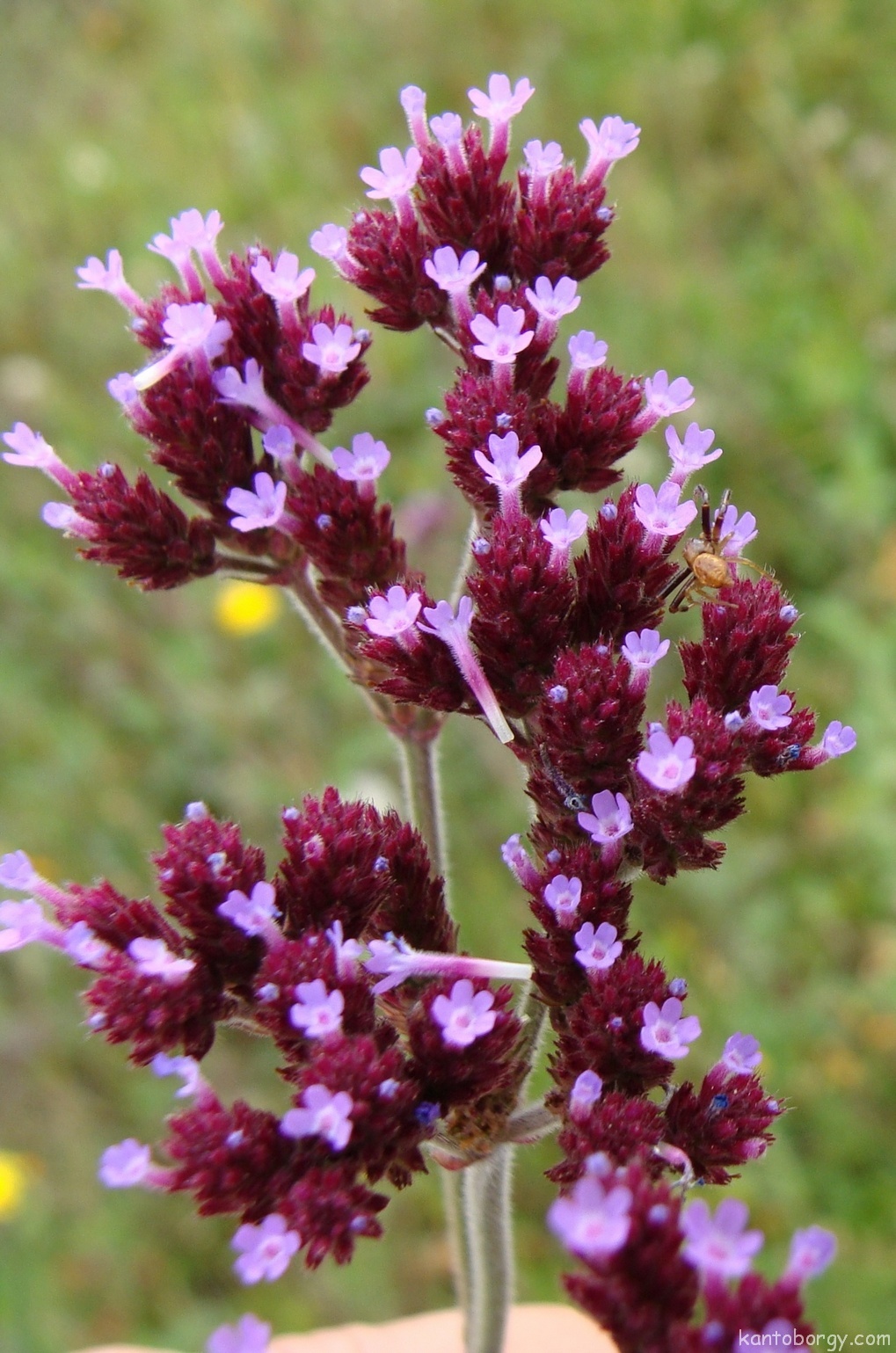
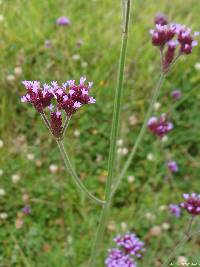
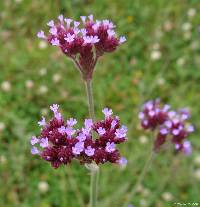
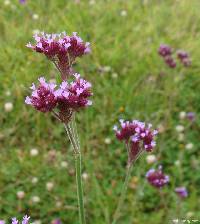
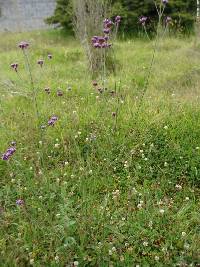
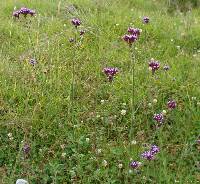
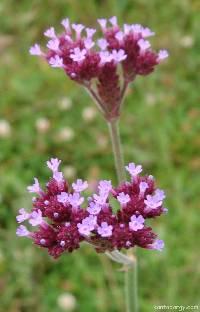
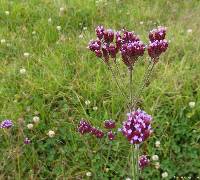
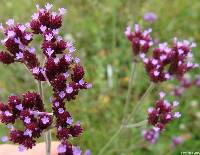
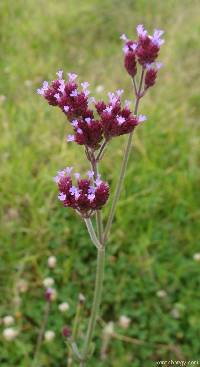
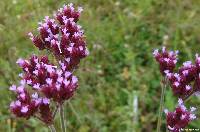
Verbena bonariensis, commonly known as the purpletop vervain, clustertop vervain, Argentinian vervain, tall verbena or pretty verbena, is a member of the verbena family cultivated as a flowering annual or herbaceous perennial plant. In United States horticulture, it is also known by the ambiguous names purpletop (also used for the grass Tridens flavus) and South American vervain (which can mean any of the numerous species in the genus Verbena occurring on the continent). For the misapplication "Brazilian verbena", see below.
It is native to tropical South America where it grows throughout most of the warm regions, from Colombia and Brazil to Argentina and Chile.
Description
Verbena bonariensis is a tall and slender-stemmed perennial. It can grow to 6 ft (1.8 m) tall and can spread to 3 ft (0.91 m) wide. At maturity, it will develop a woody base. Fragrant lavender to rose-purple flowers are in tight clusters located on terminal and axillary stems, blooming from mid-summer until fall frost. The stem is square with very long internodes. Leaves are ovate to ovate-lanceolate with a toothed margin and grow up to 4 in (100 mm) long.
Etymology
Verbena is derived from Latin, meaning ‘sacred bough’, in reference to the leafy twigs of vervaine (Verbena officinalis) which were historically carried by priests, used in wreaths for druidic rituals, and for medicine. Named by Virgil and Pliny the Elder. The common name, vervaine, comes from the Celtic name, ‘ferfain’.
Its specific epithet bonariensis means 'from Buenos Aires, Argentina'. Buenos means 'good' and aires means 'air' ('good air'). All together, its name translates to "The sacred bough from the land of good air".
Taxonomy and systematics
Verbena bonariensis is a member of the South American vervains, which are polyploid and have more than 14 chromosomes. Among these, it is part of a lineage which might also include Verbena intermedia and seems well distant from Verbena litoralis or Verbena montevidensis...