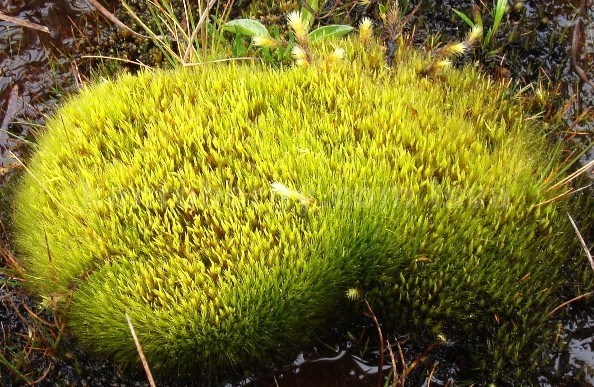
Campylopus introflexus, also known as the heath star moss, is a species of moss. The first description of the species was made by the German botanist Johannes Hedwig as Dicranum introflexum in 1801.
Description
Individual plants measure 0.5–5 centimetres (0.2–2.0 in), with lanceolate leaves 4–6 mm (0.16–0.24 in). The costa is wide and occupies about half the leaf width. The plants are found in dense mats and extensive carpets and are yellowish to olive green. They are acrocarpous and perennial. Multiple sporophytes are often present in one plant. The seta are between 7 and 12 millimeters in length, and are yellowish brown to brownish. The capsules are brown and 1.5 millimeters long. It produces spores of 12–14 μm in size.
This species will sometimes reproduce asexually by means of stem tips that break off and are distributed by the wind. Even whole cushions can be relocated by wind, animals, and humans to colonize new isolated or remote locations. Once established, they can cover several hundred square meters within ten years.
In the Netherlands and in Belgium, it is called tankmos (tank moss) due to its likely spread by tanks during the Second World War.