Theobroma cacao (cacao tree or cocoa tree) is a small (6–12 m (20–39 ft) tall) evergreen tree in the Malvaceae family. Its seeds—cocoa beans when dried and fermented—are used to make chocolate liquor, cocoa powder, cocoa butter and chocolate. Although the tree is native to the tropics of the Americas, the largest producer of cocoa beans in 2022 was Côte d'Ivoire.
Description
The plant's leaves are alternate, entire, unlobed, 10–50 cm (4–20 in) long and 5–10 cm (2–4 in) broad.
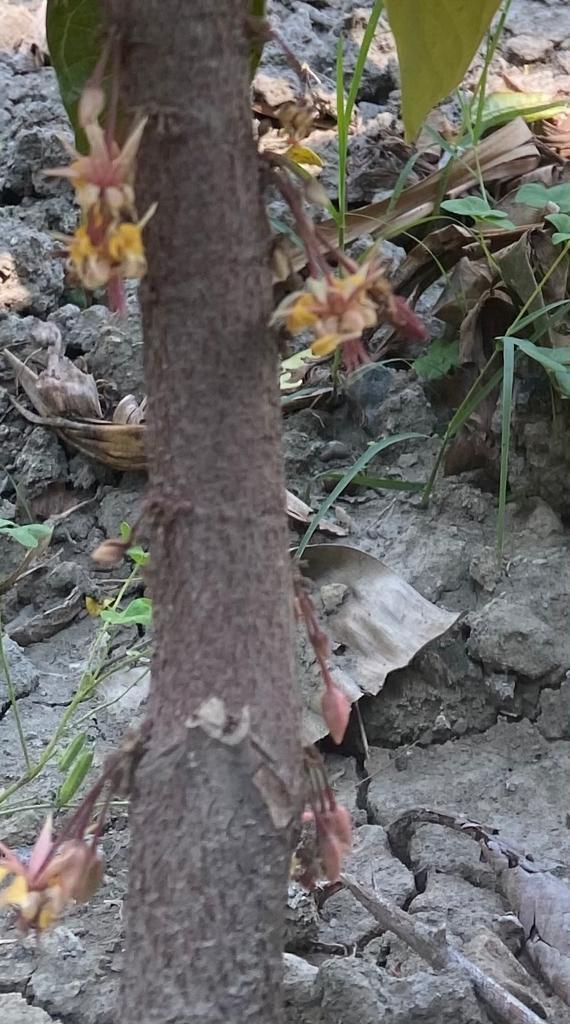
The flowers are produced in clusters directly on the trunk and older branches; this is known as cauliflory. The flowers are small,
While many of the world's flowers are pollinated by bees (Hymenoptera) or butterflies/moths (Lepidoptera), cacao flowers are pollinated by tiny flies, Forcipomyia biting midges. Using the natural pollinator Forcipomyia midges produced more fruit than using artificial pollinators.
Cacao flowers
The fruit, called a cacao pod, is ovoid, 15–30 cm (6–12 in) long and 8–10 cm (3–4 in) wide, ripening yellow to orange, and weighs about 500 g (1 lb) when ripe. The pod contains 20 to 60 seeds, usually called "beans", embedded in a white pulp.
The seeds are the main ingredient of chocolate, while the pulp is used in some countries to prepare juice, smoothies, jelly, and cream. Usually discarded until practices changed in the 21st century, the fermented pulp may be distilled into an alcoholic beverage. The pulp tastes like lychee or tropical melon. Each seed contains a significant amount of fat (40–50%) as cocoa butter.
The fruit's active constituent is the stimulant theobromine, a compound similar to caffeine.
Fruit
↑
↑ Ronse De Craene, Louis P. (4 February 2010). Floral Diagrams: An Aid to Understanding Flower Morphology and Evolution. Cambridge: Cambridge University Press. p. 224. ISBN 978-0-521-49346-8. Archived from the original on...