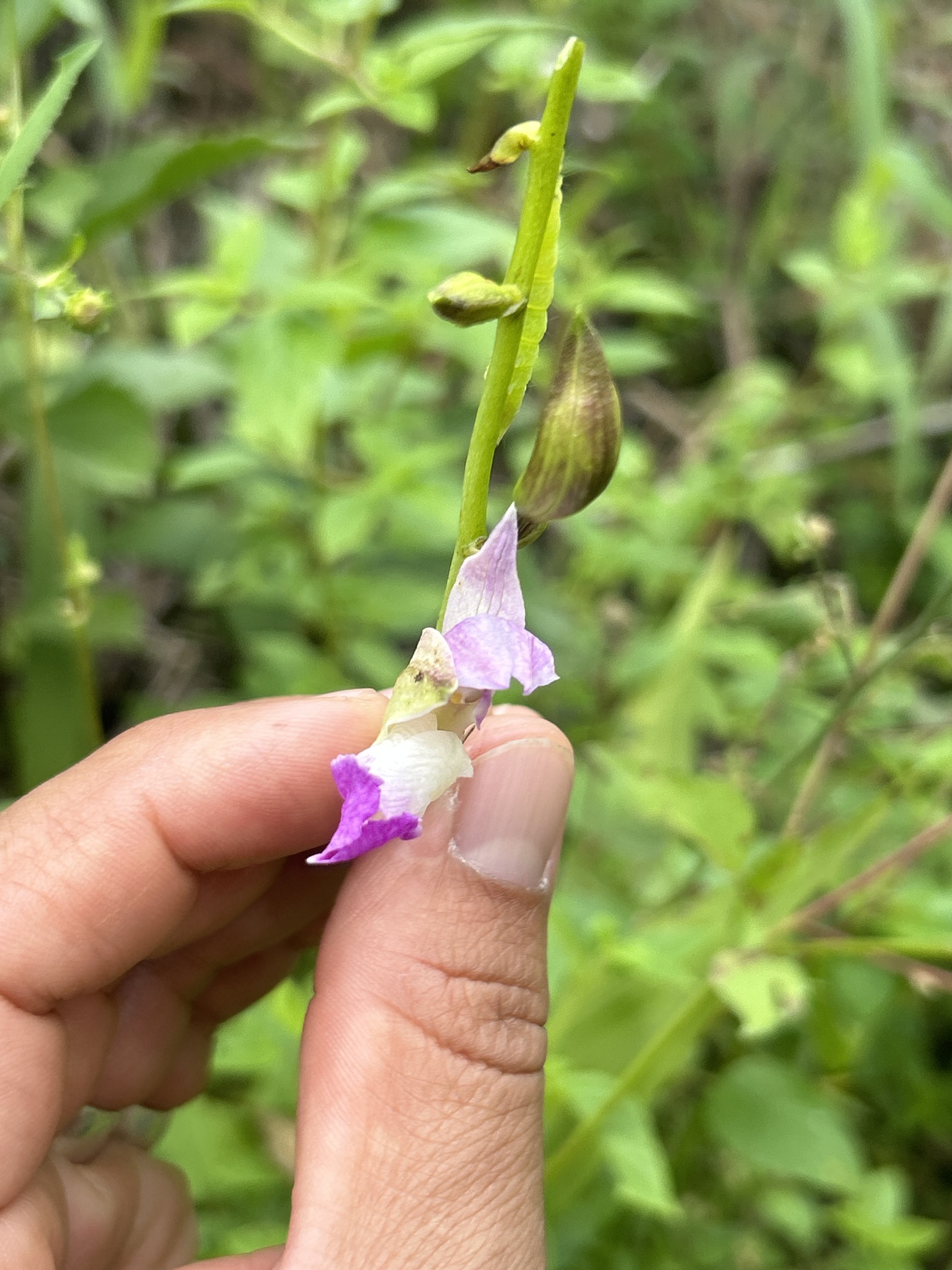
Arundina graminifolia, also called bamboo orchid, is a species of orchid and the first sole accepted species of the genus Arundina, followed by A. caespitosa discovered in 2007. This tropical Asiatic genus extends from Myanmar, India, Sri Lanka, Nepal, Thailand, Vietnam, the Ryukyu Islands, Malaysia, Singapore, China to Indonesia, the Philippines and New Guinea. It has become naturalized in Réunion, Fiji, French Polynesia, Micronesia, the West Indies, Costa Rica, Panama, Belize, and Hawaii. There are medicinal benefits to utilizing components of Arundina graminifolia, including soothing, anti-inflammatory, anti-bacterial and anti-pain properties; frequently used in Chinese medicine.
Description
botanical illustration from 1883
Arundina graminifolia is a terrestrial, perennial orchid with reedy stems, forming into large clumps growing to a height between 70 cm and 2 m.
The plaited linear leaves are oblong lanceolate, with a length of 9 to 19 cm and a width of 0.8 to 1.5 cm. The apex is acuminate. There are amplexicaul (clasping the stem) sheathing stipules.
This orchid blooms in summer and autumn, showing rather open clusters of showy terminal flowers, ten at the most. They bloom in succession on the terminal racemes. These flowers, 5 to 7 cm in diameter, are a rosy lilac and white disc with a purple lip. The bracts are broadly triangular and surround the main stalk of the flower cluster. The occasional fertilized seed pods contain minute powdery seeds, and small plants often develop near the cane ends after flowering, which likely aid in propagation if allowed to reach the soil. A. graminifolia is pollinator dependent, and requires pollination to produce capsules.
At one point in time, only 200 of the plants were recorded growing naturally in Singapore, rendering the species close to extinction. This was due to the destruction of its natural habitat, namely the rainforests and mangrove forests. However, through replanting...