Cucurbita pepo is a cultivated plant of the genus Cucurbita. It yields varieties of winter squash and pumpkin, but the most widespread varieties belong to the subspecies Cucurbita pepo subsp. pepo, called summer squash.
It has been domesticated in the Americas for thousands of years, from where it was spread by early colonisers to Europe and later across the rest of the Old World in the context of the Columbian Exchange. Some authors maintain that C. pepo is derived from C. texana, while others suggest that C. texana is merely feral C. pepo. They have a wide variety of uses, especially as a food source. C. pepo seems more closely related to C. fraterna, though disagreements exist about the exact nature of that connection, too.
It is a host species for the melonworm moth, the squash vine borer, and the pickleworm. They are also the preferred pollen source for squash bees, which are the primary pollinators in the Americas.
Description
Due to their varied genetic background, members of C. pepo vary widely in appearance, primarily in regards to their fruits. The plants are typically
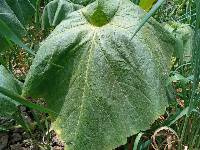
The leaves have three to five lobes and are 20–35 centimetres (8–14 in) wide. All the subspecies, varieties, and cultivars are conspecific and interfertile.
@media all and (max-width:720px){
Female flower of zucchini
Female flower near the time of fertilization
Two male flowers
Taxonomy
C. pepo is one of the oldest, if not the oldest domesticated species. The oldest known locations are in southern Mexico in Oaxaca 8,000–10,000 years ago and Ocampo, Tamaulipas, Mexico about 7,000 years ago.
Before the arrival of Europeans, C. pepo, along with C. moschata, had been carried over all parts of North America where they could be grown. The ancient territory of C. pepo extended north into Texas and up the Greater Mississippi River Valley into Illinois and east to Florida, and possibly even to Maine. It is one of several plants...