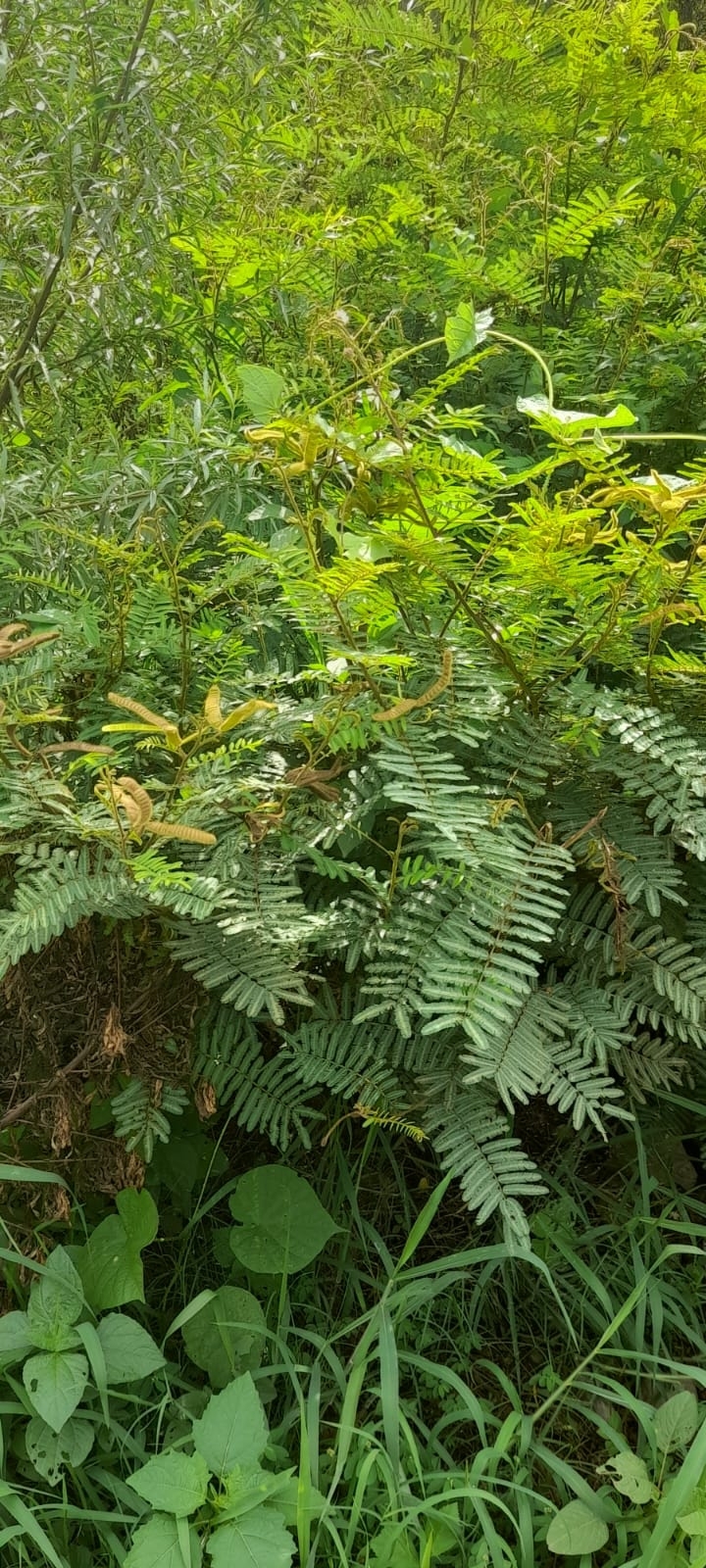
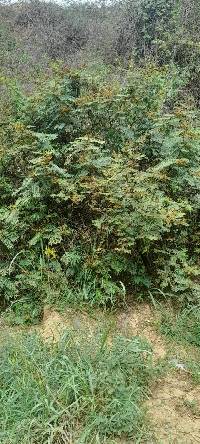
Mimosa pigra, commonly known as the giant sensitive tree (pigra = lazy, slow), is a species of plant of the genus Mimosa, in the family Fabaceae.
The genus Mimosa (Mimosaceae) contains 400–450 species, most of which are native to South America. M. pigra is a woody shrub native to tropical America but which has now become widespread throughout the tropics. It has been listed as one of the world's 100 worst invasive species and forms dense, thorny, impenetrable thickets, particularly in wet areas.
Taxonomy
Mimosa pigra was first identified by Linnaeus, who also named a separate species Mimosa asperata, on the basis of its different leaf morphology. Mimosa pigra was described as having an erect prickle between the pinnae and Mimosa asperata as having prickles in opposite pairs between the pinnae.
Further research showed that both leaf forms can occur on the same plant, and consequently both species were united under the name Mimosa asperata asperata, and later on, renamed Mimosa pigra. The scientific name remains Mimosa pigra. In Australia, the common name is mimosa or giant sensitive plant. Other common names include: bashful plant, catclaw mimosa, black mimosa.
Description
Mimosa pigra
Mimosa pigra is a leguminous shrub, which can reach up to 6m in height. The stem is greenish in young plants but becomes woody as the plant matures. It is armed with broad-based prickles up to 7mm long. The leaves are bright green and bipinnate, consisting of a central prickly rachis 20 to 25 cm long with up to 16 pairs of pinnae 5 cm long, each divided into pairs of leaflets 3 to 8 mm long. Leaves are sensitive and fold up when touched and at nightfall. Flowers are mauve or pink, in tight, subglobose pedunculate heads 1 cm in diameter, each containing approximately 100 flowers. Each flower head produces a cluster of 10 to 20 seedpods, which then mature and break into segments, each containing an oblong shaped seed. Hairs on the segments allow them to float on water and...