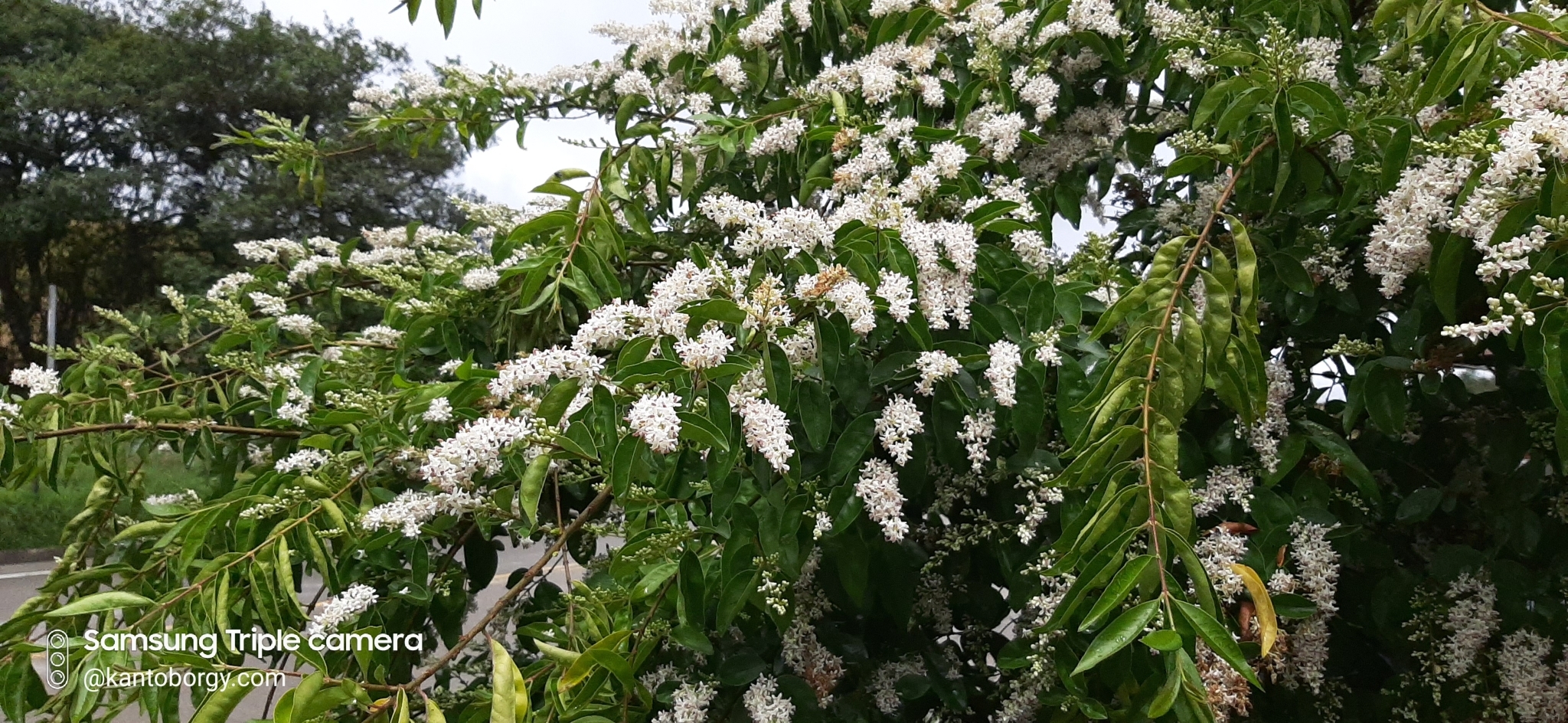
A privet is a flowering plant in the genus Ligustrum. The genus contains about 50 species of erect, deciduous or evergreen shrubs or trees, with a native distribution from Europe to tropical and subtropical Asia, and with one species each native to Australia and north Africa. Some species have become widely naturalized or invasive where introduced. Privet was originally the name for the European semi-evergreen shrub Ligustrum vulgare, and later also for the more reliably evergreen Ligustrum ovalifolium and its hybrid Ligustrum × ibolium used extensively for privacy hedging, though now the name is applied to all members of the genus. The generic name was applied by Pliny the Elder (23–79 AD) to L. vulgare. It is often suggested that the name privet is related to private, but the Oxford English Dictionary states that there is no evidence to support this.
Description
Privet is a group of shrubs and small trees of southern and eastern Asia, from the Himalayas extending into Australia. They may be evergreen or deciduous, and are tolerant of different soil types. They often have conspicuous heads of white flowers followed by black berries.
Uses and cultivation
In addition to being cultivated to create ornamental hedges and foliage, privet is also widely used in horticulture and flower arrangements. The oval leaf privet Ligustrum ovalifolium is used for hedges, while its flexible twigs are sometimes used as cords for lashing. The tree species, especially Chinese privet is frequently used as a street tree in Europe, while other species including Ligustrum japonicum and Ligustrum quihoui are among the others also sometimes used as ornamental plants in gardens.
Privet became very popular in Britain as a replacement for ornamental railings around properties, which had been lost to the 1941 UK government's requisitioning of, with few exceptions, all post-1850 iron gates and railings for the war effort. The government had the intention of melting down the donated metal for use in the manufacture...