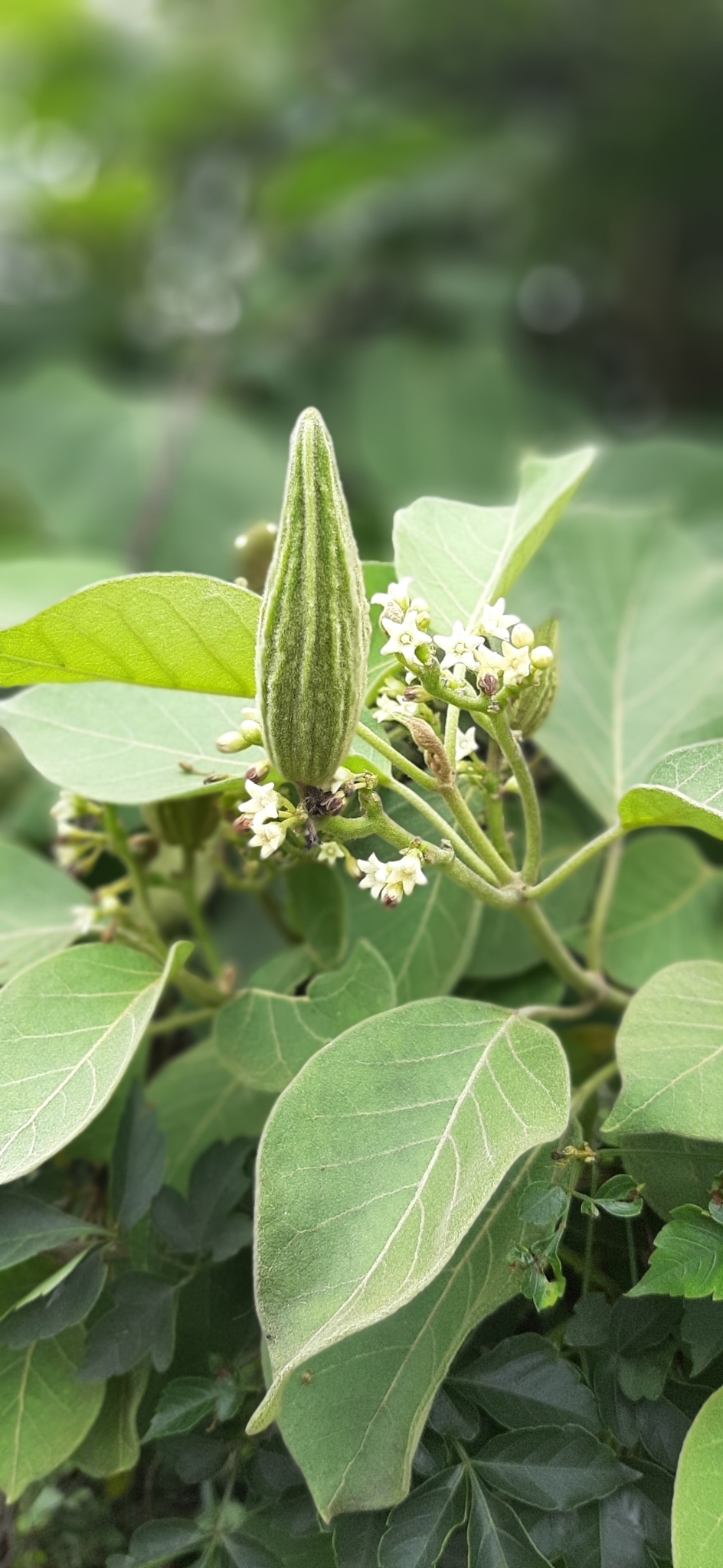
The Asclepiadoideae are a subfamily of flowering plants in the family Apocynaceae. Formerly, these plants together with those now in the Apocynaceae subfamilies Periplocoideae and Secamonoideae were treated as a separate family under the name Asclepiadaceae, e.g. by APG II, and known as the milkweed family.
They form a group of perennial herbs, twining shrubs, lianas or rarely trees but notably also contain a significant number of leafless stem succulents. The name comes from the type genus Asclepias (milkweeds).
There are 348 genera, with about 2,900 species. They are mainly located in the tropics to subtropics, especially in Africa and South America.
The florally-advanced tribe Stapelieae within this family contains several relatively familiar stem succulent genera, such as Orbea, Huernia, Stapelia and Hoodia. They are remarkable for the complex mechanisms which they have developed for pollination, independently parallel to the unrelated Orchidaceae, such as the grouping of their pollen into pollinia. The "fragrance" (or odor) of the flowers, often called "carrion flowers", attracts flies, the chief pollinators for these plants. Additionally, the color, appearance and texture of the flowers often is thought to resemble decaying flesh or raw meat to further entice pollination by flies.
Many new hybrids have been formed due to the unique fertilization method of the flowers.
Taxonomy
Gilbert Thomas Burnett in 1835 is considered to be the first botanist to recognize a primary division of the family Apocynaceae using the name Asclepiadeae, an ending now used for tribes rather than subfamilies. In 2014, Endress, Liede-Schumann and Meve recognised five tribes within the subfamily. A molecular phylogenetic study in 2019 confirmed the distinctness of the five tribes, which were related as shown in the following cladogram: