Malus ( or ) is a genus of about 32–57 species of small deciduous trees or shrubs in the rose family Rosaceae. It includes the domesticated orchard apple, crabapples, and wild apples.
The genus is native to the temperate zone of the Northern Hemisphere. Crabapples are used as rootstocks to fortify domestic apples with features such as cold hardiness, but are not of much commercial value as most are too sour.
Description
Apple trees are typically 4–12 metres (13–39 feet) tall at maturity, with a dense, twiggy crown. The leaves are
Flowering occurs in the spring after 50–80 growing degree-days, varying by subspecies and cultivar. The flowers are borne in corymbs and have five petals, which may be white, pink, or red. They are perfect, with usually red stamens that produce copious pollen, and a half-inferior ovary. Many species are self-sterile, requiring cross-pollination between individuals by insects (typically bees, which freely visit the flowers for both nectar and pollen). A minority of cultivars are self-pollinating, such as "Granny Smith" and "Golden Delicious".
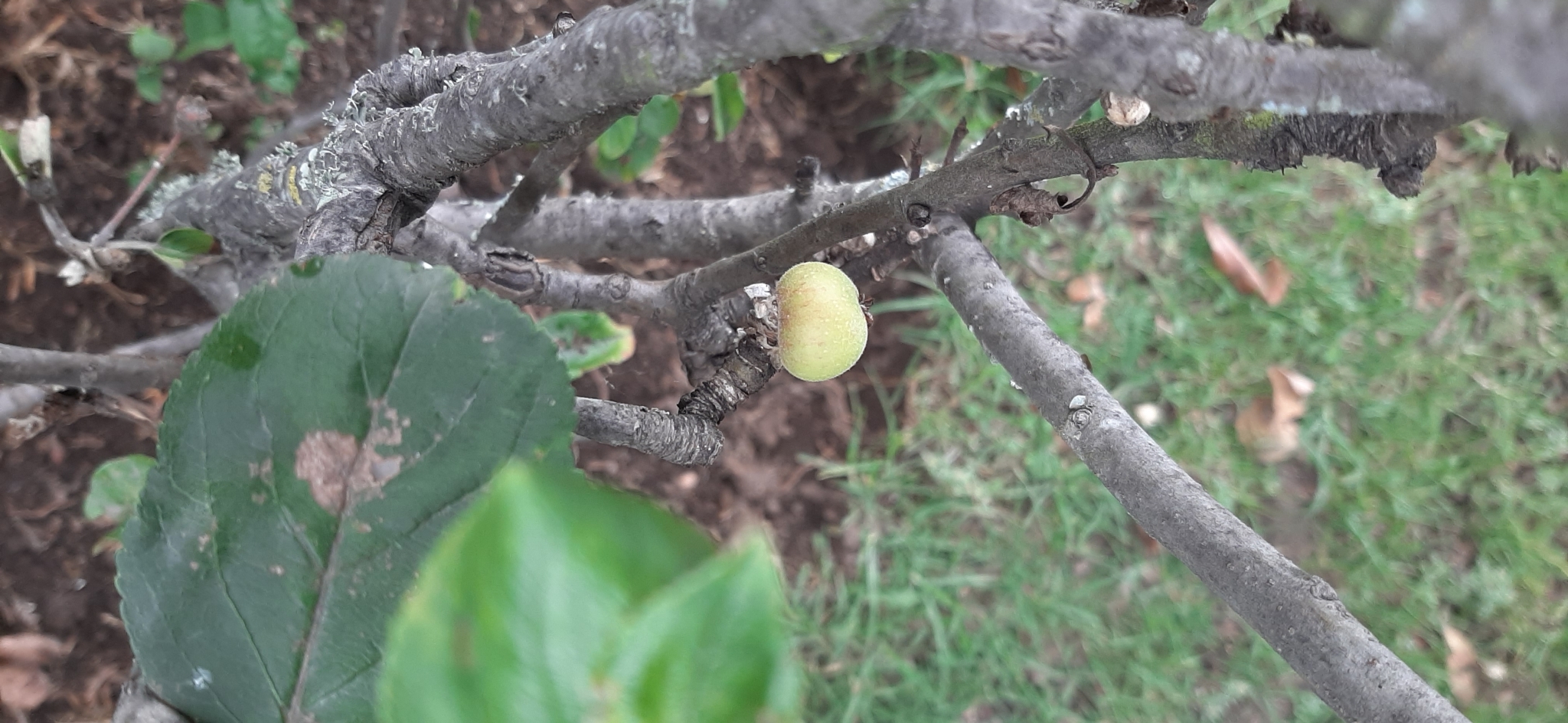
The fruit is a globose pome, varying in size from 1–4 cm (1⁄2–1+1⁄2 in) in diameter in most of the wild species, to 6 cm (2+1⁄4 in) in M. sylvestris sieversii, 8 cm (3 in) in M. domestica, and even larger in certain cultivated orchard apples. The centre of the fruit contains five carpels arranged in a starlike formation, each containing one or two seeds that contain cyanide.
@media all and (max-width:720px){
Trunk
Crabapple blossoms
Blossoms, eastern Siberia
Ripe apples (M. domestica)
Taxonomy
The genus Malus is subdivided into eight sections (six, with two added in 2006 and 2008). Several Malus species, including domestic apples, hybridize freely.
The oldest fossils of the genus date to the Eocene (Lutetian), which are leaves belonging to the species M. collardii...