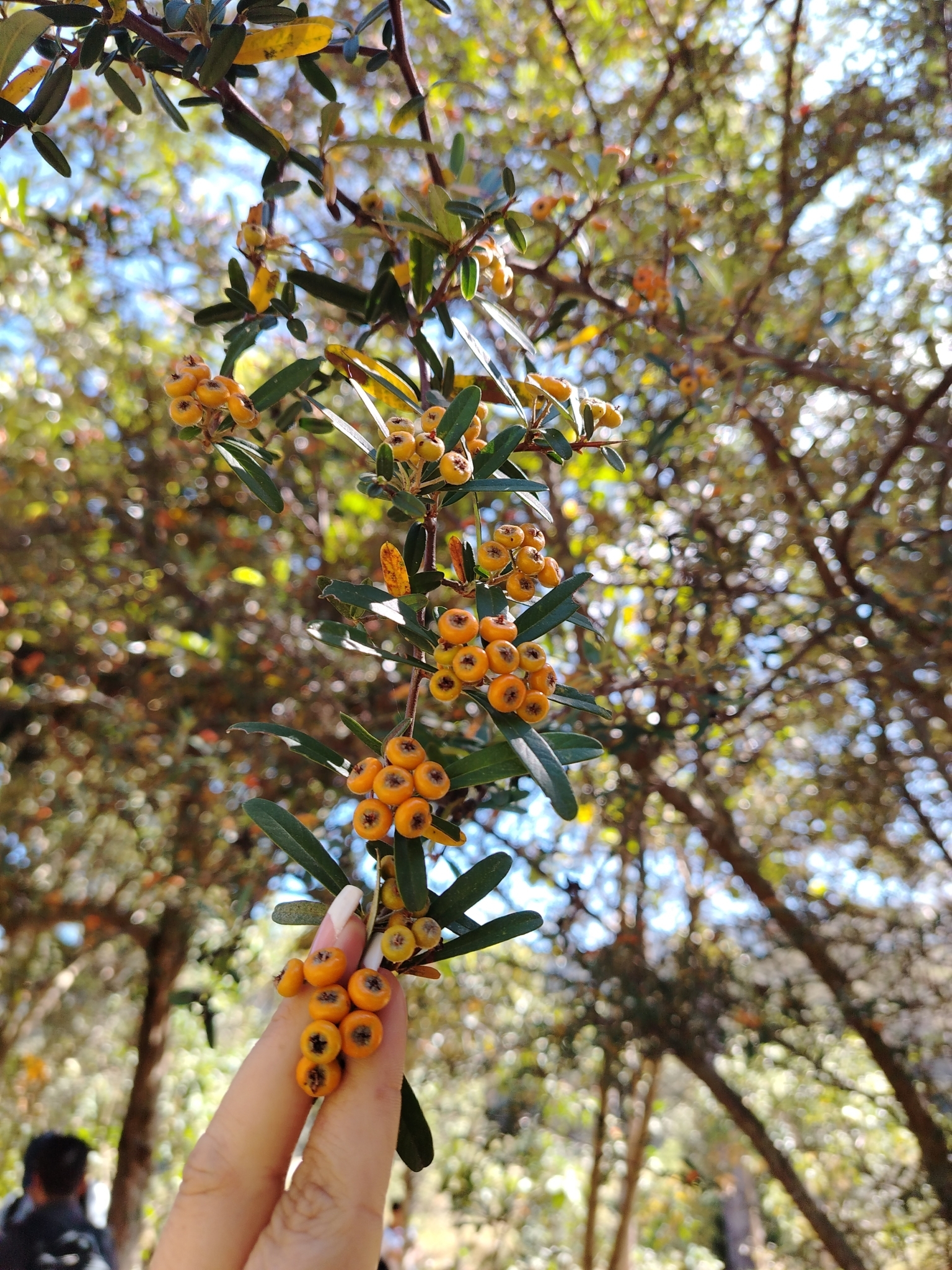
Pyracantha, the firethorn, is a genus of thorny, evergreen shrubs or small trees in the family Rosaceae native to south-eastern Europe and Asia. Pyracantha are cultivated as ornamental plants. They resemble and are related to Cotoneaster, but only Pyracantha has thorns, bumpy leaf edges, and yellow anthers, while Cotoneaster does not grow thorns.
Description
Pyracantha growing wild in a private garden in Japan. The fruit is an important food source for overwintering red-flanked bluetails (Tarsiger cyanurus).
Flowers
Pyracantha are strongly heterophyllous, evergreen, spiny, shrubs or small trees with 1–3 erect or divergent stems. The thin, grey bark is smooth or slightly fissured. The simple, petiolate, alternate leaves have an entire, serrate, or crenulate margin.
The seven species have small white flowers which are 5-merous and many stamened. Fruit are either red, orange, or yellow pomes. The flowers are produced during late spring and early summer; the fruit develops in late summer, and matures in late autumn. The fruit of Pyracantha are classified as pomes. The pulp is safe for human consumption, but it is insipid, and the seeds are mildly poisonous as they contain cyanogenic glycosides (as do apples, plums, cherries, and almonds). Seeds that are chewed and crushed while raw will release cyanogenic glycosides, and can cause mild gastro-intestinal problems when eaten in large enough quantities. The fruit can be made into jelly. The fruits persist significantly into winter which makes them a valuable bird food.
Vegetative characteristics
Pyracantha are strongly heterophyllous, evergreen, spiny, shrubs or small trees with 1–3 erect or divergent stems. The thin, grey bark is smooth or slightly fissured. The simple, petiolate, alternate leaves have an entire, serrate, or crenulate margin.
Generative characteristics
The seven species have small white flowers which are 5-merous and many stamened. Fruit are either red, orange, or yellow pomes. The flowers are produced during late spring and early summer;...