The common sunflower (Helianthus annuus) is a large annual forb in the daisy family Asteraceae. The domesticated form of common sunflower is harvested for its edible seeds, which come in two types: oil and confectionary seeds. Oilseed sunflowers are widely grown globally and represent the fourth most used vegetable oil in the world. They also are used widely as bird food or as food for livestock. In contrast, confectionary sunflower seeds are often eaten as a snack food or in baking. There also are horticultural sunflower varieties that are used as plantings in domestic gardens for aesthetics. Wild plants are known for their multiple flower heads, whereas the domestic sunflower often possesses a single large flower head atop an unbranched stem.
Description
The plant has an erect rough-hairy stem, reaching typical heights of 3 metres (10 feet). The tallest sunflower on record achieved 10.9 m (35 ft 9 in). Sunflower leaves are broad, coarsely toothed, rough and mostly alternate; those near the bottom are largest and commonly heart-shaped.
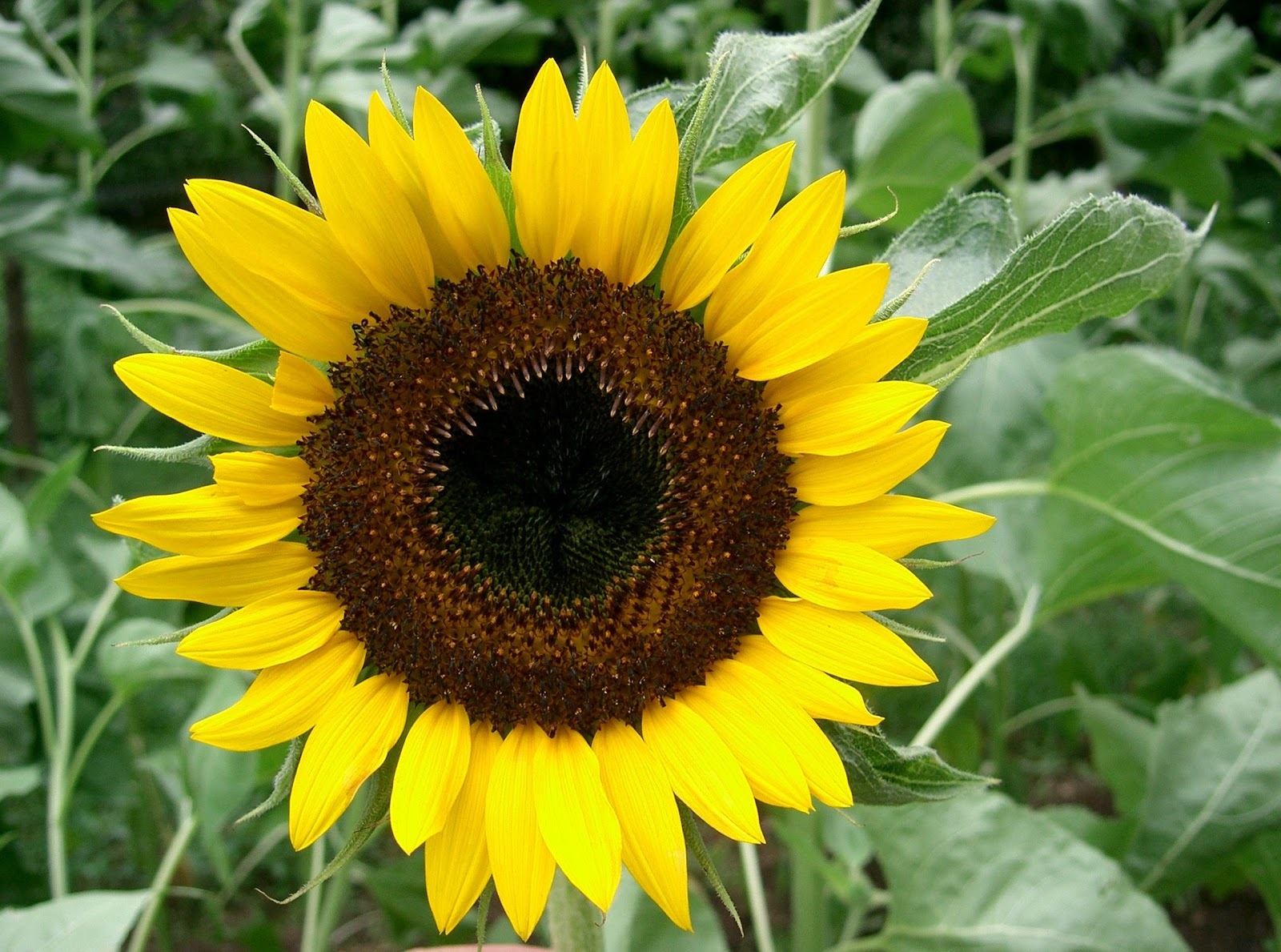
The plant flowers in summer. What is often called the "flower" of the sunflower is actually a "flower head" (pseudanthium), 7.5–12.5 centimetres (3–5 in) wide, of numerous small individual five-petaled flowers ("florets"). The outer flowers, which resemble petals, are called ray flowers. Each "petal" consists of a ligule composed of fused petals of an asymmetrical ray flower. They are sexually sterile and may be yellow, red, orange, or other colors. The spirally arranged flowers in the center of the head are called disk flowers. These mature into fruit (sunflower "seeds").
The prairie sunflower (H. petiolaris) is similar in appearance to the wild common sunflower; the scales in its central disk are tipped by white hairs.
Flower heads facing east, away from the late afternoon sun
A common misconception is that flowering sunflower heads track the Sun across the sky. Although immature flower buds...