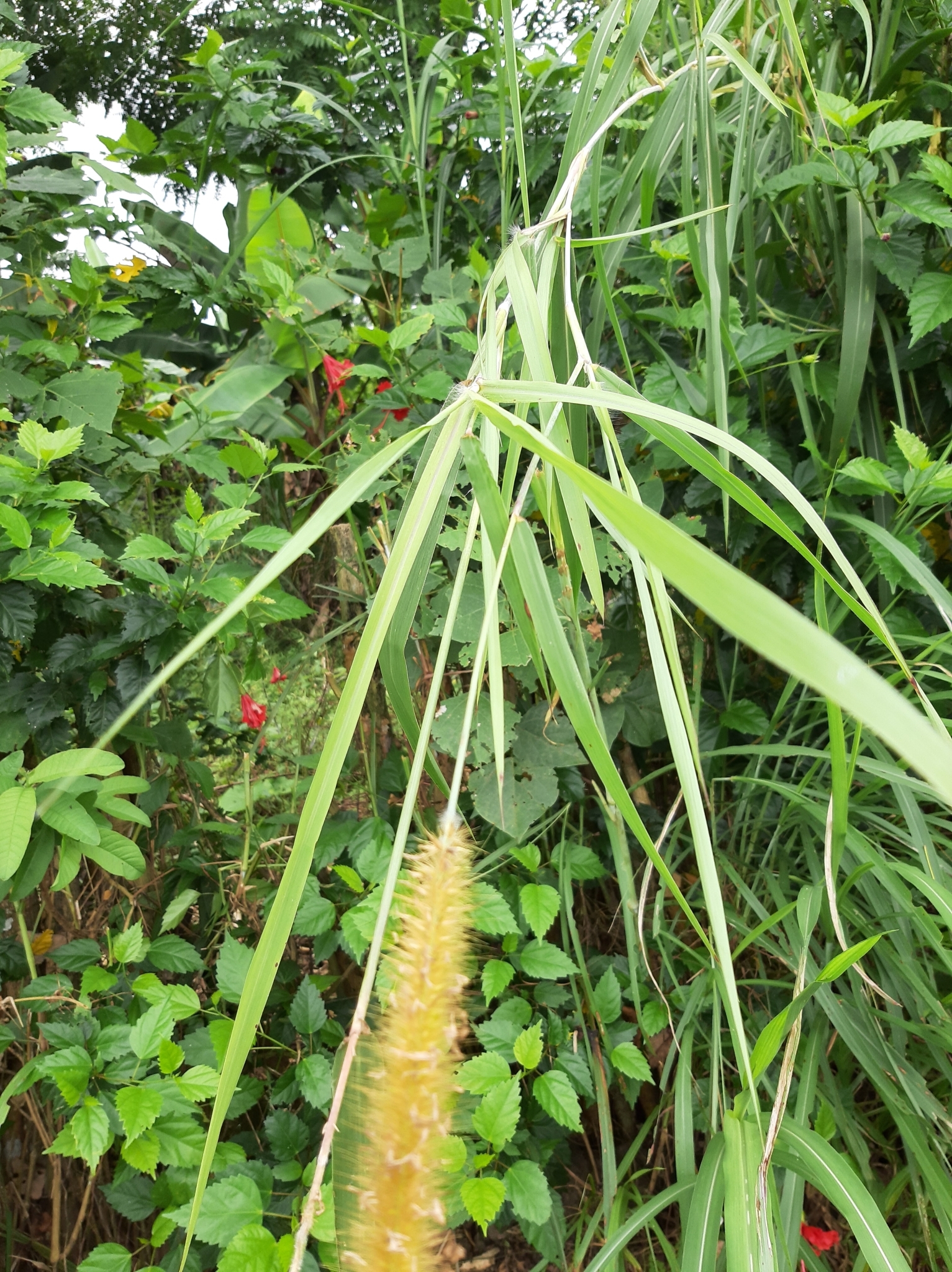
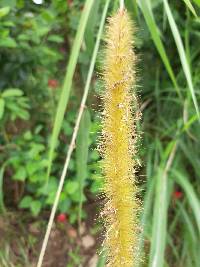
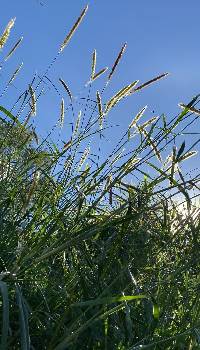
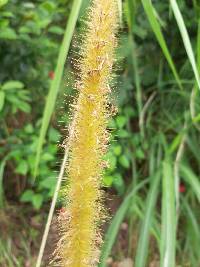
Cenchrus purpureus, synonym Pennisetum purpureum, also known as Napier grass, elephant grass or Uganda grass, is a species of perennial tropical grass native to African grasslands. It has low water and nutrient requirements, and therefore can make use of otherwise uncultivated lands.
Historically, this wild species has been used primarily for grazing, recently, however, it has been used as part of a push–pull agricultural pest management strategy. Napier grasses improve soil fertility, and protect arid land from soil erosion. It is also utilized for firebreaks, windbreaks, in paper pulp production and most recently to produce bio-oil, biogas and charcoal.
Description
Common Napier (Non-hybrid)
Cenchrus purpureus (or napier grass) is a monocot C4 perennial grass in the family Poaceae. It is tall and forms in robust bamboo-like clumps. It is a heterozygous plant, but seeds rarely fully form; more often it reproduces vegetatively through stolons which are horizontal shoots above the soil that extend from the parent plant to offspring. It requires low water and nutrient inputs. The Elephant grass was crossed with Pearl millet species to form Bajra Nappier. Subsequent work was done to decrease the internode length of Elephant grass. Napier grass plantations produce about 40 tonnes of dry biomass per hectare per year with an average energy content 18 GJ (5 MWh) per tonne, and the grass can be harvested many times per year.
Generally, the grass is harvested in relatively short intervals (every 1 to 3 months) when it is to be used as fodder for animals (its main use), and relatively long intervals (4–12 months) when used for bioenergy. Longer intervals increases the stem/leaf ratio, making the forage harder to chew and digest, but in many cases the annual dry yield increases. The grass can reach a height of 7-8 meters after 4 months of growth. It produces best growth between 25 and 40 °C(77 and 104°F), and little growth below about 15 °C(59°F), with growth ceasing...