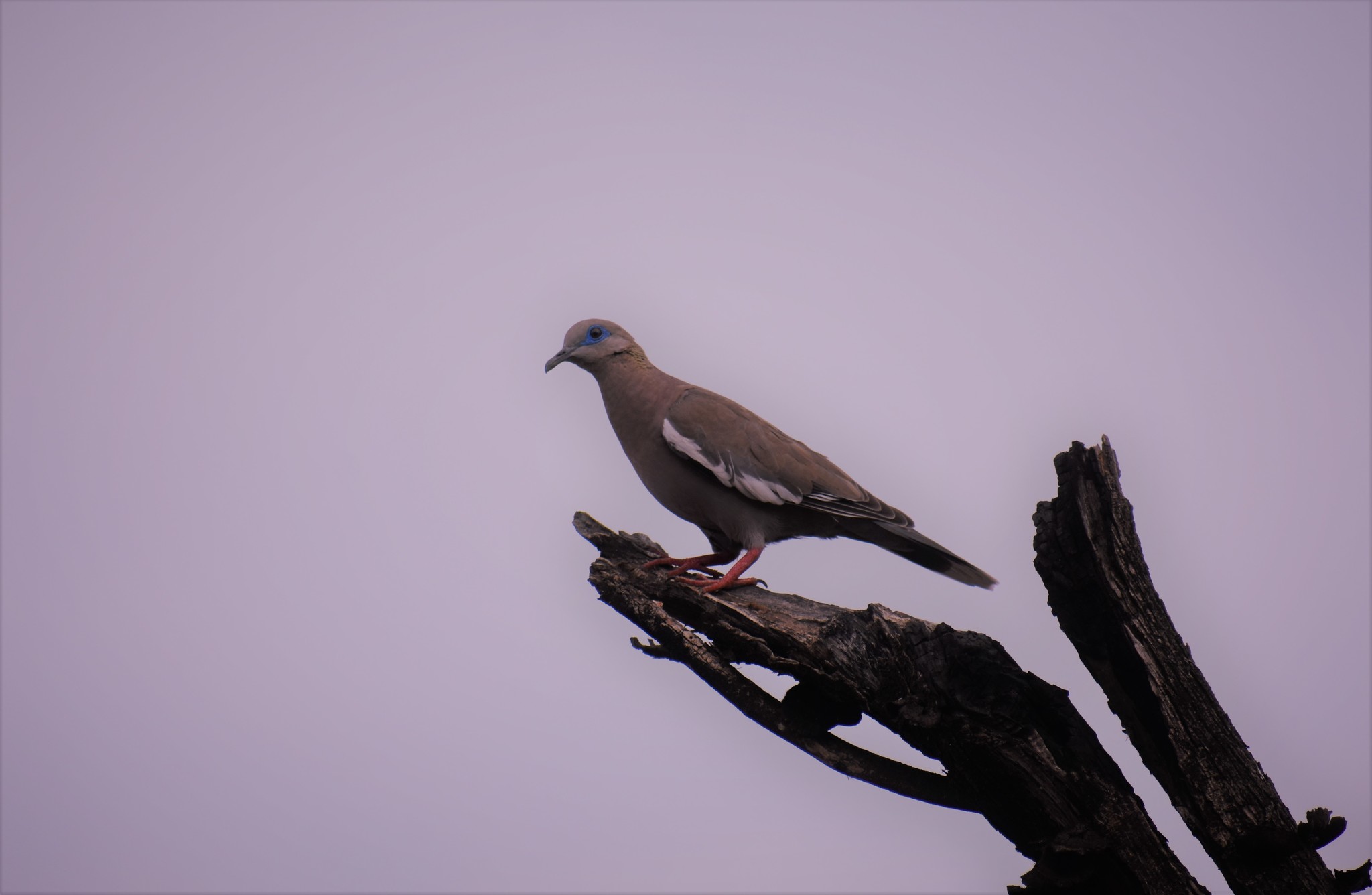
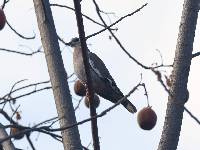
The West Peruvian dove or Pacific dove (Zenaida meloda), known locally as tórtola melódica or cuculí, is a species of dove in the genus Zenaida found on the South American Pacific coast.
Taxonomy
It was initially described by Swiss naturalist Johann Jakob von Tschudi in 1843 as Columba meloda, based upon a holotype specimen collected from a western slope of the Andes mountains in Peru. It has previously been considered conspecific with the white-winged dove (Zenaida asiatica), but has been retained as its own species based on genetic data and differences in plumage, soft part coloration, and vocalization and territorial song, which is not a learned behavior in doves.
Speciation between the white-winged dove and West Peruvian dove likely took place between 2 to 2.7 million years ago, beginning shortly after the formation of the Central American land bridge (around 3 million years ago), which enabled the dispersal of North American Zenaida doves into Central & South America and facilitated speciation.
The white-winged dove and the West Peruvian dove are each others' closest relatives, and they together form a clade which is a sister group to the rest of genus Zenaida.
body.skin-vector-2022
Zenaida
White-winged dove (Z. asiatica)
West Peruvian dove (Z. meloda)
Zenaida dove (Z. aurita)
Eared dove (Z. auriculata)
Socorro dove (Z. graysoni)
Mourning dove (Z. macroura)
Cladogram showing the relationships of six species of doves in the genus Zenaida. This study did not include the Galápagos dove (Z. galapagoensis).
Description
The West Peruvian dove is a medium-sized dove, being 25–33 cm (9.8–13.0 in) and weighing around 216 g (0.476 lb). Adults of either sex are similar, with brownish-gray upperparts, a buff face and neck that...